Was im Leben uns verdrießt, man im Bilde gern genießt.
Goethe
 Look what a formidable master Yasujiro Ozu was! They say Yasujiro Ozu (Dec. 12 1903 – Dec. 12 1963) was the „greatest filmmaker movie buffs probably have never heard of“, (if I may say so) an explorer of the human condition comparable to Shakespeare! I came across him some weeks ago when I saw one of those „Greatest Films of all Time“ lists (a seemingly somehow reliable one), where Tokyo Story (1953) by Yasujiro Ozu was ranked #3 (after Vertigo and Citizen Kane). I also remember to have seen Late Autumn (1960) last year at the Filmmuseum when they had a focus on Japanese cinema of the postwar era – I was impressed by it, but had no time to dive further into that director back then. Yasujiro Ozu´s films usually are quite simple and not overcharged with plot. Tokyo Story is about an elderly couple visiting their children (and grandchildren) in Tokyo. Their grown-up children meanwhile have families of their own and it turns out that they have neither the time nor the motivation to care a lot for their parents (with one good – however also somehow exaggeratedly good – soul being an exception). The careers of them are middle class, but more humble than expected, the grandchildren show a nasty (though also childish/immature/harmless) behaviour and may not seem very promising. On their way home the mother suddenly dies, which makes the family come after them, but leaving soon again. Late Autumn begins with the burial of a wife´s husband, with three friends attending (and one of them being a bit late), consoling the widow and her grown-up daughter (although both do not seem to be particularly shocked, with especially the widow showing a near-idiotic grin almost all the time). The story then revolves around the three friends trying to find a husband for the daughter, who somehow stubbornly refuses marriage, wanting to stay with her mother instead, with one of them (a widower himself) trying to remarry with the mother: The first endeavour is finally successful, the second one not, condemning both the widow and the widower to spend the rest of their lives in solitude, respectively, in case of the widow, leaving them obviously unable to reinvent themselves anew and start a fresh life. I reiterate, very simple stories, not overcharged with plot – but in the result, Yasujiro Ozu´s films are extremely heavy, and when I saw Tokyo Story, it was extremely uplifting for (well, for what? – for) my mind. With a somehow Beckett-like precision and sharpness, though not in an abstract/absurd setting, Yasujiro Ozu reveals what life is about at such a level of artistic quality that he may account for a true metaphysical artist! On the one hand, Yasujiro Ozu heavily relies on what Paul Schrader calls „transcendental style in cinema“ (read his illuminating essay or watch his lecture): By withholding stuff, confronting the viewer with the unexpected, paradoxical construction of empathy in the viewer, constrasting images (e.g. happy music to rather, or silently tragic scenes), by using ellipses, delay on the verge of provoking boredom he creates multiplicity of meaning and depth, even spirituality. On the other hand, and seemingly in contrast to such qualities of creating „depth“, his films and characteristics of his signature style are simple and somehow „flat“: the uneventfulness in his films and humbleness of storytelling, often the lack of soundtrack, the lack of melodrama, the static camera, the tatami shot (showing people from the perspective of a viewer seemingly sitting on a tatami mat with the film´s characters on the floor around a table) – what is more, the seemingly flat characters with their flat dialogues, where it is always unclear whether they are supposed to be characteristic Japanese people being somehow lost in their overly formal behaviour and politeness or being rather expressionless and shallow human beings per se. Dialogues usually are shown as frontal shots on the character speaking and the other characters responding, creating the impression of a competition or fight between egos (maybe even manifestations of a Nietzschean „Will to Power“) or at least of an isolation of the characters in their (pseudo-) individuality – or their solitude. The static camera creates the impression that all shots are also to be seen as artworks or paintings (with Ozu being reported to have been obsessively careful in the meticulous aesthetic arrangement of each shot) – and with no shot usually lasting longer than another, giving them equal importance. Likewise, Ozu´s films usually don´t revolve around a single character (neither they ever seem to have someone resemblant to a hero/ine), but around a number of characters, respectively their mutual interplay, and, as already stated, there is a most obvious absence of melodrama in the execution of storytelling – in sum, creating a counterweight to Hollywood movies and Hollywood storytelling. And it seems to be that characterstics of „flatness“ that (in tandem to the „transcendental“ elements of style) are responsible for the „frightening“ metaphysical depth of Ozu´s works and his (execution of) worldview: Metaphysical depth in art is created by the interplay between reality and ideal, the expected and the unexpected, archetype and individual idiosyncracy and the like, forming self-contained units of universal appeal. Ozu´s approach maybe can be said to consist in bringing humble but also bright reality (therein usually the beauty of nature of of the colourfulness of the world) so much into coverage with itself that an extreme metaphysical tension that adresses the intellect, the senses, the soul is created. Bringing stuff not into full coverage with itself, respectively metaphysical art, opens up and adresses one´s own imagination, though not in a sense of using your imagination further, but adressing imagination per se. The perfect art of the genius are manifestations and examples of endgames won by the power of imagination, imagination perfectly realised, as such they are frozen and static, but there are a lot of explosions that happen around them and they are transcendent in themselves. Ozu´s genius and its metaphysical appeal is not, for instance, a „fiery“ one, his quality rather lies in bringing stuff so much into coverage with itself that the metaphysical depth is endless (and of course, people in real life are not exactly like portrayed in Ozu´s films, neither is reality exactly like that…). With his extreme precision of intellect and imagination, Ozu strikes us by creating so very universal situations and universal characters – it is a paradox that Ozu´s films have gained little international recognition for being „too idiosyncratically Japanese“ while on the other hand – as (for instance) German independent filmmaker Wim Wenders notes – being the most universal films ever made, and probably ever possible to create (of course, their universality is limited as they do not seem stuff a mass audience can ever be programmed to fall into, due to the lack of melodrama, artistic sophisitication, „transcendental style“, nonconformism, and, most general, Ozu´s core approach not to make movies for the purpose of entertainment, but to get closer to the mystery of life). Human relationships and the life cycle are the most general topic in the films of Yasujiro Ozu and the most defining elements and conflicts, like between stability and transition, loss, tragedy, failure, missed opportunites, but also warmth between friends and family members (which Ozu also portrays), trust, altruism, mutuality, the „follies“ of youth and the wisdom of age, are more or less the same across times and across cultures. It has been noted that it takes a lot of courage and self-assuredness to „always make the same movie again“, and Ozu at least made movies that are very similar to each other (and, superficially, simple), but also exhaustively distinguished. Late Spring (1949, #15 in the above mentioned list of 50 greatest films of all time) is about a grown-up daughter that (again) refuses to marry because she likes to stay with her beloved father, and her father being finally successful trying to marry her, with a pleasant present being cracked up into an unpredictable (and maybe more dismal) future for both, yet also as a necessity of transition in a world where all things must pass. Floating Weeds (1959) and The Only Son (1936) are about life games that do not exactly work out and remain humble. By contrast, Good Morning (1959) is a wonderful film about children who want to have a TV set from their parents (including farting jokes) (also, Good Morning is a loose remake of I Was Born, But… (1932) which also deals with typical problems of children), or What Did the Lady Forget? (1937) is about (humourous) ways of how to deal with different (and difficult) family members. Both Late Autumn or An Autumn Afternoon (1962) are also about friendship, altruism and taking care for each other. In his early days, Yasujiro Ozu made rather comic (but also tragic) films, like Days of Youth (1929) (however, many of them are lost).

It has been noted that Yasujiro Ozu´s films revolve around the principle of mono no aware – which refers to an awareness of transcendental beauty of things which are bound to, nevertheless, pass, leaving behind melancholy about a basic sadness of life. As it comes to mind, great art, and therein also the art of Yasujiro Ozu, retrieves the things lost, or out of reach, in their transcendental beauty, and makes them tangible. Despite their simplicity, Yasujiro Ozu´s films come in with an enormous gravity, dass es dich einfach nur so aushebt, where it remains – as in the good things usually the case – a mystery from which it actually derives. Sure, from the slowness and metaphysical uneventfulness, their expression of artistic mastery, their depiction of life, their universality… but finally you begin to realise that the simplistic films by Yasujro Ozu are – sublime! Their gravity derives from being „something greater/deeper than you“ and of themselves, transcending themselves, like all true works of art do, opening up depths that can be explored forever. How do they make you feel? Ist es eine Komödie? Ist es eine Tragödie? The maybe most memorable moment in the entire oeuvre of Ozu is when at the end of Tokyo Story the youngest daugher, Kyoko, frustrated by the behaviour of her relatives, moans Isn´t life disappointing? with the exaggeratedly friendly (and silently lonely and depressed) Noriko nodding at her with a (frozen) smile: Yes, it is. – Well, you have to understand that there is finally no conclusion possible to be objectively drawn from life and from existence, but that your outlook on life is entirely dependent on whether you are mentally healthy or (have become) mentally unhealthy. When you are healthy, you can stand the sadness of life, and you might find Yasujiro Ozu´s bleaker films amusing. When you are unhealthy, you may not. But even (or only) then, Yasujiro Ozu´s films will strike you as a kind of Satori. That films like Tokyo Story have been a Satori-like revelation to them has been noted by many filmmakers. Satori is a general experience (across time and cultures) that is, however, very idiosyncratically experienced by few and for which no general description may be vaild (hence the reluctance of the enlightened ones to speak despite speaking a lot and the un/ambiguity of the Koan); it has been described as „the same experience of reality as usual, but only two inches from above“. In a way however, films like Tokyo Story or Floating Weeds are like the (finally inexplicable) Satori perspective itself, and the bleakness of life becomes illuminated (in the ambiguous meaning of the word). As it says in Zen Sand 16.3.: If only a single awakened spirit becomes DAO and views upon the Dharma-World / Leaves and trees, nations and the great Earth all become Buddha. Hence, if all else fails, the films and the spirit of Yasujiro Ozu remain, and the world is saved.

UPDATE SUMMER 2018:
In Tokyo Twilight (1957), which is considered as Ozu´s bleakest film, characters are not of the „Beckett-like“ precision as you have it most explicitely in Tokyo Story, instead, they are much more intransparent and opaque and, as they seem to lack a solid inner core, fickle and easily drawn in opposing directions (in a effort to find love and support, that may nevertheless be also strongly egoistic) – and therefore quite realistic. Ozu himself was said to have been somehow unhappy with the preciseness of his characters in Tokyo Story, as he was usually favoring a more nuanced approach in the protrayal of people and of reality (and, as not all people and all realities are alike, it is good to see how Ozu masters all the different approaches alike). Early Spring (1956) is about young adults and about their monotonous average professional lives as salesmen, their not very fulfilling marriages and occasional infidelity, including personal tragedies and early losses of lives, twens having arrived at an early dissatisfation with their lives and the prospect that more of it is what just will ever be about to come, with the prospect that finally what you find out is that „life is just an empty dream“ as an elderly salesman mourns, contrasting, therein, the widespread optimism due to the economic boom in the 1950s. It ends with a tacit (respectively neutralised) happy end and the message that it´s probably the small things that count in life. In Early Summer (1951) you also have younger grown-ups at the verge of trespassing into the more mature period of adulthood. Apart from the rascally (respectively „sensitive“) children you have people that are likeable and supportive of each other. It (more losely) revolves around marriage (and the increased autonomy of women in post-war Japan) and you have an absence of true problems, despite at the end a temporary melancholia about the impermanent nature of life and the transition of things (via wonderful shots on fields respectively the cyclical character of nature). Tami´s (i.e. the mother of the prospective husband) happiness is very cute and infectious, and I think I will remember her. Equinox Flower (1958) was Ozu´s first movie in color, and it again portrays the conflicts of marriage – though this time it is not the daughter that refuses to marry but the father who, in a mixture of fear for the daughter´s future and losing his daughter to another person, stubbornly opposes the marriage his sibling has chosen out of love (while nevertheless promoting marriage on the reason of true love over „sterile“ marriage for the sake of convenience), with his opposition slowly crumbling under the friendly efforts of his family members to convince him otherwise. A tacit comedy, Equinox Flower indicates (though not explicitely shows) a happy end, as the intentions and the hearts of all the individuals involved are, each in their own ways, pure and the characters show responsibility and awareness for themselves and for their loved ones. There Was a Father (1942) was shot during the war and therefore also contains some patriotic elements (that had been cut out of the version now widely available), The story of a father and his son, the grand theme of the film is responsibility and sense of duty – and its ambiguities: while „doing his duty“ seems to prevent from a slippery life course and failure, it hinders emotions and authenticity. Woman of Tokyo (1933) is a silent film in which Ozu developed from his early student comedies to a student tragedy. It is the story of two siblings, Chikako and her brother Ryoichi. Chikako works hard and makes thorough sacrifices to provide her brother with the financial means and emotional/moral support to complete his studies (since that is what would make her so proud). When Ryoichi gets confronted with his sister also prostituting herself for that end, he turns angry and desperate and commits suicide, obviously due to worries of damage done to their reputation (respectively because he is a weakling, as Chikako mourns in the final scene), leaving his grieving sister alone.


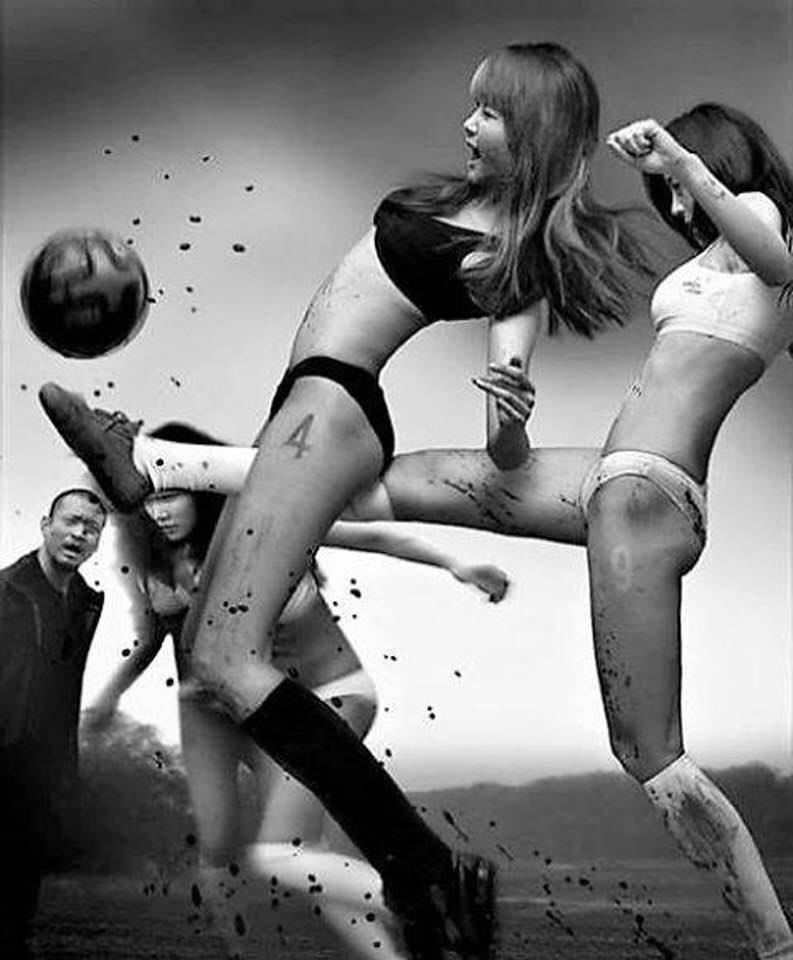
 Was an Fußball interessant sein soll, habe ich mich oft gefragt; dass das also die große Klammer ist, die das Menschenreich zusammenhält – was sagt das über die Leistungsfähigkeit des normalen menschlichen Gehirns wohl aus? Aber es hat sich auch z.B. Beckett für Tennis interessiert und auch für das noch langweiligere Kricket – also will ich da nicht richten – und ich muss auch zugeben, dass die Spiele, die ich bislang bei der jetzigen WM gesehen habe, gar nicht mal schlechte Unterhaltung waren! Also: nicht richten (damit ihr nicht gerichtet werdet)! Ich schaue nun also auch WM, und das Abschneiden von Argentinien interessiert mich noch am meisten, aber ich habe so die Möglichkeit, an der Welt teilzuhaben, mich in den Gesamtzusammenhang einzufügen, mit der Menschheit in ein Bündnis zu treten; außerdem bin ich, wie immer, gierig darauf, die „Tiefenstruktur“ hinter dem Fußball zu entdecken und neue Einsichten zu gewinnen, auch wenn mir klar ist, dass die Tiefenstruktur hier zwar vorhanden, aber eher flach ist. Schade finde ich, dass das Publikum eher selten eingeblendet wird, denn ich sehe mir gerne Leute an, vor allen Dingen gefühlsmäßig aufgewallte, euphorisierte Leute, die sich unschuldig an was erfreuen. Da ich sehr empathisch bin, beziehe ich daraus Energien und kann mich in ein Verhältnis setzen oder so, vor allem, wenn es sich um die lieben Kinder handelt! „Ein Mann, der sich in der Menge langweilt, ist ein Dummkopf! Ich verachte ihn“, meint Constantin Guys, der „Maler des modernen Lebens“, und Baudelaire zitiert ihn so. Schade, dass ich noch keine Spiele von Saudi-Arabien, Iran oder Ägypten gesehen habe, denn insbesondere sehe ich mir gerne die weiblichen Fans an. Bei der WM kann man euphorisierte Massen aus aller Herren Länder, vulgo der Welt, sehen, und das will ich gerne tun! Sieben Milliarden Menschen auf der Welt, jeden einzelnen würde ich gerne erforschen oder zumindest in Augenschein nehmen, und die WM gibt mir tangential eine Möglichkeit dazu. Ich fände es gut, wenn ich das ganze Stadion austrinken könnte, jawohl! Austrinken und mir so einverleiben! Was soll das bringen? Kierkegaard sagt, der Wald nimmt sich am besten auf Abstand aus, aus der Nähe ist er ein gelöstes Rätsel (denn so interessant und zur Kontemplation anregend sind einzelne Bäume ja nicht), das Wasser hingegen werde interessanter, je mehr man sich in es vertieft, also denke ich mir halt die Masse als ein Fluidum, eine Weltseele, dann sehe ich sie richtig. Nietzsche sagt, gelänge es einem Menschen, das Bewusstsein der gesamten Menschheit in sich zu vereinigen, er würde mit einem Fluch auf das Dasein zusammenbrechen. Eventuell, aber dann steht er wieder auf, denn der gesunde Geist wandert, und der Geist der Menschheit wandert auch. Gelänge es einem Menschen, den gesamten Geist der Menschheit in sich zu vereinigen, wie würde sich das anfühlen? Ich kann von meiner bescheidenen Warte aus sagen, dass es sich so und so anfühlt. Das ist das tiefste Geheimnis, das So und So. Irgendeine wahnsinnige sphärische Einheit, ja, die ist zwar da, aber andere Dinge auch. Ich sage immer, wenn ich den lieben Kindern auf ihren Kinderspielplätzen zusehe, das ist zugleich mein Inneres, ein Abbild dessen, wie es in mir aussieht. In mir also die – leicht chaotische, aleatorische – Menge. Ich glaube, so ist das, so kann man das beschreiben. „Ein Mann, der sich in der Menge langweilt, ist ein Dummkopf“. Was ich, und wie ich das schon öfter mal moniert habe, bemerke, ist, dass sich Menschen in der Menge im Allgemeinen aber weniger langweilen, als gar nicht wirklich beachten. Sie rennen über die Mariahilferstraße und beachten einander nicht. Sie sehen bei Extreme-Metal-Konzerten auf die Bühne, aber niemals um sich ins Publikum, in die Menge, nur ich tue das! Die Augen mit dem nach innen gerichteten Blick seien das untrügliche Kennzeichen des Genies, so Lichtenberg, das kenne ich und kann ich verstehen; wenn ich durch die Menge laufe, habe ich den Blick in den Augen nach außen gerichtet, die anderen Leuten meistens in sich hinein oder eben ganz einfach auf den Weg vor ihnen. Denn in mir ist eben die Menge. Dementsprechend. Was ist schöner als eine schöne, bemalte Frau, die sich über ihr Fußballteam freut; vor allem, wenn sie aus irgendeinem komischen Land kommt? Sie gehen und treffen sich zu Fußballspielen, die Leute, um sich zu freuen und euphorisiert zu sein! Das können sie dann gut, vor allem in Argentinien. Und dann, obwohl ich äußerlich unbeteiligt erscheine, freue ich mich mit ihnen mit! Das ist das magische Band zwischen uns. Es ist ein tiefes Geheimnis. Es ist zutiefst magisch. Als Gotama auf der Suche nach dem Buddha war, fand er ihn schließlich nicht in mühevoller Selbstkasteiung, sondern in einer Erinnerung, als er als Kind in einem frisch gemähten Feld gesessen und dort nicht nur zerschnittene Grashalme sondern auch tote Insekten bemerkte – was ihn mit tiefer Trauer erfasste. Diese plötzliche und urtümliche Welle an Empathie und Teilhabe, begriff er im Nachhinein, war jedoch tatsächlich das, was das Nirvana ist, und das Aufgehen in seiner eigenen Befreiung ermöglicht. Mahavira, ein Übermensch, der vor Gotama lebte, erreichte inmitten von Kasteiung kevala, in dem er plötzlich „alle Realitätsebenen gleichzeitig in jeder Zeit- und Raumdimension wahrnehmen konnte, als ob er ein Gott wäre“ (Karen Armstrong: Die Achsenzeit. Vom Ursprung der Weltreligionen, München, Siedler S. 318). Auf Mahavira geht jene extreme empathische Bewegung zurück, die jedes Insekt und jeden Kieselstein achtet und von der Heinrich Himmler einmal bewundernd gesprochen hat.