I have read Kant´s Träume eines Geistersehers once again since sooner or later I want to read some Swedenborg. Ahhhh … what an extraordinary stylist Kant was! Yet not as awesome as Hegel! Both, however, are, approximately, the most hilarious stylists in philosphical writing. Swedenborg had a very high IQ, maybe even higher than Kant. Kant, however, claims that Swedenborg is a miserable, drab and dull stylist, and dismisses him all the same. In the appendix of my copy of Träume eines Geistersehers there are some writings also by Swedenborg and I can see that Kant was actually about right, at least concerning the style in those two short passages. But the same thing goes for other illustrious minds of that age, luckily bygone, also quoted in the appendix, including Herder. I like what Swedenborg says about hell. Clever it is. According to Richard Bucke, in his very important but largely forgotten book “Cosmic Consciousness: A Study in the Evolution of the Human Mind”, Bucke surmises that, like Buddha, Jesus, Johannes von Kreuz, Shakespeare, Balzac or Walt Whitman Swedenborg had achieved cosmic consiousness as well. Kant, however, was a man of reason, and someone who solely builds his house on reason (“all brains, no heart”) surely is homosexual, if not pedophile in the brain. Emanuel the hero, Immanuel the fag quod erat demonstrandum
In a book by the knowledgable Pickover, A Beginner´s Guide to Immortality, I have read for the first time about hell-like near death experiences. In popular understanding near death experiences are cozy and ethereal, so it was previously unknown to me that not a few people have NDEs which rather resemble a state of hell or at least purgatory. Since mankind is composed of, say, 15 percent of people who are morally superior, 70 percent who are average and another 15 percent who are morally inferior it should not come as a surprise but as something completely logical respectively as an apparent consequence.
In Pickover´s book Swedenborg is also mentioned and it says:
“In his book “Heaven and Hell”, Swedenborg said that there was no devil, no single ruler of hell … Hell exists because it is the only place in which evil people feel comfortable. In heaven, the evil people would suffocate from the love and the goodness. According to Swedenborg, the creation of Hell was not an act of punishment but of divine mercy. When one dies, a person lives forever in the place that best matches the love the person fostered in his heart while on earth.” (p. 66)
Ahh, the good Lord. Hears everything, sees everything, understands everything.
25 and a half years ago I bought my first metal album: Iron Maiden´s Seventh Son of a Seventh Son. (I came across popular music as a slow learner because I had considered it as vulgar before; then, at 14, I began to listen to Pink Floyd, Kraftwerk and the like, soon became interested in Iron Maiden and other heavy metal bands, because their obscurity attracted me. The first contact I made with Iron Maiden was when I was little and I saw the Piece of Mind LP at the Pro Kaufland when we were shopping, obviously in the early 1980s, the cover with the monster in the rubber room made an impression on me I still remember, ahhhh…) I initially disliked it but soon got into it, and soon got me some other metal records (from Helloween, Motörhead and Iron Maiden, later in 1991 Guns ´n´Roses and Metallica became big shots, etc.). – Seventh Son of a Seventh Son, one of Iron Maiden´s finest works, is a concept album about a person with supernatural powers. The forces of Good and Evil try to manipulate this person and to turn him into an agent for their causes. As it turns out the Seventh Son of a Seventh Son possesses the faculty of clairvoyance and foresees impending doom, yet, like Cassandra, is not taken seriously by people, respectively after the disaster gets all the blame for it. Despite his powers to see through people and through things the Seventh Son of a Seventh Son is not able to foresee his own demise and it remains dubious what he actually has achieved in the human realm – „The evil that men do lives after them; The good is oft interred with their bones“, a quote from Shakespeare´s Julius Caesar which serves as a Leitmotif for the whole album. In the end it seems the story of the Seventh Son was only an episode in a seemingly eternal struggle between the forces of Good and Evil. – If we zoom out of this section of the fractal, where Good and Evil are categories of the understanding of man, we progressively refer to the cosmos, of the totality of existence, and their dubious purpose, where it is maybe right to envision forces of constructiveness (energy) and forces of dissolution (entropy) as the deep structure, as the ultimate logos; maybe those forces are conscious and god-like, or they create their own (quasi-) consciousness as they progressively unfold, and who knows if it is not the forces of entropy which guarantee the eternal repetition of the cycle (for instance the Penrosian Cycles of Time)? Or is the state of order we experience just a natural and logical state within an infinite mass of chaos which naturally inhabits finite regions of cosmos, bound to dissolute again? – Such questions are of some interest for humans, and although those interests are usually not very pronounced among people they form the screen on which the shadows of all the other ephemeral interests are projected. It is the call of the genius, who naturally sees all the ephemeral in its cosmic significance, who projects daily struggles into cosmic struggles, who expands finite contexts into the infinite – sometimes for good, sometimes for worse – to establish systems of reference, of meaning. In their final consequences, people will not truly understand them. Apart from that, everyone will understand them. Because they are just natural and soulful, intellectually and emotionally intelligent abstractions of everyday life, of the common life experience.
01 – Moonchild 02 – Infinite Dreams 03 – Can I Play With Madness 04 – The Evil That Men Do 05 – Seventh Son Of A Seventh Son 06 – The Prophecy 07 – The…
Adressing those articles again the health benefits of listening to heavy metal are apparent. Heavy metal is simply better music than what is usually displayed in other genres. It is more intense, more erudite, more sophisticated, more simple and direct, more natural. There is more melody and harmony and more abrasiveness. It involves new ways to express melody and harmony in a dialectics with cacophony. It gets you much more immersed. That is why metal fans have an unusually strong attachment to their music. It is more sincere and demands passion, professionalism and devotion, yet is also more tongue-in-cheek and funny. That is to say it is more multi-faceted and comprehensive; what you see is not what you get, what you get is more. It is also more authentic, i.e. heavy metal fans avoid the psychological downsides of conformism and the unhappiness it involves. If your cognitive type is being a mismatcher you will be naturally more attracted to counterculture; if mismatching is most pronounced you will be most attracted to (the extreme subgenres of) heavy metal. That´s the voice of the outsider, of the individual, not of an anti-conformist quasi-partisan collective as you have it with punk. The truth is to be found there – in the enlightened, enchanted individual that contains most aspects of the world and is therefore in the most perfect state of harmony with the world. Beach Boy´s Pet Sounds or Led Zep´s Physical Graffiti are pretty comphrehensive albums but so are Forbidden´s Green, Grip Inc.´s Incorporated or Inter Amra´s Sky Burial, however the latter are clearly further down the horizon, in a more elevated region in the atmosphere, a higher echelon, closer to the vanishing point of totality. Why keep on insisting on listening to Sun Ra or Pink Floyd, if it is not some weak shit at all, when it is Morbid Angel, Meshuggah or Mitochondrion which give you an impression what music that comes from another planet, originates from or tries to realign with other worlds could look like; or when it is Abyssal who transmit the sound, the signals of the abysmal depth of far outer space (from close to the region where Azathoth dwells)? They expand the frontiers of the human mind, those acts explore new horizons. I do not quite understand how anyone with a brain working at high intensity level cannot be into heavy metal. It is music for schizotypal explorers. Schizotypal usually also is the poetry in metal lyrics, the scattered patterns, the strong lines transporting messages open to interpretation, so that you can establish multiple perspectives on them, a call from the beyond, ahhh … the patterns you can see in those lyrics! Healthy schizotypy involves introversion/introspection, intensity of inner world experience, power to ruminate, creativity and independence, ability to create a new world. It is not a disorder, but the highest level of personhood, of man. And with its lyrics about satan, about gential mutilation, or also with its sincere lyrics about politics, society or the human experience is simply more in touch with reality that the phony shit you can hear on the radio. Being in touch with reality, and mastering it, according to the principle, is good, is healthy. Smell the gravity of the heavy metal.
By the end of last year, enchanted by some new extreme metal releases, I wanted to write the Metapysical Note about Extreme Metal, which I could have already done, but still haven´t since I wanted to involve more contemplation and maybe new insights. But I think I am going to finally write it in November this year. The Metaphysical Note about Extreme Metal will be about how to realign „Western“ and „Eastern“ metaphysics, about how to avoid the negative consequences of both, and it will teach about the overman.
(The idea is that by embracing extreme metal you embrace otherness. By embracing otherness by the means of productive mimesis you get in closer contact with otherness and the apparent shadow realm it involves, as well as the shadow realm you involve yourself. Your consciousness will be broadened and you yourself become deepened. „Western“ metaphysics is concerned with the possibility of solid knowledge, „Eastern“ metaphysics with directly experiencing the faculty of perception itself, the extreme metal experience allows an integration and synthesis of both approaches. As you broaden and deepen yourself by embracing otherness, you will progressively lose the egoic aspects of self, both become a fluid entity as well as a distinct individual entity which does not get lost in the perception of Tao but will, with the knowledge of Tao, operate as a scientist. Finally, in that fractal-like process, everything that is untrue will be sorted out and only the true nature of things will remain. That entity which encapsulates things in that way is, then, the overman.)
The Metaphysical Note about Extreme Metal, together with the Postscripts to the Metaphysical Note about Extreme Metal, will be a very important document in the history of human thought, and of human practice. That will make me unpopular on Facebook again.
Heavy metal music helps fans deal with the idea of their own death, new research suggests. According to a study in the Journal of Psychology of Popular Media, the sense of identity that the death-themed music creates gives listeners meaning to…
A while ago I heard Jon Leifs´ „Geysir“ at the Konzert am Vormittag on the radio. I was initially struck by it and I liked it. Most art, and notably most music, from most composers, is insipid and not completely true. Leifs´ music however is true, it is real, and it is in no way insipid. He originated his own peculiar musical language, his own peculiar style, and it approaches you as something that is completely natural, an expression of nature itself. Few artists are able to develop their own peculiar language. However, whenever someone does, it does not actually strike you as a „composition“, but as something that is completely natural, making forget the huge intellectual and personal effort that lead to such a result. It is as if nature´s boys and girls finally managed to find their way home.
Thereafter, I went to my favorite classic record dealer, Gramola am Graben, to buy some material by Jon. There was only one CD in stock (with the Saga Symphony), the other one, containing „Geysir“, I had to order. The Gramola guy told me that it´d rarely ever happen that someone asks for a record with the compositions of Leifs. The same thing he told me years ago when I wanted to buy records with stuff by Scelsi. Also Scelsi is a transcendent genius who is completely natural, and real. And also Galina Ustvolskaya is of this kind.
At that day I also bought a Yukata at a hipsteresque fashion store in Vienna because two days before I saw a woman with a Yukata who struck me, and told me about from where she bought it. At the fashion store I was told that unfortunately they do not have much else somehow more „eccentric“ and idiosyncratic for men, because men don´t use to buy such things (although the situation is said to be a bit better at their outlet in Berlin). Same old story. I am used to it. I do not buy clothes like the Yukata to look cool, and most of the time I run around wearing casual clothes. I buy them because they are beautiful and it is simply natural to wear them. It is natural beauty, and they give an idea of how more beauty can be brought into this world. People then tell me on the streets how cool I look with those garments. But strangely, they never seem to come to the idea that they could wear such stuff themselves.
We are living in a free, independent, individualistic age. Hail the new age.
I was reading that despite the initial, apparent natural beauty and the striking profoundness of artistry of his music, Jon Leifs had a difficult life and was not understood, respectively rejected by most people. He was born in 1899 and died in 1968 due to cancer. His last composition Hughreysting („Consolationn“) was meant to be his last salute to humanity; in the eyes of Leifs the purpose of art was to console man. In Hughreysting you again seem to have nature exposing itself, directly, without intermediary. You have the flow of being, of existence, of Werden und Vergehen, the hopefulness, the tragic, the elegy transcended into tenderness, at the end a fleeting, but tender and upright memory created by the bright violas as the music dies out. I was having a conversation with the record dealer at Gramola, myself wondering why there is so little interest in music by true and apparent geniuses like Scelsi or Leifs. In Vienna alone there must be thousands or at least hundreds of people receptive for such things. There has been a Scelsi fan page on Facebook with not even 4000 Likes which eventually got deleted, and there is a Wikipedia page on Facebook for Jon Leifs with 263 Likes as well as a Wikipedia page on Facebook for Galina Ustvolskaya with 600 Likes and a fan page with 277 Likes. There is also a group on Facebook named Pretentious Classical Music Elitists with close to 8000 members. When I post music by Scelsi, Ligeti or Grinblat I, on average, get 2 Likes. When I post my writings about Scelsi and Ustvolskaya, I never get any Likes from the Pretentious Elitists. – However, the Gramola guy told me it is part of a more general phenomenon: 15 years ago there was more interest not only in Scelsi and Leifs but in modern classical music in general. So I asked him what people are interested in now. Kommerz, he said (indicating that the interest in the more deviant forms of art has never been genuine and rooted in itself at any time).
HAHAHAHAHA! – We´re living in a ghost world! Which is frighteningly empty! People have no solid, natural access to what is natural and to the eternal categories that reflect true quality! The genius is real, because the genius is a direct expression of nature, communicating with other geniuses across space and across time, across the Continuum. As a conscious agent of nature and nature´s productivity, the genius initiates and creates culture. Culture is then brought down by the priests, the technocrats and the scientists to the level of civilisation. Civilisation is then brought down by the politicians to the level of the government and of the state, and by the businesspeople to the level of commerce. Commerce, per se, is innocent. It reflects the half-conscious realm of the human ego. The human ego strives to realign with nature, in multiple ways, some better and of higher quality, some worse and of lower quality. The striving of man should be to try to to ensure the reproduction of society at a higher level in a world headed for entropy.
“Man erhält nicht von der Wirklichkeit eine Intuition, wenn man nicht ihr Zutrauen durch eine lange Kameradschaft mit ihren Offenbarungen gewonnen hat. Und es handelt sich nicht bloß darum, sich die bedeutsamsten Tatsachen zu eigen machen; man muss eine ungeheure Masse anhäufen und zusammenschmelzen … So nur wird die rohe Stofflichkeit der Tatsachen aufgehoben.”
Henri Bergson, Schöpferische Entwicklung
„Vor allem ist ein großes Feingefühl nötig. Sich alles auf der Welt als Rätsel vorstellen, nicht nur die großen Fragen, die man sich immer wieder gestellt hat – warum die Welt erschaffen wurde, warum wir geboren werden, leben und sterben -, denn vielleicht liegt in all dem, wie ich schon gesagt habe, kein Sinn. Aber das Rätsel mancher Dinge verstehen, die im Allgemeinen als belanglos betrachtet werden. Das Geheimnis mancher Phänomene im Bereich der Gefühle, der Merkmale eines Volkes spüren, so weit kommen, dass man sich sogar die schöpferischen Genies als Dinge vorstellt, als äußerst merkwürdige Dinge, die wir nach allen Seiten drehen und wenden. Auf der Welt leben wie in einem unermesslichen Museum voller Seltsamkeiten, voller wunderlicher, bunt gescheckter Spielsachen, die immer wieder anders aussehen, die wir manchmal kaputt machen, um zu sehen, was drinnen ist, und enttäuscht merken, dass sie leer sind. – Die unsichtbaren Bande, die ein Volk mit seinen Schöpfungen vereinen. – Zum Beispiel, warum die Häuser in Frankreich auf ihre bestimmte Weise gebaut sind und nicht anders; man kann noch so viel Geschichte zitieren; die Gründe nennen, die zu dem oder zu jenem beigetragen haben, man beschreibt, doch erklärt man nichts, aus dem ewigen Grund, dass es nichts zu erklären gibt und das Rätsel doch immer bleibt.“
“I trust not promotions
And I fear not omens
I flee not from slander or poison
There is no death
We´re all immortal – All is immortal
Fear not death at seventeen,
Not at seventy …
There is only reality and light.
There is neither dark, nor death in this, our world.
We´ve reached the beach,
And I am one of those, who pulls the nets in,
When immortality arrives in batches.
Live in a house, and it won´t crumble;
I´ll summon a century at will,
Enter and built my house in it.
That´s why your children and your wives
All share my board
The table serving forefather and grandson:
The future is decided now.
And if I rise my hand,
The five rays will remain to you.
My bones, like beams
Held up each day,
I measured time with a surveyor´s staff,
And passed through it as through the mountains.
I chose a century to my height.
We pressed on South, raising dust in the steppes,
Weeds smoldered, a grasshopper played,
Touching horseshoes and prophesying…
Threatening me with death quite like a monk.
I strapped my fate fast to my saddle,
I rise up in the stirrups
Of the future as a boy.
I am content with my immortality,
With my blood coursing from century to century.
I´d gladly give my life
For a safe corner of warmth.
If life´s swift needle
Did not draw me out, as though I were a thread.”
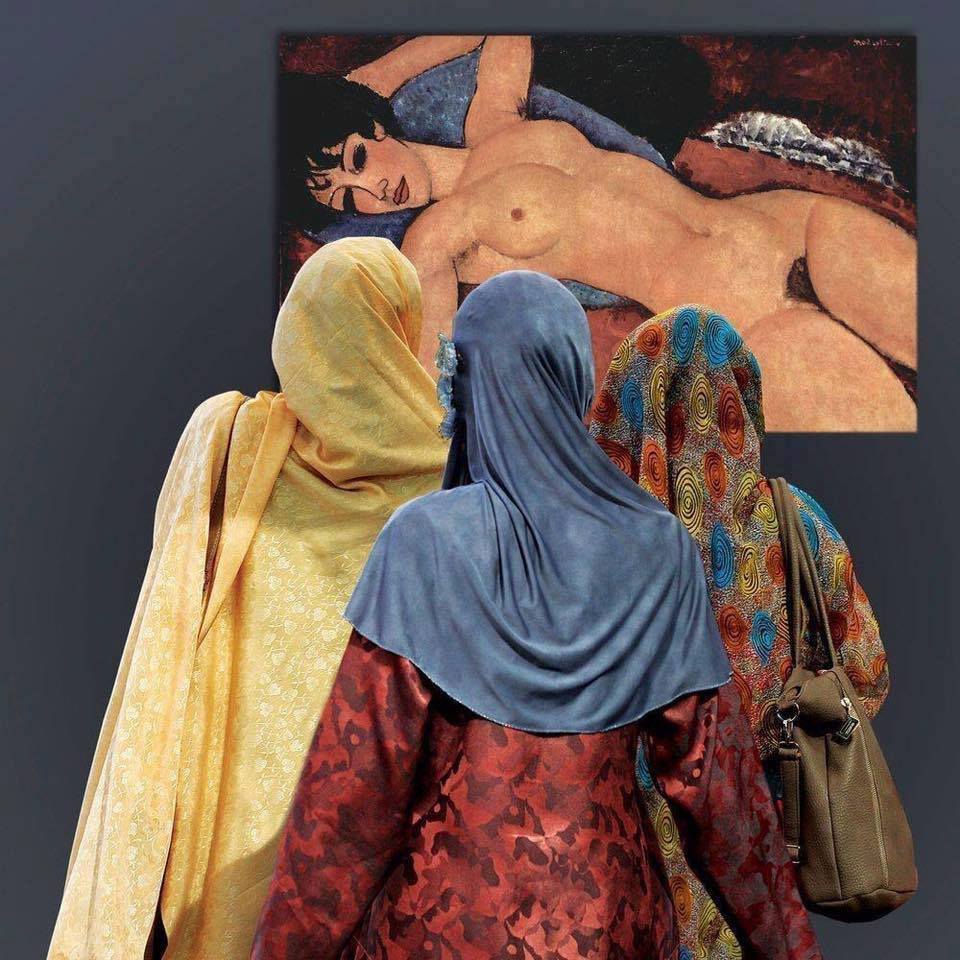
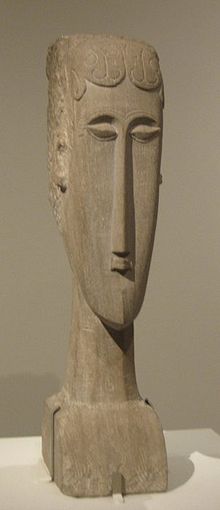
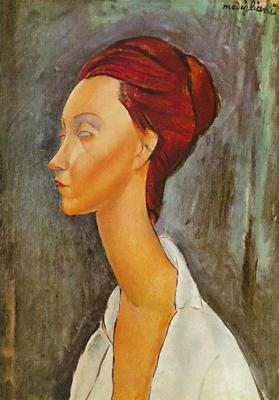
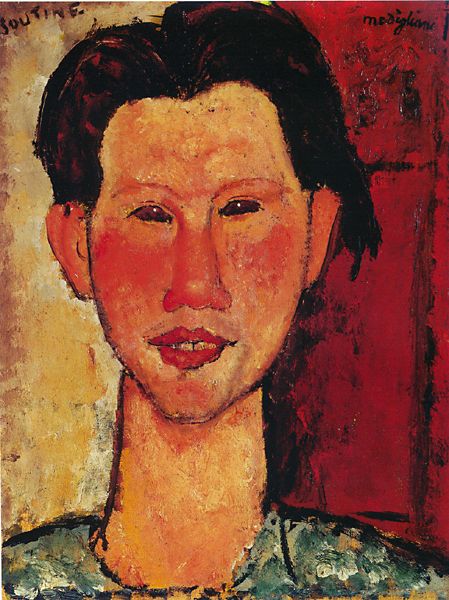
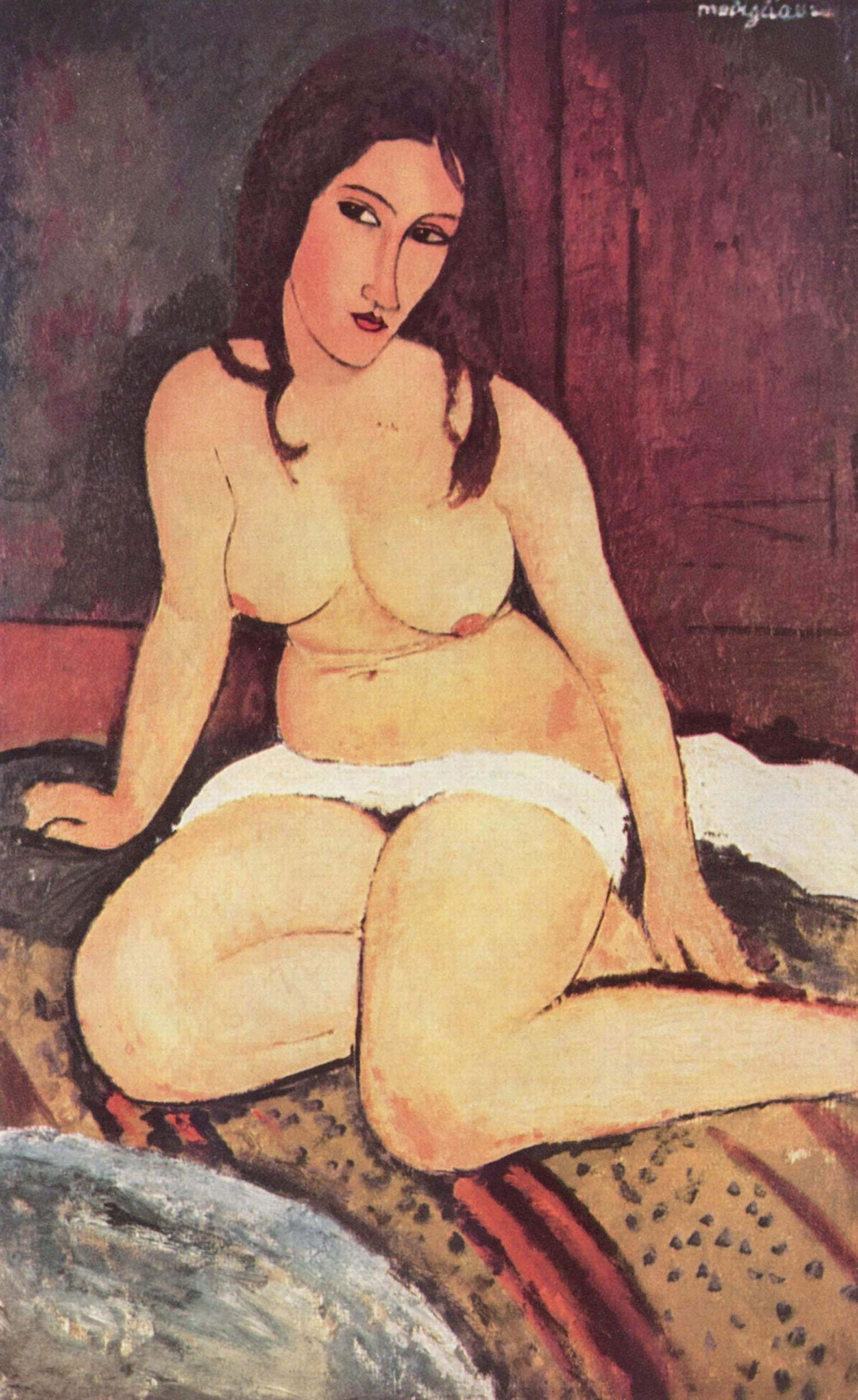
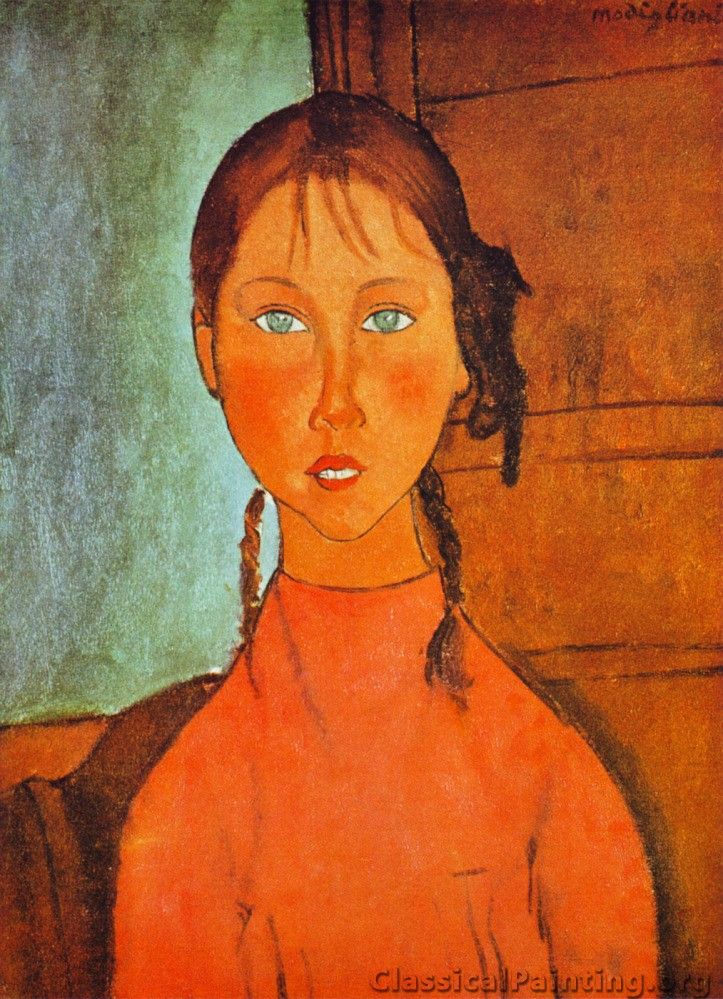
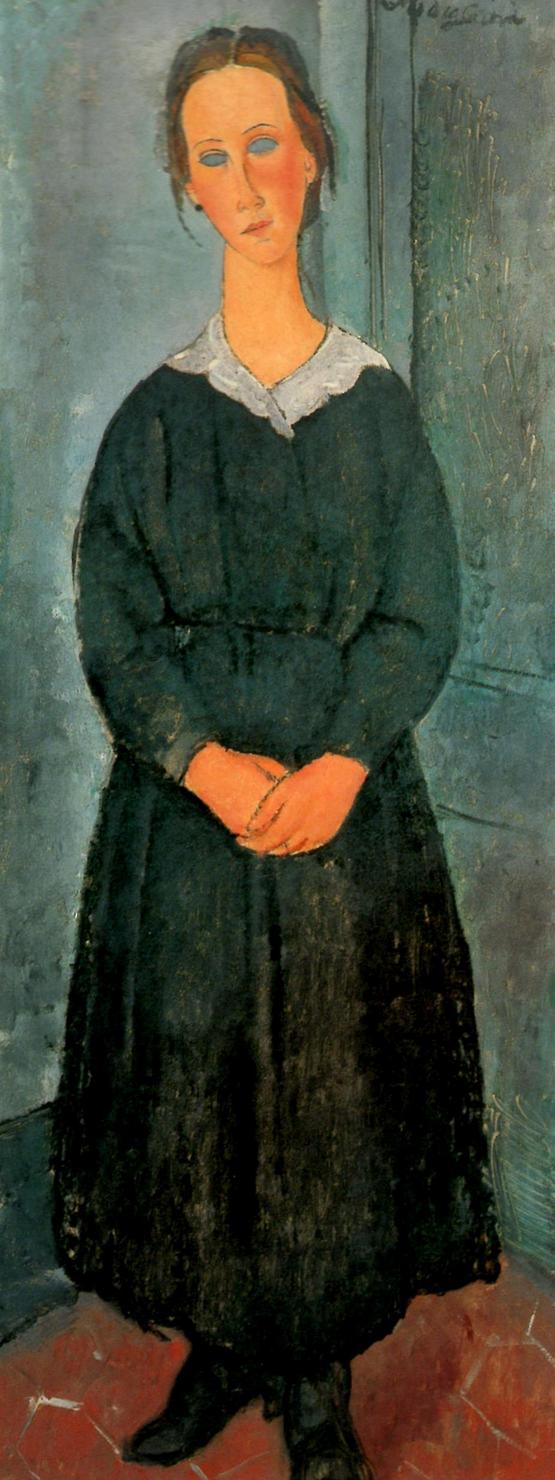
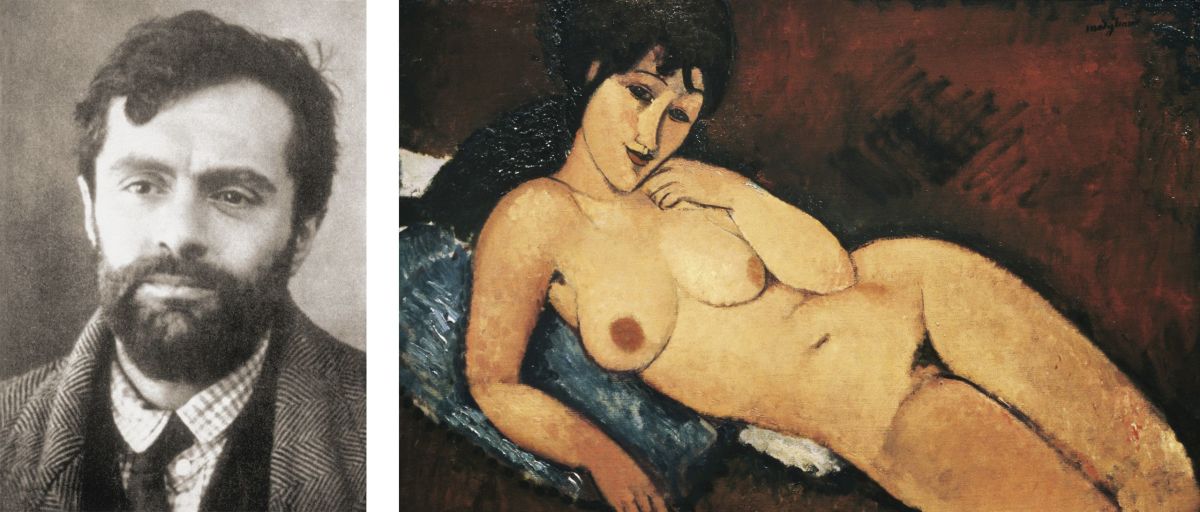
In the last post I made reference to Lautréamont. Little is known about this very outstanding writer and intellect, he lived and died early, in obscurity, and rose to fame post mortem. To a lesser extend this also accounts for Amadeo Modigliani, who happens to be one of my favorite painters. What is known about him is at least that he was very well read and that he always carried a copy of Lautréamonts Maldoror with him. – Modi was well known among the Paris art scene, but remained an idiosyncratic outsider even there and it seems somehow uncanny how Modi could have found the strengh to avoid the influence of Picasso (and others); of Picasso and his multidimensional, intellectual paintings, whereas he himself made portraits seemingly flat and two-dimensional (which was a reason he was dismissed by critics like Carl Einstein). But if you look at his paintings they show a good deal of love and of empathy for his models, a truly productive mimesis, a gentle soul; in his portraits there is this massive interplay between their seemingly reduced appearence and the individuality and character of his models being so pronounced — which is why – in some contrast to Picasso – Modigliani makes my heart sing. – He lived in poverty and died due to tuberculosis at age 35. (Last year his Nu Couché was sold for $ 170 million and is therefore at the moment the second most expensive painting in the world (#1 is Picasso´s Les Femmes d´Alger)). Although the couple had a baby his finacee Jeanne commited suicide the following day. This is understandable, since, as far as I can see, once you have met someone like Modigliani in your life you are not likely to ever meet such a person again.
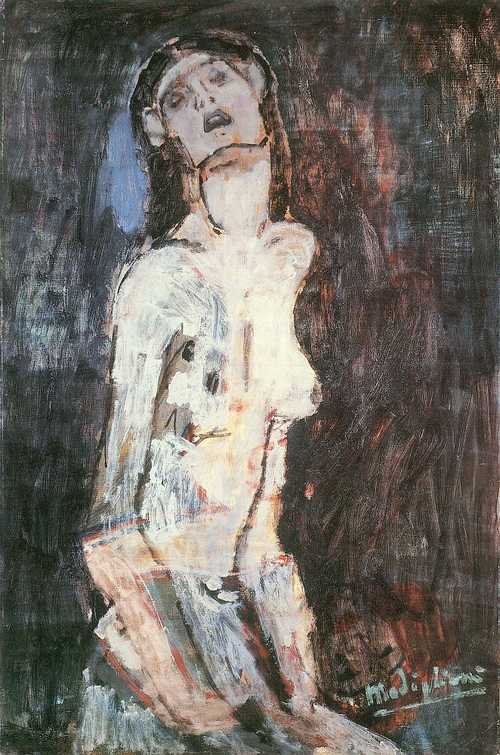
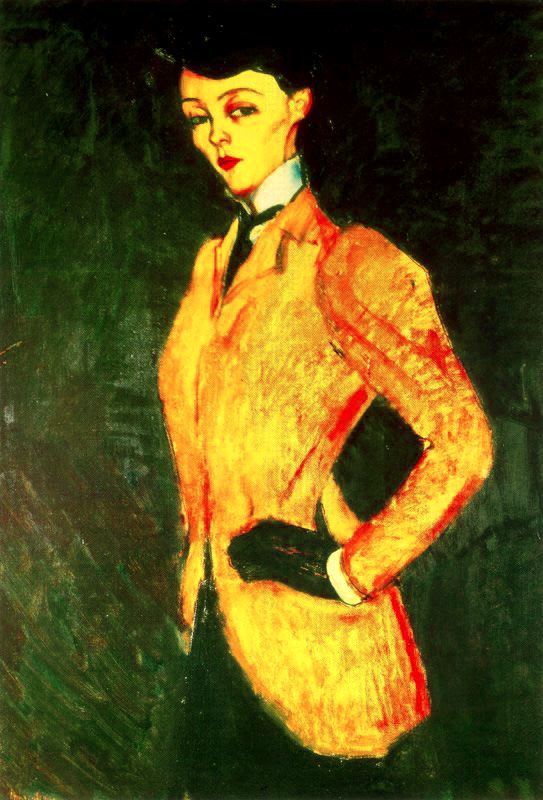
UPDATE 03/20/2017 I have mentioned the last time that it is cool, if not somewhat uncanny how Modi avoided the pronounced influence of Picasso respectively of the avant-gardist tendencies of his time. A considerably robust and strong artistic personality, self-contained and authentically creative out of itself, is necessary to operate at such a level of stability and unaffectedness. Modi however did not explicitely desire to be avant-garde, and he was content with being an outsider, occupying the position of true individualism – and indeed, he was aware that he was a kind of „superuomo“, an overman as the climax of the authentically creative individual drawing out of itself to the highest degree; – Modi´s quest was for beauty, for harmony, for vitality and for the eternal. Whereas the primary motive of avant-gardism is to explode into the future, the serene qualities of beauty, harmony, etc. refer to the archetypical. The art genius, both revolutionary as conservative as he is, will strive to express beauty and harmony by relying on archetypical forms and transforming them into something new, to create new archetypes; plus he will be highly creative in discovering the archetypical in places neglected by others: Modi was a versatile and dead-aimed artist from the beginning, painting, for instance, the eerie as well as roughcast Nudo Dolente (1908) or displaying his sense for elegant forms and colours as well as his talent (or genius) for offering striking and revealing impressions of physiognomy and character with Woman in Yellow Jacket (Amazon) (1909) (which infuriated the amazone – Baroness de Hasse de Villers – so much that she refused to pay for it) – yet it was during his period as a sculptor (1909-1913) in which Modi progressed into synthesis. In his quest for „forms of beauty and harmony“ Modi draw back not only on sculptural forms of the Greco-Roman antiquity but also of ancient non-European worlds. Despite that his sculptures are rather a paraphrase and an allusion to primitivism, not an imitation nor a mere avant-gardist takeover, revealing, again, his staunch autonomy as well as accuracy in finding modes of expression of both abstract and eternal as well as concrete and individual qualities.
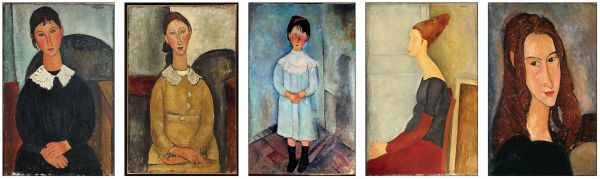
Through reduction, linearity and abstraction Modi found his own, peculiar and homogenous style, and maybe the true amazing quality of Modigliani´s art is how the abstract and the supratemporal and the concrete, the individual and the modern not only mirror each other but seem to be born out of each other. In taking away so much elements that his portraits may rather seem caricatures he brings the physiognomy to a vibrant life and to extremely distinct expression; despite the homogeneity in style the individuality is always most pronounced. His nudes are both individually (and in several respects) in the flesh as well as they are statuarily abstracted and otherwordly – where this amalgam between living objects and objects of art, the animate and the (timeless) inanimate and transcendent comes in the most unexpected, idiosyncratic way. Likewise his characters sometimes have eyes whereas on other occasions their eyes are eradicated into an apparent de-individualised glimmer (– Modigliani explained that to him this would symbolise an „affirmation of life“, on other occasions that he would not paint eyes as long as he was not sure about having captured to „soul“ of a person —— that Modigliani did not talk much about his art, offered several, sometimes seemingly contradictory and elliptic explanations is typical for the genius, since the genius makes conclusions all the time yet at the same time lives in a multilayered world of inconclusive conclusions in which everything is both in stasis and in motion). In his final portraits his characters are transcended into a kind of supra-individuality where the abstract and the concrete meet, the timeless and the ephemeral, the common and the idiosyncracy… where those portrayed have become dwellers in a realm that is impossible to tell what it actually is (Heaven? Hell? Purgatory? Or, most likely glimpses from an eye on reality which is able to look into other, additional dimenions)… where those individuals portrayed have become… art (where Modi´s artistic eye somehow seemed to have sensed a compressing interplay of dimensions forming diamonds).
Although Modigliani wasn´t a commercial success during his brief lifetime his art was well acknowledged by the people close to him, although no one could tell where the specific quality and beauty lay and how it could be conceptually grasped. This kind of evasiveness (due to its multidimensionality respectively its interdimensionality) is still there and makes the quality of genius art. That is so because it is, finally, inexblicable as beauty itself and carries its own transcendence.
I do not know or understand why and how Carl Einstein could have got it so wrong with Modigliani; yet despite their high intelligence neither The Art of the 20th Century nor Bebuquin, I find, carry much of a soul. It is cool how Einstein is a severe judge of the art and the artists of his time – such a thing is quite absent today – but I often find The Art of the 20th Century unnecessarily confrontational.
Lautréamont was one of the most ultraintelligent writers, seemingly above the level of Shakespeare or Goethe, the intellectual intensity of his writings was one of the highest. Of the highest degree also was the versatility and flexibility of his language. In his writings you directly gaze into the Chaosmos. Others in this category (above Goethe, Shakespeare, Tolstoi, etc.) probably were Georg Büchner and Arthur Rimbaud. Their habitat is the exosphere. The air is very thin there, open space begins; a fluent passage to open space … (unfortunately all of them died very early, so one cannot exactly tell what would have become of them over the course of their life). I recommend reading Lautréamont, Büchner and Rimbaud.
“Ancient ocean, crystal-waved, you resemble somewhat those bluish marks
that one sees upon the battered backs of cabin-boys; you are a vast
bruise inflicted upon the body of earth: I love this comparison. At the
first sight of you a long breath of sadness that might be the murmur of
your own bland zephyr passes over the deeply moved soul, leaving
ineffaceable scars, and you recall to the memories of those who love
you, though they are not always aware of it, the crude origins of man
when first he made the acquaintance of the sorrow that has never
deserted him. I salute you, ancient ocean!”
“Tell me, ocean, will you be my brother? Roll wildly… more wildly yet… if you would have
The Opening of the Umbrella is an important kinetic concept within my intellectual/physical systems of reference. It symbolises the total realization of the world, and is accompanied by a sharply rising, swelling sound and a totality of light, somehow like the Big Bang. Perception, cognition and the creative process in my case is accompanied with such intellectual and bodily sensations (which are not always pleasant, since feeling like exploding at every moment, not only in the head but the entire body, most notably at the chest, can easily get painful and tormenting). Basically, I am an entity that feels like it is driven by its own inner urge to transform itself and to let the urge inside out, to process itself alongside its own permanent transformation into a negatively curved open universe. That is, then, hyper-spirituality, or so, and shit. It is NOT the case that my psychology is closely resemblant to that of man. In the Book of Strange and Unproductive Thinking I somehow explained the thing with the Opening of the Umbrella in more detail (“Am Strand”; respectively, if I remember correctly, I shortly mentioned it to spin other thoughts related to that). I want to get introduced closer to Eliminative Materialism to figure out the more exact nature of such all-inclusive connections within the thinking process.
Shampoo were the best girl band of all time. I have never seen more non-uniform teenagers. They were 5 sigma/IQ 180 individuals. Only one in a million people are this intelligent/independent/individualistic/multifaceted/complex. Examples include Nietzsche, Wittgenstein, van Gogh, Kafka or Emily Dickinson. They are seldom understood or appreciated. Usually they are born posthumously. Jacqui and Carrie had a brief career in the 1990s which unfortunately faded soon again because the populace usually does not really know what to do with such individuals, apart from that they got screwed by the record industry and partially used as a blueprint for the design of Spice Girls. They are largely forgotten but in my heart they do live on. They stem out from the heart of it all, from the center of it all. They are seen as hybrids but are of course the most natural of all things.
Philip Hautmann“Shampoo combined a poppy girlishness and a love of all things plastic, kitsch, and pink with a punk sensibility. They often cited their main influences as being the Sex Pistols, Gary Numan and the Beastie Boys, whilst also claiming to be huge fans of East 17 and Take That. They approached interviews with a studied insolence and tended to finish each other’s sentences, claiming that they always thought exactly the same thing.
Playing on an image that was part Johnny Rotten, part stubborn lolita infantilism, part lipstick lesbian and part razor-sharp wit, Askew and Blake tended to confuse both journalists and record-buyers as to who exactly their target audience was.
Whilst this may have prevented lasting mainstream success, it was also arguably their greatest strength in an industry increasingly dominated by easily-digested, two-dimensional artists.” https://www.facebook.com/Shampoo-24872944171/
Steve JamesThat’s interesting; where did you find the information about their IQs ?
Philip HautmannLol, introspection … to mention 5 sigma intelligence deviants was an additional information, also to give a better illustration of the whole structure of the argument; standard deviations are commonly referred to IQ but could also be applied to other domains like creativity, physical strengh; or we can say that Usain Bolt or Muhammad Ali are 6 sigma deviants in sports … Jacqui and Carrie were, obviously, 5 sigma deviants concerning their individuality, connecting the most heterogenous elements into a perfectly integrated whole, which is completely natural and has the highest degree of reality. Unfortuantely, although such individuals embody the whole, they are quite disconnected from the whole of society, and the story of Shampoo is a sad one, they would have deserved much better, also because, apart from their “coolness”, they displayed an astonishingly high level of competence, and their albums, which they wrote together with a producer, were very good. To attribute 180 IQ to them was primarily to honour them (and also to annoy some smartfolks who think they can monopolise anything that is vaild in this world for themselves), maybe is also a correct estimate, who knows? … Very intelligent children who are primarily divergent thinkers and mismatchers are not likely to be child prodigies (or to score high at IQ tests which are about convergent thinking abilities), rather lost childs, like Alice in Wonderland, they may find it hard to productively relate to anything at that age, so may appear to be lost in their fantasies which actually are intellectual operations to find out how the world works, and, well, Jacqui and Carrie, who were outsiders everywhere, managed to create an island for themselves, as I find, a very beautiful one.
Viva….
We’re Such A Hot Sensation
Wow!
What A Creation!
Who’s The Latest Teenage Dreams
On The Front Of Every Magazine?
We Got Our Shades Pulled Down On The Escalator!
Is Everybody Staring?
Uh-Oh, See Ya Later
Later!
Camera’s Watching When We Go Shopping!
Better Step Aside
Cause We Just Ain’t Stopping!
Chorus
Viva..
Viva..
Viva..
La Megababes
Megababes! X2
Viva!
We’re Such A Cool Sensation
Wow!
What A Creation!
We Are The Last Teenagers
The New Front Pages!
We’re Going Downtown On The Escalator!
We’re Blond Haired Teenage Terminators!
Yeah!
Camera’s Watching When We Go Shopping!
Better Step Aside
Cause We Just Ain’t Stopping!
Chorus x1
Hey…..
Hippy Chicks Are Sad And Supermodels Suck!
Riot Girls, Diet Girls, Who Really Gives A Fuck!?!