50 Jahre Dummheit in der Kunst

Jedes Ding hat zwei Aspekte: den gewöhnlichen Aspekt, den wir fast immer sehen und den jedermann sieht, und den geisterhaften und metaphysischen, den nur seltene Individuen sehen mögen in Momenten der Hellsichtigkeit und metaphysischer Abstraktion. Ein Kunstwerk muss etwas erzählen, was nicht in seiner äußeren Gestalt erscheint … Wir konstruieren durch Malerei eine neue metaphysische Psychologie der Dinge. Das absolute Bewusstsein des Raumes, den ein Gegenstand in einem Bild einnehmen muss, und des Raumes, der die Gegenstände untereinander trennt, stabilisiert eine neue Astronomie der durch das starre Gesetz der Schwerkraft an unseren Planeten gefesselten Dinge …  Vor allem ist ein großes Feingefühl nötig. Sich alles auf der Welt als Rätsel vorstellen, nicht nur die großen Fragen, die man sich immer wieder gestellt hat – warum die Welt erschaffen wurde, warum wir geboren werden, leben und sterben -, denn vielleicht liegt in all dem, wie ich schon gesagt habe, kein Sinn. Aber das Rätsel mancher Dinge verstehen, die im Allgemeinen als belanglos betrachtet werden … In erster Linie ist es nötig, die Kunst von allem freizumachen, was sie bis jetzt an Bekanntem enthält, jedes Sujet, jede Idee, jeder Gedanke, jedes Symbol muss beiseitegeschoben werden … Den Mut haben, auf alles andere zu verzichten. So wird der Künstler der Zukunft sein; einer, der jeden Tag auf etwas verzichtet; dessen Persönlichkeit jeden Tag reiner und unschuldiger wird … So muss die Malerei der Zukunft sein. Dass mehrere Menschen auf dieser Welt so malen können, ist unmöglich. 

Giorgio de Chirico

Giorgio de Chirico hat (im Alter von 23 Jahren) gemeint, große Anstrengungen seien nötig zu unternehmen, um Künstler zu werden, um zum Metaphysischen vorzudringen, denn: Kunst ist die eigentliche metaphysische Tätigkeit, so Nietzsche (mit Bezug auf Schopenhauer und von dem blutjungen de Chirico zum Vorbild genommen). Metaphysik interessiert sich dafür, zu einem tieferen, „eigentlicheren“ Wesen der Dinge vorzudringen, ein tieferes, „eigentlicheres“ Wesen der Dinge freizulegen. Das will auch (zumindest) die neuzeitliche Kunst; mit zunehmender Intensivierung und Verbesserung des metaphysischen und wissenschaftlichen Wissens, des Selbstbewusstseins des neuzeitlichen Menschen und der Methoden, in die Materie einzudringen, wie diese Methoden dann selbst wieder zu hinterfragen (Epistemologie) wollte das mit dem höchsten Intensitätsgrad die moderne Kunst. Sie hat große Anstregungen unternommen, ja, war ein Rahmen um Anstrengungen metaphysischer Art, zu einem tieferen Kern und Wesen der Dinge vorzudringen und so einen höheren epistemologischen und moralischen Standpunkt für den Menschen zu schaffen, zu unternehmen. Alles andere, geringere Anstrengungen zu unternehmen als eben solche, schien banal und lächerlich. Heute ist das nicht mehr so. Seit in etwa den 1970er Jahren steht die bildende Kunst mehr oder weniger unter dem Spirit der Transavantgarde.

„Die Welt ist tief, und tiefer als der Tag gedacht“. Das ist nicht Mystizismus von mir, sondern das ist unser heiligstes Lebensgefühl. Es ist einfach töricht, von solchen Menschen (wie Kandinsky) zu sagen, dass ihre Kunst „nur um einiger weniger krankhafter Mäzene willen, die so einen Kitzel bezahlen“, geschaffen wurde (…) Man begreift, dass es sich in der Kunst um die tiefsten Dinge handelt, dass die Erneuerung nicht formal sein darf, sondern eine Neugeburt des Denkens. Die Mystik erwache in den Seelen und mit ihr uralte Elemente der Kunst (…) Jene abstrakte reine Linie des Denkens, nach der ich immer gesucht habe und die ich auch immer im Geist durch die Dinge hindurch gezogen habe; es gelang mir freilich fast nie, sie mit dem Leben zu verknoten – wenigstens nie mit dem menschlichen Leben, ( – darum kann ich keine Menschen malen).

Franz Marc

Die abstrakte reine Linie des Denkens führt über das bloße Leben, über den bloßen Menschen hinaus. Es ist schwierig, die abstrakte reine Linie des Denkens zu denken und sie sich zu vergegenwärtigen, da sie eben rein und abstrakt ist und nicht im lebensweltlichen Raum verläuft. Allerdings wurde diese abstrakte reine Linie des Denkens in der modernen Kunst sichtbar gemacht, aufgezeigt, über die Frakturen und Nuancen, die sie schafft, über die Tableaus und Plateaus, die sie errichtet, über das, mit was sie den Betrachter konfrontiert etc. Der Spirit der modernen Kunst und der Avantgarde war eben das Verfolgen der abstrakten reinen Linie des Denkens. Sinn und Intention dieses Denkens war natürlich immer, sich mit dem Leben zu verknoten. Dass das trotz aller Anstrengung nicht gelungen ist, zumindest nicht im gedachten Sinn, trug dazu bei, das Fundament der avantgardistischen Intention auszuhöhlen. Der Sinn von Kunst und der Sinn von der abstrakten reinen Linie des Denkens ist aber gar nicht, sich „mit dem Leben zu verknoten“; der Sinn von Denken und Kunst ist Vorstoßen zur Transzendenz. Die Anforderungen der Transzendenz stellen sich immer wieder neu. Transzendenz ist dabei aber etwas, was im Leben und im Menschen vorhanden ist – denn der Mensch ist ein transzendentes Wesen, wie man sagt. Transzendenz ist etwas ganz Lebensweltliches. Transzendenz und Immanenz des Menschen und des Lebens treffen sich und verknoten sich in einer Dimension, die nicht unmittelbar sichtbar ist. Die Vollendung in der Kunst ist es, dieses Zusammentreffen eben sicht- und verstehbar zu machen. Die Kunstwerke (unter anderem) sind sichtbare Zeugnisse und Emanationen aus dieser Dimension. Heute ist die Kunst als Fenster in diese Dimension weitgehend geschlossen.

Ohne die Dichter und Künstler würden die höchsten Ideen, welche die Menschen vom Universum haben, rasch verfallen, die Ordnung, die in der Natur erscheint und die nur das Ergebnis der Kunst ist, würde verschwinden. Alles würde ins Chaos versinken … Die Dichter und Künstler determinieren im Wettstreit die Gestalt ihrer Epoche, und gelehrig richtet sich die Zukunft nach ihren Weisungen.

Guillaume Apollinaire

Auf ihrer höchsten Stufe versucht die Kunst, die Situation des Menschen im Universum und den „bewussten Zusammenhang des Menschen mit dem Weltganzen“ auszudrücken (ähnlich zur Metaphysik, die ihn auszusagen versucht). Die „Situation des Menschen im Universum“ wurde im Verlauf des zwanzigsten Jahrhunderts durch die Technik radikal verändert. Mit dem tatsächlichen Vordringen des Menschen in das Universum, mit seiner Landung auf dem Mond, stürzt das erhabene Raumschiff der großen Kunst scheinbar beinahe zeitgleich auf die Erde und liegt dort zertrümmert, oder aber ist zumindest nunmehr ein bescheideneres und weniger futuristisches Habitat. Mit Heidegger gesprochen, ist die Funktion von Kunst (nach dem Verlust der dementsprechenden Verbindlichkeit, die Religion für sich beanspruchen kann) die Schaffung eines „Zeit-Raums“, also eines integralen Selbstverstädnisses von einem Raum in der Zeit. Dies wird nunmehr von der Technik erledigt, ungleich mächtiger und ungleich die Lebensqualität verbessernder. Aus der Kunst ist die Luft gleichsam folgerichtig so draußen, wie sie aus der Religion draußen ist, entgegen ihrer avantgardistischen Intention gibt sie eventuell noch einen matten Kommentar zum Zeitgeschehen ab und fokussiert sich nunmehr vorwiegend auf ihr eigenes Publikum und ihre eigenen Regelkreise. Allerdings: die höchsten Ideen, welche die Menschen vom Universum haben, verflüchtigen sich damit tatsächlich. Nur weil die Technik die besten Ideen hat, heißt das nicht, dass sie auch die höchsten Ideen einschließt (wenngleich das natürlich nicht unmöglich ist). Die höchsten Ideen, die der Mensch haben kann, sind mit der seelischen Transzendenz des Menschen verbunden, verweisen auf den Übermenschen. Und Kunst sei das Medium, wo der Mensch über sich hinaus weise, Übermensch werde: das sei der Kunst Privileg (wenngleich die Gen- und Computertechnik in zwei, drei Generationen womöglich den „Übermenschen“ einfach achselzuckend tatsächlich hinstellen mag – wir sollten uns aber eben gegen diese Degradierung wehren).

Wenn man das Unsichtbare begreifen will, muss man so tief wie möglich ins Sichtbare eindringen. – Mein Ziel ist immer, das Unsichtbare sichtbar zu machen durch die Wirklichkeit. Es klingt vielleicht paradox, aber es ist tatsächlich die Wirklichkeit, die das Geheimnis unseres Daseins bildet … Meiner Meinung nach sind alle wesentlichen Dinge in der Kunst seit Ur in Chaldäa, seit Tel Halaf und Kreta immer aus dem tiefsten Empfinden für das Mysterium unseres Daseins entsprungen. – Das Ich ist das große verschleierte Mysterium des Daseins … Ich glaube an dieses Ich und seine ewige unveränderliche Form … Darum bin ich so versunken in das Problem des Individuums und versuche auf alle Weise, es zu erklären und darzustellen.

Max Beckmann

„Die meisten Leute sind andere Leute“, sagte Oscar Wilde, und meinte damit: die meisten Leute werden durch Gehalte ihrer Umwelt definiert. Wenngleich die meisten Leute sehr eitel sind, haben die wenigsten davon ein eigentliches „Selbst“ und ein Bewusstsein für das eigene Selbst und ihre Individualität, sprach also Zarathustra/Nietzsche. Der Konflikt zwischen Individuum und Gesellschaft, dem Individuum, das aus der traditionell-feudalistischen oder modern-vermassten Gesellschaft heraustreten will – mit all den schönen utopistischen Hoffnungen, welche Potenziale damit freigesetzt werden mögen –, der Kampf darum, sein Leben zu einem Kunstwerk zu machen und „Kunst und Leben zu verbinden“ war, sagen wir, zwischen 1850 und 1950 (oder 1875 und 1975) in der Kunst prominent. Heute ist jeder Künstler. Deswegen ist er aber noch kein Individuum und kein Selbst. Paradoxerweise haben es die Künstler und hat es die Kunst auch aufgegeben, ein starkes Selbst zu entwickeln und zu transportieren. Eine postmodern-selbstironische Subjektivität, die sich zurücknimmt, hat zwar was Sympathisches und kann ein gutes Korrektiv sein, aber eben auch, und vor allem, etwas Defätistisches und kann ein gutes Faulbett sein. Wer ist versunken in das Problem des Individuums als dem großen verschleierten Mysterium des Daseins und versucht auf alle Weise, es zu lüften? Kunst soll doch sein, wo der Mensch auf den Übermenschen trifft!

Hervorragende Kunstwerke zu machen ist für gewöhnlich eine beschwerliche Arbeit. Doch im Modernismus wurde nicht nur das Herstellen, sondern vor allem das Betrachten von Kunst noch anstrengender, musste man sich die Befriedigung und die Freude, die die beste neue Kunst vermitteln kann, mühsam erringen. In den letzten mehr als einhundertfünfunddreißig Jahren waren die beste neue Malerei und die beste neue Skulptur (und die beste neue Dichtung) zu ihrer Zeit für den Kunstliebhaber eine Herausforderung und eine Prüfung, wie sie es früher nicht gewesen waren. Doch gibt es den Drang sich auszuruhen, wie es ihn immer gegeben hat. Er ist eine permanente Bedrohung der Qualitätsmaßstäbe. Dass dieser Drang auszuruhen sich in immer anderer Weise ausdrückt, bezeugt nur seine Dauerhaftigkeit. Das Gerede von der „Postmoderne“ ist eine weitere Ausducksform dieses Dranges. Und es ist vor allem eine Art, sich dafür zu rechtfertigen, dass man weniger anspruchsvolle Kunst bevorzugt, ohne deswegen reaktionär oder zurückgeblieben genannt zu werden (was die schlimmste Befürchtung der neumodischen Philister der Avantgarde ist).

Clement Greenberg, Modern und Postmodern, 1980

Dass der Mensch auf den Übermenschen trifft, erfordert große metaphysische Anstrengungen. Leute wie de Chirico wollten sich dieser Anstrengung bewusst unterziehen, wer aber will das sonst? Was man in den o.g. Zitaten hat, sind tief denkende und empfindende Menschen (Beckmann, Apollinaire, Marc), und viele andere, darunter eventuell noch tiefere, wurden gar nicht genannt. Dieses tiefe Denken und Empfinden ist allerdings unter den Künstler(innen) der Moderne ganz allgemein und verbreitet. Ebenso, wie es heute offenbar weit verbreitet fehlt. Es waren wunderliche und seltsame Leute, die sich in einer luftigen Sprache ausdrückten und luftigen Idealen nachjagten – der Sprache der Intelligenz und der Kreativität (und der Spiritualität) halt allerdings. Der Künstler galt als Sonderling. Heute hat man ein solches Bild vom Künstler als antibürgerlichem Sonderling nicht mehr. Es hat sich verflüchtigt. Große Proklamationen und Manifeste und theoretische Schriften finden sich auch nicht mehr so ganz. Wenn man angesagte Künstler sprechen hört, hat man eine Idee, warum ihre Kunst immer wieder so dumm ist. Sie ist eben, dahingehend, „Selbstausdruck“. Angeblich steigt in jeder Generation der durchschnittliche Intelligenzquotient („Flynn-Effekt“), unabhängig davon würde man einen gewissen Grundstock von sehr intelligenten und kreativen Individuen zu jeder Zeit vermuten. Aus irgendeinem gespenstischen Grund scheint das in der Kunst der Gegenwart nicht der Fall zu sein, nicht in Erscheinung zu treten. Und dieser gespenstische Grund scheint mir, vielmehr, auch der zu sein, wo der Hund wirklich begraben liegt (und nicht in sozialen und historischen Entwicklungen). Große, interessante, aufregende Zeiten kommen zumeist in Raum und Zeit geclustert vor. Neben objektiven sozialen und historischen Bedingungen ist das Zusammentreffen von Individuen Ausschlag gebend. Eine „Goethezeit“ gibt es (im Gegensatz zu einer „Shakespearezeit“), weil Geothe der eminenteste unter allerhand eminenten Geistern seiner Zeit und in seiner Umgebung gewesen ist. Man hat sich an die marxistische Vorstellung gewöhnt, dass entsprechende Zeiten entsprechende Individuen produzieren, das „Sein das Bewusstsein bestimmt“ u.Ä., und in der Tat fällt es auch schwer, das anders zu denken – allerdings, weil das Gegenteil ja eben auch schwer festzustellen ist. Zeiten, die reif wären, aber nicht zur Reife gelangen, weil die epochenmachenden Individuen fehlen. Vielleicht ist aber sogar das der regelmäßigere Fall. Sagen wir, dass eine Zeit zur Reife kommt: im Hinblick darauf gibt es verstärkende und abschwächende Tendenzen, und der jeweilige Mix ist durchaus zufälliger, als man vielleicht glaubt. Heute kommen dann eben scheinbar zu viele abschwächende Tendenzen zusammen, die ihre gespenstische Sogkraft nach unten ausüben. Das kann schon mal sein. Das ist so aufgrund des Chaosmos, des kosmischen Zusammenspiels von Zufall und Ordnung. Die Idee vom Chaosmos ist ja eben das Zentrum meiner Philosophie und Metaphysik; soweit ich feststellen kann, ist sie sogar grundlegender als alle Metaphysik und Philosophie: denn der Chaosmos ist die Welt an sich.

Ich will Ihnen etwas entdecken, und sie werden es in ihrem Leben vielleicht bestätigt finden: alle im Rückschreiten und in der Auflösung begriffenen Epochen sind subjektiv, dagegen haben alle vorschreitenden Epochen eine objektive Richtung.

Goethe zu Eckermann

Kunst ist, beliebt man zu sagen, Selbstausdruck. In der obersten Etage ihrer Pyramide ist sie aber Ausdruck von etwas Objektivem und Universalem, von einer Subjektivität bestenfalls, die objektive und universale Wahrheiten auszudrücken anstrebt. Dieses Wissen war den modernen Künstlern, wie man an den Zitaten hier sieht, zu eigen, es ist aber eher verloren gegangen und in den Hintergrund gerückt. Die Postmoderne lieferte das intellektuelle Rüstzeug dazu, die Pluralisierung der Gesellschaft und der Aufstand der „Minderheiten“ und „Partikularitäten“ und ihr Drang, sich selbst autonom zu definieren (oftmals eben auch irgendwie künstlich gegen das „Universale“ gerichtet) bildete die realweltliche Basis dazu. Kunst, die von Angehörigen von „Minderheiten“ oder Frauen kommt, als Versuch des Selbstausdrucks wie der Erweiterung gesamtgesellschaftlicher Verständnisse, wird nunmehr gerne gesehen – und das ist auch würdig und das ist auch recht. Allerdings haben Selbstausdrücke oder Emanzipationsprozesse nicht notwendigerweise was gesamtgesellschaftlich Verbindendes, sie können genauso gut Ausdrücke eines saturierten (bzw. nach Satuierung strebenden) Egoismus sein und der Ausdruck eines Zerfalls von Gesellschaft und eines Zerfalls von Geist und eines Zerfalls von Streben. Die Abstrakten Expressionisten haben danach gestrebt, Universalität, Metaphysik und Transzendenz auszudrücken, und haben (angeblich) auch gemeint, die Subjektivität, die das am Besten könne, sei der (junge) weiße Mann. „Feminine“ oder ethnoplurale Einflüsse wollten sie außen vor lassen, da sie der reinen geistigen und universalen Schau entgegenarbeiteten. Da mag man heute platzen vor Empörung. Es kann aber schon sein, dass das stimmt. Es geht um die Durchdringung und es geht um die Durchsichtigkeit gegenüber dem Geistigen. Die Postmoderne heiligt das „Minoritär“-Werden, das Frau-Werden, das Neger-Werden, das Tier-Werden. Ja, das alles ist sicherlich hilfreich, um sich zu verbessern und seinen Aktionsradius zu erweitern. Aber vielleicht tut auch das WeißeralterMann-Werden ganz gut. Es formuliert die Möglichkeit einer Position bzw. verweist auf eine theoretische Position, die es sich eventuell lohnt, einzunehmen. Man muss daür auch kein weißer alter Mann sein, eine Kannibalin aus Papua-Neuguinea kann das ja genauso tun. „Objektive“ Gerichtetheit in der Kunst ist auch aus der Mode gekommen, weil in deren universalistischem Anspruch ein Totalitarismus und Narzissmus des Westens (bzw. westlicher „Männlichkeit“) vermutet werden kann. Was aber, wenn der westliche Universalismus nicht totalitär ist, sondern Ausdruck von genuinem Interesse an der Welt und am Anderen, von Offenheit, Extrovertiertheit, fortschrittlichem Geist, Empathie und Spiritualität, der dann eben deswegen weltumspannende Imperien errichtet, weil er dem kleinkrämerischen, introvertierten (und sexistischen) Chauvinismus in anderen Kulturräumen überlegen ist? Die westliche Kultur ist die intellektuell, wirtschaftlich und sozial ausdifferenzierteste. Daher ist sie schon ganz gut. Die Kunst der Gegenwart trägt auch dazu bei, sie weiter auszudifferenzieren, aber ich finde, sie sollte sich auch wieder mehr auf ihre ernthaft-avantgardistischen Wurzeln besinnen. Falls man gegen den Westen ist: Die Chinesen sind eh schon fast da. Viel Spaß mit denen. Kunst spielt in China im Übrigen (aktuell noch) kaum eine Rolle und wird von den Chinesen kaum wahrgenommen; Ai Weiwei ist bei uns viel bekannter als bei denen etc. Selbst ein alter Linkdradikaler wie Badiou rümpft die Nase über die Dominanz von „ethnischen“ und „sexuellen Partikularitäten“ als Leitmotiv in der Gegenwartskunst („Diese Produkte beruhen auf einer Ichbezogenheit, die so verspielt wie nur möglich ist“) und plädiert stattdessen für eine Neuaufrichtung der Kunst in universalem Anspruch („Die Kunst kann kein Ausdruck der Partikularität sein, ganz gleich, ob sie ethnisch oder ichbezogen ist. Sie ist die unpersönliche Produktion einer Wahrheit, die sich an alle richtet“).

Für drei gute Dinge in der Kunst haben „Massen“ niemals Sinn gehabt, für Vornehmheit, für Logik und für Schönheit – pulchrum est paucorum hominum –: um nicht von einem noch besseren Dinge, vom großen Stile zu reden.

Friedrich Nietzsche

Friedrich Nietzsche war ein Philosoph mit einer hohen Affinität zur Kunst, ein Künstler-Philosoph. De Chirico, Pollock, Modigliani – mehr oder weniger alle bedeutenden Größen der modernen Kunst – waren Künstler mit einem großen Interesse an der Philosophie. Für Philosophie interessiert sich, angeblich, jeder. Denn der Mensch ist ein philosophisches Wesen. Ebenso interessiert sich, angeblich, jeder für Kunst. Denn der Mensch ist ein künstlerisches Wesen. Beides, Kunst und Philosophie, ist was für die Massen. Allerdings wird man aus den Massen niemals schlau. Schau, die Massen, wie sie sich drängeln und den Eingang zum Museum verstopfen, um sich dann in einer völlig überlaufenen Ausstellung alter Meister wiederzufinden! Ich habe mich dazu schon mal geäußert, nachdem ich eine nächtliche Vision hatte, wie es bei Monet oder Cézanne doch Tränen der Rührung verursachen müsste, wenn sie sähen, wie sich hundert(e) Jahre nach ihrem Tod die guten Leute in die Ausstellungen drängeln, nur um ihre Kritzeleien zu begutachten! Gleichzeitig sind die Massen immer wieder in der Lage, sich für einen aktuellen, aber unbekannten Cézanne so gut wie überhaupt nicht zu interessieren und ihn genauso gut verrecken zu lassen (was dann natürlich dessen Charmisma und Symbolgehalt merklich steigert). Man will den Dingen gerne auf den Grund gehen, man will wissen: was ist das Wesen, das innerste Wesen der Massen? Es erscheint völlig undefinierbar. Allerdings wird mir eben gewahr, dass ich das innerste Wesen der Massen ja gerade damit eben punktgenau definiert habe! – Mit dem W. sitze ich zusammen; da kommt die P. vorbei. Die P. studiert Philosophie. Der W. ist sowieso immer nervös, weil ihm die große Kunst heute fehlt; das bereitet ihm (wie mir) Unbehagen. „Und wo ist eigentlich bei diesen Leuten die Begeisterung für das was sie machen? Wenn die Philosophie studieren, warum wird da keine Begeisterung für die Philosophie bei denen sichtbar? Sondern immer nur diese lahme Gleichgültigkeit? Wenn sie Philosophie studieren, warum ist dann bei denen keine Begeisterung für die Philosophie spürbar?“, platzt es da plötzlich aus dem W. heraus. Ja, das frage ich mich auch immer wieder, und seit Jahrzehnten. Menschen und Massen sind äußerst begeisterungsfähig, und dann auch wieder das genaue Gegenteil davon. Das Unbekannte und Überlegene begeistert sie nicht, da da in ihnen nichts zum Arbeiten anfangen kann. Das verkraftet die (offensive oder defensive) Eitelkeit des Publikums nicht. Die avantgardistische Intention konfrontiert die Gegenwart und die Menschen der Gegenwart mit einer Antithese, in der Hoffnung auf Herstellung einer Synthese. Diese Synthese mag lange ausbleiben. Das muss die (offensive oder defensive) Eitelkeit des Avantgardisten dann ihrerseits verkraften. Da der heutige Kunstbetrieb auf möglichst rasche und breite Streuung seiner Güter unter die Massen bedacht ist, verkraftet er eventuell den Geist der Avantgarde und der meditativen Versenkung umso weniger.

Kunst ist zumeist mechanisch dumme Wiederholung, eine Ansammlung von Vorurteilen, welche hemmt, voraussetzungslos zu reagieren, vielmehr ästhetisch mechanisiert und abschwächt.

Carl Einstein

Eine gewisse Dummheit und Ineffektivität, vor allem mechanische Repetitivität ist der Kunst inhärent. Dass sich irgendwo was auf den absoluten Höhen des magischen Zusammenklangs trifft, ist selten. „Die großen magischen Momente im Studio sind rar“, so der Gitarrenmagier Slash. „Kunst besteht vorwiegend aus dummen Ideen“, geht Willem de Kooning sogar so weit zu sagen: „man betrachte nur den Kubismus: ein Ding von verschiedenen Blickwinkeln aus gleichzeitig darzustellen – was für eine dumme Idee“. Ja und, vor allem aber: nein. Es ist ein zutiefst metaphysisches Verfahren der Entbergung von verborgenen Seinsqualitäten und Wahrnehmungsmöglichkeiten. Es zeigt auf, dass die Welt tief ist, und tiefer als der Tag gedacht. Es war ein Abbild des fortschrittlichen modernen Zeitgeistes vor einem Jahrhundert und, aufgrund seines Tiefsinns, etwas, das ewig Bestand haben wird. Es geht in die verborgenen Tiefen. Es drückt ernsthaften Forschergeist aus, Bedürfnis nach Exploration. Und hier sprechen wir über den Kubismus (!). Carl Einstein war ein strenger Richter über die Kunst seiner Gegenwart, und das war, als die moderne Kunst in ihrer Hochblüte gestanden ist. Er äußert sich sehr kritisch über Kokoschka, über Modigliani et al. Gerade komme ich von einer Gegenwartskunstausstellung, und frage mich, was ich mit meinem Ansatz – Kunst solle das „Metaphysische“ zum Ausdruck bringen – eigentlich überhaupt will, und in welcher Welt ich eigentlich lebe? Was man da immer wieder sehen kann, ist so dumm, hässlich und uninspiriert, dass es nicht nur den Gedanken an die Kunst als Metaphysik unterläuft, sondern eigentlich auch den an die Kunst an sich! Man kann dazu, als Philosoph, gar nichts sagen. Genauso, wie man als Philosoph zu Fußball kaum was sagen kann oder zur Tagespolitik; einfach, weil das von der Philosophie völlig verschiedene Seinsbezirke sind. Genau genommen hat man den Eindruck, die Gegewartskunst ist nicht allein ein recht verschiedener Seinsbezirk zur ernsthaften Philosophie, sondern auch zur Kunst. Kunst entspricht dann ihrem eigenen Wesen nicht mehr. Wir leben einfach in einer sehr interessanten Zeit! Besinne ich mich darauf, dass wir – in Bezug auf die Kunst – doch in einer hundertmal interessanteren Zeit leben als vor drei, vier Generationen noch! Wie leben in einem Zeitalter der Absenkung, die planare, vielleicht sogar die planetarische Fläche tritt umso mehr hervor, die Urfläche und damit auch der reine, der Urhorizont der metaphysischen Projektion! Dort und da ragt etwas empor, aber eher wenig, die Fläche und der Horizont an sich treten immer mehr in Erscheinung, herausfordernd! Streng genommen finde ich es sehr gut, in einem Zeitalter wie in diesem zu leben.  

The art audience is the worst audience in the world. It´s overly educated, it´s conservative, it´s out to criticize, not to understand, and it never has any fun. Why should I spend my time playing to that audience? … I´ll play with the street audience. That audience is much more human, and their opinion is from the heart. They don´t have any reason to play games.

David Hammons

Kunst bereichert das Leben. Sie ermöglicht sogar das Leben, zumindest das der Kunstkritiker. Für die Kunstkritiker ist es lebensnotwendig, zumindest irgendwo ein wenig intelligenter zu sein als der Künstler und seine Kunst. Wie soll er sie sonst kompetent kritisieren? Der große Künstler kommt daher, mit seiner ebenso neuartigen wie tiefsinnigen Kunst, und der Kunstkritiker mag nicht wissen, wie er sich da am Besten draufsetzen soll. Also lässt er es bleiben; und als Revanche dafür, dass er andere ins Dunkel stößt, wird der Künstler im Dunkel gelassen, dem Dunkel seines Tiefsinns. So weit, so klar. Es gibt wohl durchaus Kunstkritiker, die noch weit eingebildeter sind als jeder Künstler, und alles, was Dunkel erzeugt als Affront auffassen gegen ihr Ego, aber in den allerallermeisten Fällen ist es wohl legitime Selbstverteidigung, wenn sie das Eigentliche in der Kunst gar nicht erst aufkommen lassen, weil es ihnen unheimlich ist. Kunst ist nicht zuletzt eine Komfortzone, vor allem für den Sehr Tiefen Denker, dem kaum jemand folgen kann, die Komfortzone der absoluten, abgrundhaften Tiefe, aus der helles Licht heraufstrahlt. Der Kunstbetrieb ist auch eine Komfortzone und auch die Kunstkritik ist eine Komfortzone, Komfortzonen der Zirkulation von Geld, von Meinungen, von Beweihräucherungen, von gegenseitig unterstützenden Beweihräucherungen und von Selbstbeweihräucherungen. Menschen werden nicht gerne aus ihren Komfortzonen gerissen. Der Sehr Tiefe Künstler reißt Kunstbetrieb und Kunstkritik leicht aus deren Komfortzone, hinein in seine eigene Komfortzone der bodenlosen Tiefe und metaphysischen Spekulation. Das ist nicht jedermanns Sache. Der Kunstbetrieb und die Kunstkritik würden den Sehr Tiefen Künstler ja auch gerne in ihre eigene Komfortzone der Zirkulation reißen, und da ist der nicht zuhause. Problem der unterschiedlichen Komfortzonen. Wo sind die Sehr Tiefen Künstler und Denker, die in den abgründigen Tiefen ihre Komfortzonen errichten?

… die bedauerliche Tatsache, dass jeder der anerkannten Künstler nur etwa ein Dutzend verstehender Anhänger besitzt, … aus jahrzehntelanger Erfahrung hat Cézanne resigniert geäußert, jede Kunst sei nur für wenige da. Erst als Bildungsvorrat erweitert sie die Peripherie ihres Kreises und schafft die Täuschung, als wären der Erkennenden viele. Alles dies gehört in in das Gebiet der Auswirkung der Kunst, nicht in den inneren Bezirk des Geschehens…

Will Grohmann 1926

Was haben die Texte, die Welten von, sagen wir, Samuel Beckett oder Emily Dickinson mit der Welt des Bachmannpreiswettbewerbs zu tun? Was haben sie überhaupt mit der allgemeinen Welt des Literaturnobelpreises zu tun? Es handelt sich um Welten, die – trotz aller scheinbaren Gemeinsamkeit und Affinität – eigentlich nicht viel miteinander zu tun haben. Allerdings werfen sie ein Netz über die empirische Welt und vermögen so Beliebiges, ja, die ganze Mannigfaltigkeit der Welt einzufangen. Sie sind, eben, der Abgrund der Metaphysik, in dem die Einzelgänger hausen, und das ist der innere Bezirk dieses Geschehens, des Geschehens der Kunst. Wenn die Betriebe sehen, etwas ist deutlich intelligenter als sie – und hat dann aber wenig Ähnlichkeit mit ihnen, werden sie immer wieder krawutisch. Das ist ein altes Stück. Der heutige Kunst/Literatur/Kulturbetrieb hat, vermeintlich, einen Saumagen. Aber der Abgrund der Metaphysik, aus dem die Einzelgänger kommen, ist ein noch größerer Schlund, und daher leicht auch für Saumägen zunächst unverdaulich. Die avantgardistische Intention hat ihre Grundlage in einer dialektischen Opposition innerhalb einer von Grundsatzkonflikten durchzogenen Gesellschaft. Heute tut sich die Gesellschaftskritik schwer, da es in einer demokratischen Wohlstandsgesellschaft keinen Grundsatzkonflikt mehr gibt und daher auch nichts mit weit ausholender Geste zu kritisieren. Das ist der Saumagen der Demokratie, der damit die avantgardistische Intention einigermaßen ihrer Grundlage beraubt. Wie Badiou bemerkt, vergewissert sich die Demokratie stolz ihrer selbst, indem sie kommuniziert und Informationen zirkulieren lässt: „Die westliche Demokratie ist in der Tat Zirkulation und Kommunikation“. Eine Antithese errichtet man dazu allerdings durch meditatives Schweigen und, als dessen Ergebnis, Kunst die nicht zirkuliert und kommuniziert: „Ja, das einzige Problem besteht darin, herauszubekommen, ob sich der künstlerische Imperativ vom westlichen Imperativ lösen kann, welcher der der Zirkulation und Kommunikation ist … Die wahre Kunst ist daher das, was die Zirkulation unterbricht und nichts kommuniziert. Immobil und unkommunizierbar, das ist die Kunst, die wir brauchen und die sich als einzige an alle wendet, da sie nicht irgendeinem vorgegebenen Netz entsprechend zirkuliert und mit niemandem im Besonderen kommuniziert“. Ich sage ja auch immer, das westliche Denken und Kommunizieren soll mit dem östlichen Nicht-Denken und Nicht-Kommunizieren zusammengebracht werden. Ich glaube, so kann das heute gehen, so ergibt sich eine neue Einheit, eine neue Totalität, ein neues, flexibles Universales – eine neue Matrix. Der innerste Bezirk dieses Geschehens ist Bodhidharma, der schweigend vor einer weißen Wand sitzt.

I´ve always wondered what it would look like reading other people´s minds. Then I got a Facebook account, and now i´m over it.

Mem auf Facebook

Great mind dicuss ideas. Average minds discuss events. Small mind discuss people, heißt es auch. Tatsächlich: Intelligenz- und Auffassungslevels kann man über Unterschiede im Abstraktionsgrad des Denkens feststellen. Allerdings schreitet die Realität oft mit solch schönen Kategorisierungen nicht einher. Von den Angehörigen der besser gebildeten Schichten kann ich in den sozialen Medien überhaupt nicht groß feststellen, dass sie großartig was diskutieren würden. Das anzunehmenderweise intellektuellere und kunstaffinere Publikum ist allerdings in der Lage, sich tage-, wenn nicht sogar wochenlang das Maul zu zerreissen über Battles Glavinic vs Sargnagel, über Songtexte und Wortmeldungen von Andreas Gabalier, vor allen Dingen aber darüber, wie antisemitisch Lisa Eckhart wohl ist. Da gehen dann die Wogen der Leidenschaft hoch. Angesichts dessen ist es vielleicht viel weniger verwunderlich, warum die Gegenwartskunst so dumm ist, sondern wie tatsächlich intelligente Sachen überhaupt jemals so was wie eine breitere Wirkung haben entfalten können. Lisa Eckhart tritt im Übrigen auch für ein elitäres Kunstverständnis ein, und sie weist auch die Emanzen in die Schranken, die dauernd jammern und fordern, alles sollte immer verweiblichter werden. Aber ich traue ihr nicht ganz über den Weg.

22.-29.10.2020

P.S. 31.10.2020: Gestern war ich mit dem Bertl auf einem Motörhead-Tribute Konzert (von The Röad Crew). Populäre Musik ist ja auch längst nicht mehr das, was sie einmal war, so scheint es ebenfalls. Das so was wie Motörhead so nicht mehr möglich sein könnte heute, scheint einsichtig, da die Zeit mittlerweile fortgeschritten ist. Allerdings, sich außerhalb und gegen die Gesellschaft zu stellen, sollte doch zu allen Zeiten möglich sein. Und vor allen Dingen: gute Musik und Kunst zu machen. Das ist ja, sozusagen, was rein Handwerkliches, und unabhängig von Klima und Zeitgeist. Der Bertl hat aber gemeint: Ach was, das unterschätzt du einfach! Die guten Dinge passieren ganz einfach aus einer Zeit heraus, und aus einem Zeitgeist heraus. Heavy Metal ist heute nicht mehr aufregend, nicht mehr gefährlich. Wie soll man da noch gute Songs schreiben? Ja, wenn ich mir das so überlege, hat er da wohl Recht, und viel mehr vom Mysterium gelöst mit diesen zwei, drei Sätzen als ich mit diesem ganzen Text (und all den anderen). Mir fällt das nicht so auf. Ich bin durch die Gesellschaft so gut wie nicht beeinflussbar. Aber vielleicht fast alle anderen sind das schon irgendwie. Ich finde ja selbst eine Hausmauer hochinteressant und als Provokation zum tiefen Nachdenken, und zwar ganz unabhängig von Zeitgeist. Die anderen aber vielleicht nicht so sehr. Bodhidharma fand ja auch eine weiße Wand hochinteressant und als Provokation zum tiefen Nachdenken. Und zwar ununterbrochen, über neun Jahre hinweg.

Was ich meine, und auf was ich hinaus will: Wir leben eventuell in einem nach-metaphysischen Zeitalter, oder in einem, wo die Metaphysik pausiert (eventuell sich erholt, nach all den Anstrengungen). Eine authentische Kunst, die das Zeitalter mit sich selbst konfrontiert, kann daher vielleicht auch nur nach-metaphysisch und unangestrengt sein, ohne lächerlich zu sein. Die Kunst distanziert sich von sich selbst, so sehr, dass die Kunstwerke zu – wie der Merowinger sagt – „kunstähnlichen Gegenständen“ werden, zu einer auffälligen, aber weitgehend sinnlosen Idiosynkrasie, die im White Cube irgendwie herumsteht. Wenn ich mir die Diskussionen so ansehe: ja, da werden schon Sinngehalte und Differenzierungen herumgeschoben und Komplexitäten abgewogen. Aber all diese Sinngehalte sind nicht sonderlich stark oder profund. Ein komplexer und differenzierender Zeitgeist, der allerdings nicht sonderlich profund ist. Ich weiß nicht, warum die ganzen Kunstkritiker und Philosophen und Intellektuellen nicht darauf kommen, in ihren Befragungen darüber, warum die Kunst nicht mehr ist, was sie mal war. Ich mache hier ja nur einen Vorschlag, wie sich das aus meiner Sicht darstellt. Aber ich glaube, die Crux von all dem liegt eben darin, dass die Kunst keine metaphysische Kontemplation mehr ist. Sie ist keine reine Bestrebung mehr nach Konfrontation mit dem Geist, dem reinen Geist. Dass die Kunstkritiker und Intellektuellen nicht darauf kommen wird ein Zeichen sein, dass sich entlang der abstrakten reinen Linie des Denkens kaum einer bewegt, oder sich bewegen kann. Es wird Zeit, dass einer daherkommt und das tut.

P.S. 2. September 2022:

Diese Überlegungen, die nur zu begründet sind, führen uns zwagsweise zu der Schlussfolgerung, dass man immer vom Schlechten zum noch Schlechteren gelangt … Die gegenwärtige Entwicklung wird kein Ende haben, bis eines Tages ein neuer Haydn, Mozart oder irgendein anderer Meister von gleicher Qualität wieder erscheint. Seine Aufgabe wird es sein, die Melodie wieder zur Einfachheit zurückzuführen, die Ordnung, Folgerichtigkeit und Symmetrie des Ganzen wiederherzustellen und die Verzierungen auf den Platz zu verweisen, der ihnen zukommt. So wird sich dann die natürliche Musik wieder regeneriert finden und ein neues Goldenes Zeitalter für diese so köstliche und ungewisse Kunst wieder entstehen. Doch die Natur geizt mit Genies, und es fehlen ihr die Jahrhunderte, um einen Raffael, Palladio, Pergolesi, Haydn oder Canova entstehen zu lassen. Gehaben Sie sich wohl!

Giuseppe Carpani, Zeitgenosse Joseph Haydns, in seiner Haydn-Biographie
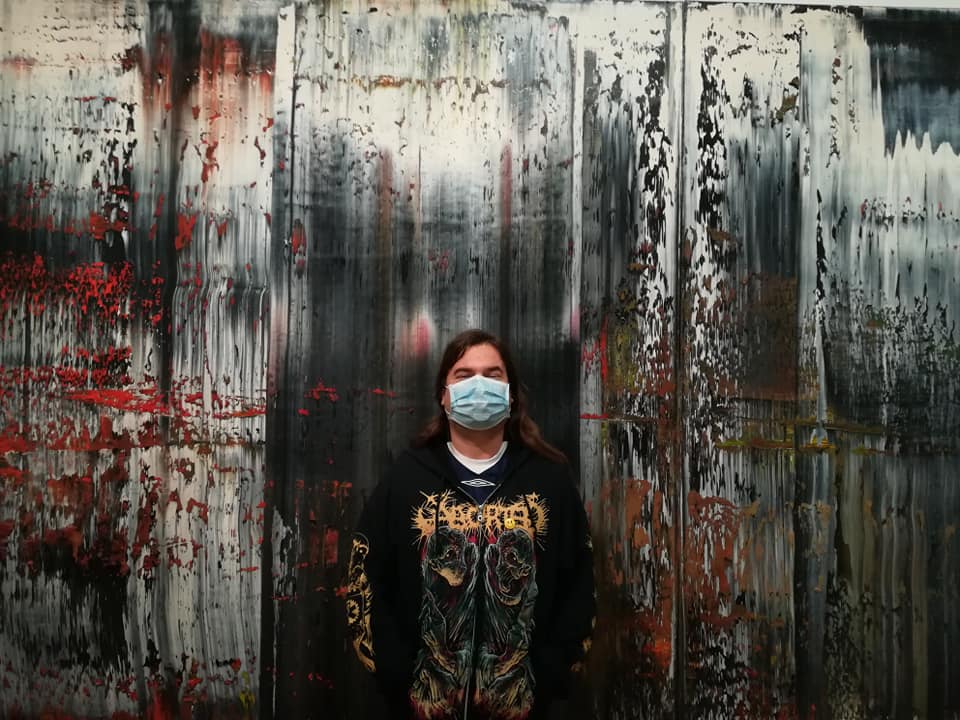
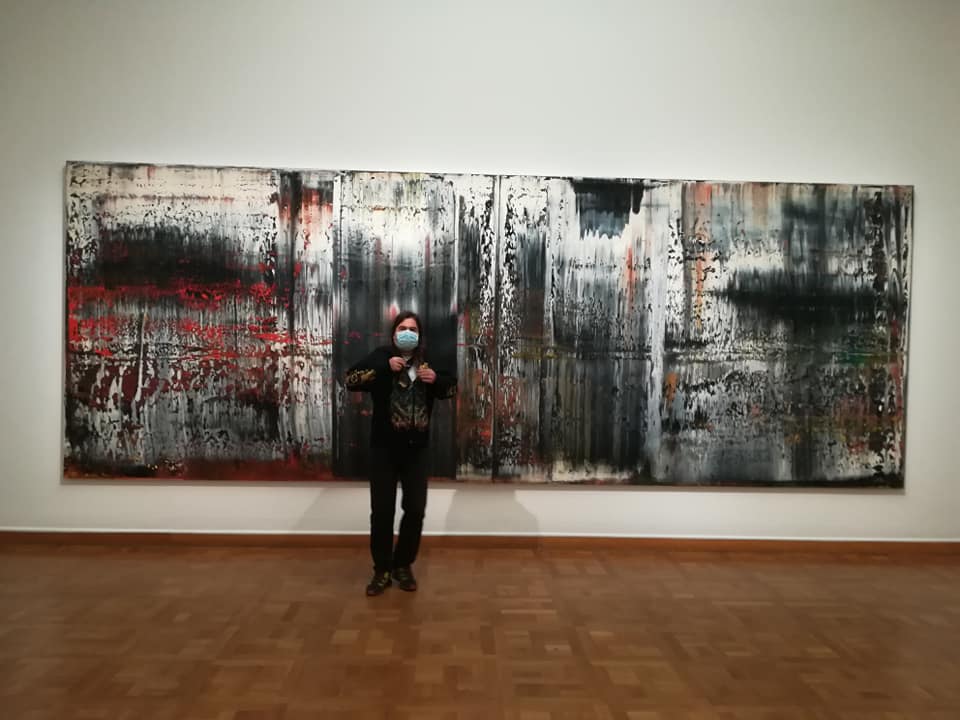
Gerhard Richter, Master of Disaster

I melt back into indifference

Napalm Death, Silence Is Deafening

Nobody I know is fond of Gerhard Richter. Yet, at least since the turn of the new millennium, Gerhard Richter ranks in the very top segment of best-selling and most influential living artists. That is to say, he is to be considered as a distinctly defining figure of present-day art. Abstract Expressionism had been one of the intellectual peaks in the history of Western art. Its abstractions are meant to express the spiritual, the divine, the gloriousness of mind, they are also meant to be an investigation into the nature of art and painting and the possibilities of methods; Ad Reinhardt`s black paintings assembled within the line of an heroic quest for the „last“ possible paintings. That was in the 1950s and 1960s. In the 1970s, Gerhard Richter came up with his monochromous grey paintings. They are solely meant to express „indifference, shapelessness and refusal to give evidence“. They are meant to mean nothing. Salvador Dali says: Genius spiritualises everything. Yet, how would you spiritualise indifference? Much more than Reinhardt´s black paintings Richter´s grey paintings may be „last“ possible paintings, though rather in the sense of marking the beginning of something new. The limits of human thought and expression, therefore also the possibility of seomething new that lurks behind the horizon can be spiritualised (i.e. via the black paintings), yet indifference may open a much wider and plainer ground, with countless possibilities of exploration; since it may operate at a much lower level and standard of quality. Says Richter: I pursue no objectives, no system, no tendency; I have no program, no style, no direction. I have no time for specialised concerns, working themes, or variations that lead to mastery. I steer clear of definitions. I don´t know what I want. I am inconsistent, non-commital, passive. I like the indefinite, the boundless; I like continual uncertainty. That could translate: I´m a pretty average mind. I am a drifter whose morale will largely will be determined by circumstances. I do not try to erect something and transgress the frontiers that are set by contemporary understandings, etc. In Leonardo da Vinci you also had the indefinite, boundlessness and uncertainty, yet Leonardo was operating way beyond the intellectual frontiers of his time. The radical and the transcendent mind will be prone to the indefinite and to experimental uncertainty – and the objective of art should be to open up the mind and the potential of the mind for transcendence. This is what you had in modern art. Contemporary art is more confusing. What you may have in post-modern, or contemporary art is general consensus of indifference. Alongside with his grey paintings, Gerhard Richter, at least symbolically, opened the gates to hell.

Of course, Gerhard Richter is not stupid. Even less, he´s devilish. His qualities are undeniable. Gerhard Richter is raumgreifend, he has Volumen, his oeuvre is of „oddly integral diversity“. He has done abstract paintings, landscapes, portraits, the RAF cycle, church windows, overpaintings. Despite not being avant-garde, he always manages to be at the pulse of time, at least with some delay, that nevertheless, may put more gravity into the whole thing. His art is both realistic and illusionistic. Consider also that Richter is a hybrid between a painter and a conceptual artist. He often presents us paintings that are outtakes or snapshots of reality, without, however, spiritualising them as a fragment that alludes a greater whole, that adresses your imagination of what could be beyond these outtakes, no: you are simply confronted with a rather meaningless snapshot and outtake. Some of Richter´s depictions of clouds, landscapes and seascapes are quite immersive. The objective, however, is to de-romanticise nature, to remind us that romantic notions about nature and the world we inhabit are in the eye of the beholder at best, and not qualities inherent to nature itself. Yet a quality inherent to art and painting is to romanticise nature and to offer higher perspectives, a more sophisticated, empathetic worldview; to elevate not only nature, but also man as the beholder. Occasionally, Richter´s abstract paintings are quite tasty. They combine elements of geometric abstraction and gestural abstraction and his signature style is that he uses a squeegee to make his paintings more interesting. In his RAF paintings there is a mild uncanniness, a mildly non-conformist confrontation of the Bundesrepublik with its past. Richter painted the RAF cycle ten years after the events, in the later 1980s. He has also painted church windows. The respective archbishop did not like them. Gerhard Richter is no slouch. He is, undeniably, a talent and he is academic. There are things that can be said about his art, though not very much. The possibilities of things to be said about his art get drained rather sooner than later. He may not care so much on that behalf, since with his art he is among the 500 most wealthy individuals in Germany. He does not appear an uncomfortable or unlikeable person. It is said he is taken by surprise by the success of his art himself. Consider that one of Richter´s most iconic paintings – Betty (1988) – depicts a woman turning away from the viewer to gaze at a monochromous painting (respectively a monochromous background). It depicts a woman from behind. Despite its solidity and tastyness it is a negative icon. It is an icon of negativity. It is an icon of lukewarm interest, close to being an icon, again, of indifference. – Despite that, it´s an icon. Richter said, it was not easy to overcome Beuys. It will neither be easy to overcome Richter. Richter has Volumen and there is intellectual presicion in his oeuvre, even some space for enigma and mysticism. Upon reflection, Richter´s work and attidute may serve as a watershed between what is possible in art, and via art, and what is not. Maybe that is its historic function. He (at least symbolically) opened the gates to purgatory, the flat land of nearly infinite space, of indifference and mediocrity in art, the flat land we currently inhabit. That nobody I know is fond of Gerhard Richter may just be reflected in his status as the defining artist of our time.

If you like to think about art in a lofty way, you may consider Gerhard Richter and his ineffective art as the enemy. Yet ineffectiveness is inherent to art. Self-criticism about its own relative impotence and incompetence is inherent to art. The problem arises when affirmation of ineffectiveness becomes the substance of art. Yet as such, as the description of the spirit of our age, our present days may go into history´s books: as „the Age of Gerhard Richter and Damien Hirst“. The history of art and of painting had been sensational, and sensationally progressive, for, say, two centuries. (Normally, cultural peaks and climaxes are geographically clustered and last for a generation or two). Naturally, a point will come when all will be said and done in a discipline for quite a while, and it maybe should not come as a surprise that painting had suddenly collapsed in exhaustion, that there had been a big and sudden slump after the radicalities of Abstract Expressionism, Arte Povera and Fluxus. All seemed to be said and done. Pop Art seemed the last occasion to erect distinct icons that capture the contemporary era. Pop Art already was a bit stupid. After the 1960s, society will have become too differentiated and too intelligent for art, to be captured by the means and the spirit of art. The spirit of avant-garde, even art itself, seemed to have become the anachronism in relation to society. The grace that had fallen upon art and, notably, the spirit of avant-garde in the 19th and 20th century maybe had only been the grace of the low hanging fruit. In those bygone days, art could more easily master to be more intelligent and futuristic than society, since society was so stupid. More recently, society may have become too intelligent for art. – Yet also, and most obviously, art has become more stupid and self-defeating, self-depreciating than ever before. That semi-competent artists like Richter, Baselitz, Damien Hirst or Jeff Koons are the defining artists of our age is symptom of a malaise. I don´t know why artists aren´t more intelligent and commited nowadays. Although there are ebbs and floods in the availability of competent people you would also guess that a certain stock of very intelligent and creative truth-seekers are around all the time. The secret of art, and of any enterpise that lies within the mind, is that it is not actually determined by society and Zeitgeist. It´s an enterprise of plunging into depths, of transgression. Despite its insight into its own ineffectiveness, art is meant to be a protest against the ineffectiveness of art. Its purpose should be to erect something. It is, above all, a matter of inspiration. Inspiration is practically independent from society and Zeitgeist. So why isn´t there more inspiration, contemporarily? Yet life, as they say, never ceases to be a mystery.

There´s a Richter exhibition in Vienna right now. Just by the end of this week, the new annual ranking list of most important living artists has come in. Again, Gerhard Richter ranks on top of them all. Yet the ranking mentions also shooting stars and artists that can be expected to have a bright future. I need to look at them. After all, Gerhard Richter is also one of the defining artists of postmodernism, i.e. not necessarily one of the defining artists of the actual present or the future to come. Yet postmodernism at least had a conceptual framework. And there is no guarantee that present and future will have even that, i.e. a minimal insight and self-understanding of what it is doing. Maybe we will lose even that. Maybe it gets even worse than that. Also the Rolling Stone magazine most recently published an update of its list of the 500 greatest albums of all time. Sgt. Pepper´s Lonely Hearts Club Band got kicked back at postion 24, Elvis Presley has not even an album in the top 50 anymore. Marvin Gaye with his elevator music on What´s Going On is now King, is now President, like Gerhard Richter. I think what is going on in this world is that most people simply are directionless. Also as concerns popular art, popular music, which has clearly been going down the roller coaster (including death metal, which, to my great dissatisfaction, has even become moronic more recently). Yet there are also good things. Two weeks ago I discovered Billie Eilish. I admit that I have not been pretty observant in this respect, but she strikes me as the best thing I have seen in more mainstream popular music in the new millennium. She has synesthesia and her videos are great. I see her in a crown. Her debut album has already been included in the Rolling Stone´s list of the 500 greatest albums of all time. Maybe the Generation Z will push us forward again. Meanwhile, we seem to be able to live off the fat of older generations, and maybe even for a long time to come. Gerhard Richter or Damien Hirst aren´t actually the most expensive artists. The most expensive paintings sold at auctions in the last decade were from van Gogh, Modigliani, and Basquiat. I.e. the center of gravity is still where it should be. The world is still stable and logical. This is so because the structure of the world is chaosmos, as I always emphasise.

Oct. 16-18, 2020

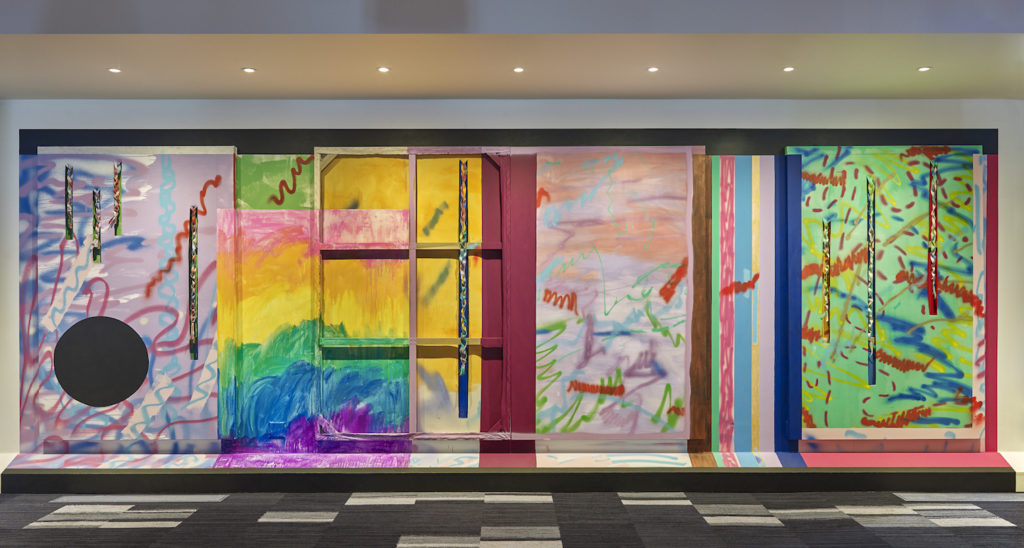
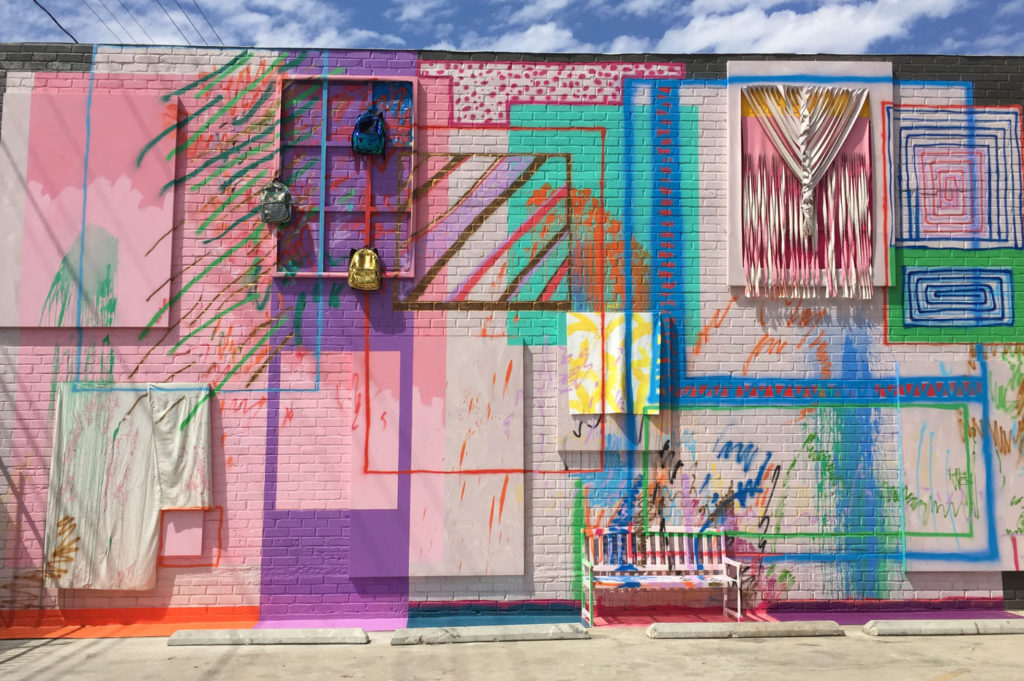
Artist: Sarah Cain

Abstraction means: to induce from a concrete example a general concept. In themselves, both the abstract and the concrete are tricky. The merely concrete and particular is insignificant and evades definition, the merely abstract is empty or an illusion/delusion. Yet, in order to be productive, to understand the world and to create, the human mind needs to operate within the spectrum of abstraction and concretisation/substantiation, mirroring themselves in each other. (Note: as I am now done with this note, I cannot find a further possibility to refer to that introductory remark at another occasion in the text, so that it is actually useless, but for some reason, I´ll just let it be.)

Abstract painting – with the first true abstract paintings made by Frantisek Kupka in 1912 – set in at the beginning of the 20th century. A specific desire behind abstract painting was to make visible and tangible the human mind itself – as well as to expand and to broaden it, not only via the means of art and painting but also via science and via spirituality, therein also broadening the understanding of the world. The main figures behind abstract painting, Kupka, Kandisky or Malevich, were deeply intellectual, introspective and spiritual persons. It seemed an undertaking in diving into the depths of the mind and throwing up something new, something enigmatic, that, via its abstract forms, is able express the inexpressible itself: the depths and the frontiers of the mind, as well as the horizon of our understanding of the world, and of what possibly could lie beyond that horizon, or beyond that world (therein both the primordial and originary as well as the „spheres“ and the „divine“). Malevich´s Black Square seems to express a wormhole of introspection, a vibrant intensification of introspection, where you mentally destroy or leave behind common knowledge and understanding in order to come out in a new region of the universe with something new (in the case of Malevich it would enable him to later come up with novelties in figurative painting, while Kandinsky stayed inside the abstract realm and Klee coming up with a childlike and virgin amalgamation of abstraction and figuration). Abstract Expressionism would try to express the divine and untouchable via abstraction and make it tangible, reduce the content in order to open up and expand the mind and the spirit; Minimalism would reduce and shape a content in order to express a metaphysics of (enigmatic) presence and coexistence of man with (objects within) the world. Gerhard Richter´s grey paintings from the 1970s by contrast were about using (monochromous and monotonous) abstraction not to express the „spheres“, the „divine“ or anything metaphysical, but to flat out express its opposite: mindlessness and indifference. From that time on, grand narratives, respectively undertakings of art as a spiritual, intellectual, metaphysical endeavour have become falling apart, with interesting things popping up here and there, yet they remain localised. And new impulses to abstract painting seem even rarer.

Sarah Cain (b. 1979 in Albany, New York, resides in Los Angeles) refers to herself as an abstract painter. Like Duncan Wylie she is no super famous artist today, yet she is the coolest thing I have seen in painting since Duncan Wylie (whom I discovered almost ten years ago). Her art is described as „like seeing a rainbow in the middle of a forest“ by poet Bernadette Mayer. I have to say, such a stunning effect it also had on me. It is a combination of mastery over color and (some innate, finally intellectually indecipherable) mastery over form that produces something mesmerising. A highly sensitive person (i.e. excessively open to perceptual stimuli of all kind), Sarah Cain makes dense paintings, in which there is, nevertheless, astounding room for maneuver. I cannot think so quickly of other painters, at least not in the contemporary period, that have such a room for maneuver in combining colors and forms, and, moreover, that produce such astonishingly exact yet unforeseeable results without an apparent underlying formula, since you actually seem to have but a potpourri of stuff and of elements. There are gestural brushstrokes which often make strict rectangular or geometric (i.e. supposedly anti-gestural) forms that are present in most of her paintings, and which I like because they signify the upright, and the challenging and the (near) sublime, they are stern; and they are contrasted with floating forms, waves, or splashes which creates some kind of interesting harmony (between some kind of opposites). There are often (seemingly unmotivated) big black dots that seem to have no function (apart from creating a hole) but that Sarah Cain, as she confesses, herself likes a lot. There often are textiles or objects included in her paintings and one of her innovations was to expand the painting over the edges of the canvas, into the surrounding, which so becomes part of the artwork. Therein, her paintings also become sort of environments, and often she directly interferes with the environment as she does graffiti, paints whole street corners (for instance a street corner in L.A. where there is the epicenter of the city´s trans-prostitution scene, i.e. making the queerest corner of L.A. even queerer), or paints glass windows (most recently at San Francisco International Airport). All of this seems to happen quickly and fervently, yet out of a position of coolness. Sarah Cain seems to just stand there, or do yoga, then get the brush, paint all over something stunning and indisputable, then walk on. Sarah Cain comes, paints, and wins. So it seems. Sarah Cain´s paintings are – without any obvious formula – extremely robust and stable. Unlike most other productions in art, they are able to stand on themselves. They are, above all, extremely tasty. Very tasty stuff – that cannot be actually explained, but that wins over the intellectual, the critic, as it just is (and needs no addenda). It is true that that this art seems not deeply intellectual nor metaphysical either: the introspective element, the introspective endeavour doesn´t seem to have omnipresence (yet Sarah Cain is still young, and, for instance, Barnett Newman came up with his excessive stylistic contemplations later in life) (my neighbour Wolfgang ruminated that there may be less density and presence in her paintings in the future, but more of a meditative restriction and absence). Yet there undoubtely is an expansion within abstract painting, and you may find that in this combination of elements you may have a display of the totality of the human mind, and it is playful, it is colorful, and it is innocent. Sarah Cain is a GREAT painter and she is a VITAL figure in the history of abstract painting.

Thus spake Zarathustra

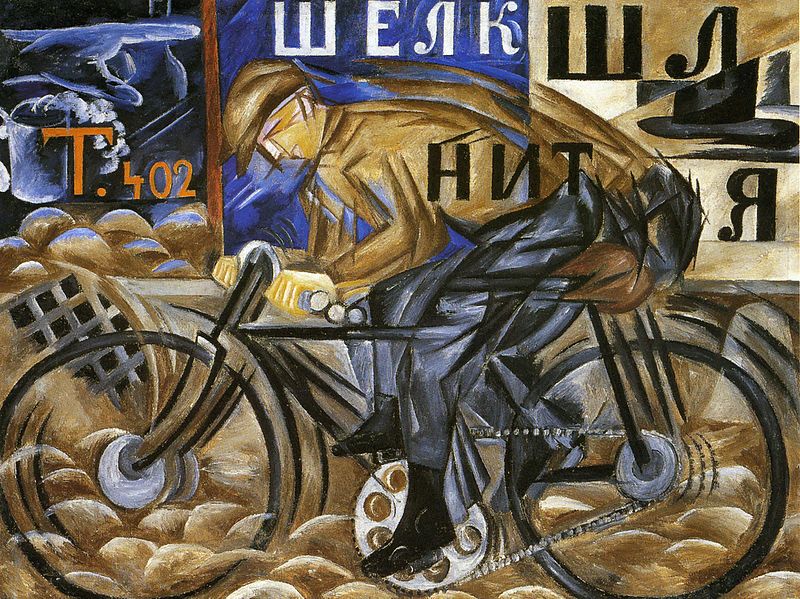
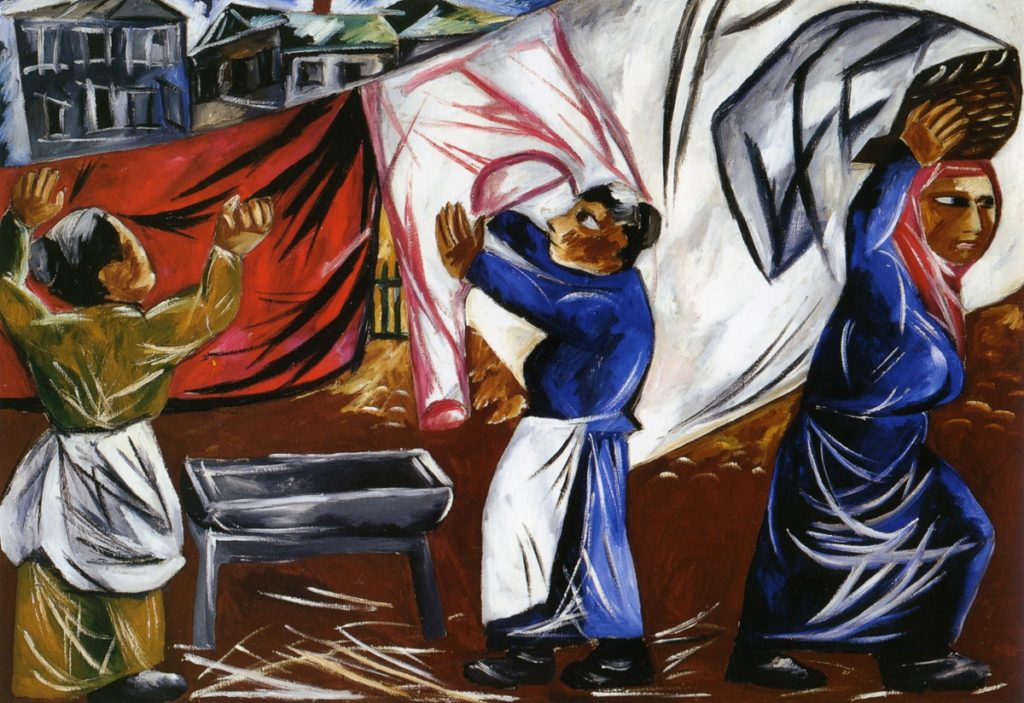
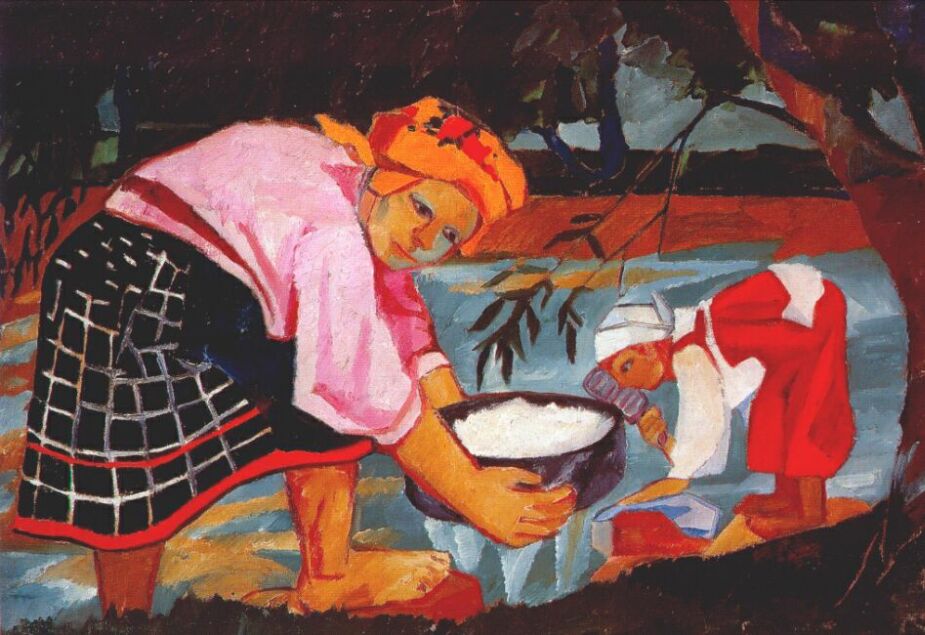
Homage to Natalia Goncharova

Natalia Goncharova, femme fatale of the Russian avant-garde, was born June 21, 1881 in the region of Tula, 200 kilometers south to Moscow. Of noble descent and born into a highly educated family, one of her ancestors (after whom she was named Natalia) had been the wife of Alexander Pushkin (and inadvertedly responsible for Pushkin´s death in a duel about her). She went to school and became friends with Marina Tsvetaeva, who would later become one of Russia´s leading poets, and also a biographer of Goncharova. After school, Natalia tried to study zoology, botany, medicine and history, but after not fitting into the respective environments, she turned to study sculpture in Moscow. There she would meet fellow student Mikhail Larionov, who recognised her talent as a painter and convinced her to concentrate more on painting and to become part of what would soon become to be the Russian avant-garde. Larionov and Goncharova would remain a lifelong couple, living an obviously perfect relationship of equals who share the same interests and capabilities and being collaborators, yet also remain distinct enough to follow individual paths and not to become overpowered or distracted by each other. As an unmarried couple they would be seen as „scandalous“, yet also as powerful and independent: They would marry only late in their lives, in order to avoid legal trouble concerning their respective estates. Natalia Goncharova was described as a strong-willed and provocative personality, causing scandals not only in the art scene and living an exuberant lifestyle. In the 1910s, both Larionov and Goncharova quickly became successful not only in Russia, but also in Europe, and during the first world war both managed to move to Europe, to soon permanently settle in Paris, where Goncharova also worked as an art teacher and as a set and costume designer for the theatre.  Working for the theatre was not her major passion, yet since her flamboyant set designs and costumes would become very popular, it became her major source of income and also a means to continue to promote herself as a painter. In later years, public interest in the art of both Goncharova and Larionov waned, together with declining health of both it would make the life of the couple more complicated. In the mid-1950s the interest in their works would resurge, while their health, however, was on further decline. Plagued by arthritis in her final years, Natalia Goncharova died in her sleep on October 17, 1962, while Larionov had been at the hospital at the same time. He would pass away only two years later.

Natalia Goncharova´s trajectory as an artist was illustrious. Starting as a sculptor, she was soon to become one of the best and most promising students of her academy. Influenced by Mikhail Larionov she moved to painting, starting with Impressionism and Post-Impressionism, with Henri Toulouse-Lautrec being a major influence and idol for her. In accordance with the rapid development of stylistic innovations at that time, she would remain aware of what is going on around her, and also especially embrace Cubofuturism soon thereafter. Eager to develop a distinct „Russian“ avant-garde, she, and Russian avant-gardists in general, would begin to rely on „archaic“ traditions or approaches to painting, and amalgamate them with the most contemporary ones, resulting in Neo-Primitivism, therein also trying to amalgamate childlike innocence and spontaneity and sophisticated artistic intelligence and craftsmanship, as well as an affirmation of both future-directed modernity and being and remaining spiritually rooted in „Russian soil“. Religious motives and iconography would remain a constant topic in her work all the same, as well as the depiction of farmers (as a child she had preferred rural over urban life). Larionov and Goncharova would also come up with an original stylistic innovation, „Rayonism“, which is about depicting light itself respectively objects via the way they reflect light. She was a great colorist (and it was her talent as a colorist that originally made Larionov encourage her to shift from sculpturing to painting). She was competent in portraying figures both via contour as well as via the „forces“ and intensities that seem to constitute that figure in the respective environment. Fluent in many styles, Goncharova was able to come up with interesting and intuitive solutions about how impressionist or cubofuturist depictions could look like, displaying an innate command over artistic depiction in general. Goncharova, Larionov and others of their circle would advocate a pluralism of styles and cement it theoretically and philosophically.

Above all, what seems most striking is the sheer humanity in the art of Natalia Goncharova. Without being naive, her depiction of the world, of humans and of animals is of great dignity and sweetness. It seems Natalia Goncharova had a very harmonious soul. Unfortunately, such is a rare occurence, not least in the arts.

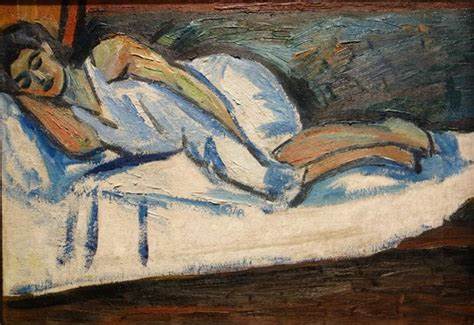
Mikhail Larionov: Natalia Goncharove sleeping

ADDENDUM SEPTEMBER 2025

Message Body:
Dear Sir,

Thank you for your attention to the masters of the Russian art and culture.

With the great interest I have read your publication about well known artist Natalie Goncharova.

I would like to draw your attention to the few inaccuracies in the text which is otherwise very interesting.

1) Natalie Sergeevna Goncharova has never been that, a “fam fatal”. She was a professional of the high level and dedicated to her work more than to anything else. She was actually an workaholic. And her so called personal life was monogamous and dedicated. Even after divorce with Michael Larionov, she remained a true friend and close person to him – and not in words, but in the dids. She helped him monetary, physically when he was ill, with legal issues.. Many materials and memories state those facts..

2) Natalie Goncharova has never been a friend with Marina Cvetaeva in their childhood – despite the fact, they lived neighbouring houses and were of the similar age.. However, the difference in few years which is neglectful in mature age, became significant in the earliest.. When they have met in France, both were astonished by the fact that they had used to live nearby.. And , yes, they had a close communication for about two years then, when Goncharova have been working with Cvetaeva for illustrations of her books. Then relationship discontinued, what was quite frustrating for Cvetaeva..

Thank you for your publication once again.

Kind regards,

Nonna Silverman

Vincent van Gogh and the Abyss of Art

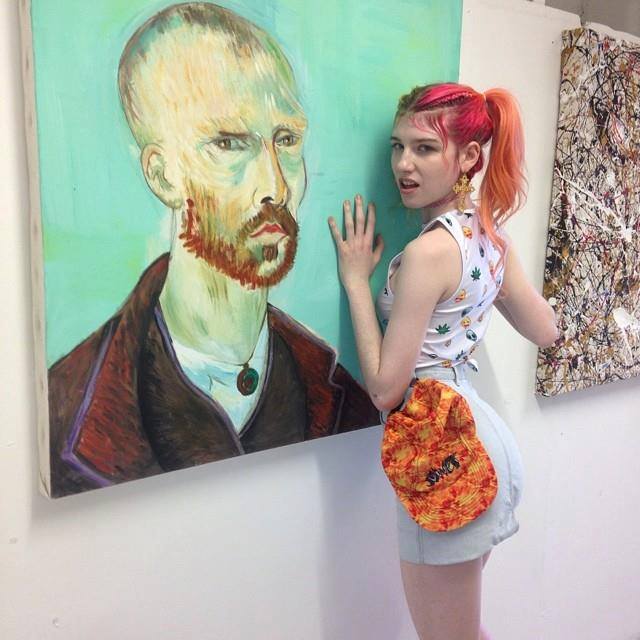
Vincent van Gogh is one of the most incandescent minds of all time. While it is true that he did sell a single painting in his life, it is not true that he had come to be utterly unrecognised. Albert Aurier, the most profound art critic around at that time, would write an exalted article, praising Vincent van Gogh as a rare genius, able to see through the material hyle of shit while at the same time not transcending (or descending) into otherworldy or celestial depths. Rather, you would have an overabundance, a plethora of world, due to an intense perception of „a bubbling brain that would burst out his lava into all canyons of art;  a terrifying, half-mad genius, often sublime, sometimes grotesque, always slightly grazing the pathological“. It is true, in the art of Vincent van Gogh you have the otherwordliness of the world. You may say, you have a vision that refers to the peak of human perception and episteme, the Unitary Consciousness, in which all manifestations that lie within reality and that lie within the mind and in the spirit amalgamate into single, intense, elevated, transcendent perception of totality. In Vincent van Gogh´s paintings, everything has an extreme presence; nothing is hidden, reality seems to emerge out of itself, in ways that might be beautiful, frightening, dangerous or disgusting. Nature becomes of an expressive character; therein Vincent would become a forerunner of Expressionism, while his vision and, consequently, his impact on art would be more general and more profound. It is a true metaphysical reflection of the metaphysical structure of the world; while Vincent would reflect on some kind of embracive overtotality that lies inside (or beyond) nature, he was also aware that it is not necessarily protective; Artaud would say that in Vincent van Gogh´s vision you have laid bare „the hostile flesh of nature“; haha, art and the recognition of art lies in the eye of the beholder, and the depth of vision would also articulate itself in the many aspects it oversees; the more abysmal the depth, the higher and more glorious the vision until it gets consuming like the flame. The Burning World. „I love a nature that is nearly burning“, and: „Some men have great fire within their soul“. – While he had not been a child prodigy, but rather a problem child (although actually problematic (or „problematic“) he would eventually become later in his life), Vincent van Gogh had a capacity to get immersed into things, a pronounced and synthetic/synaesthetic intelligence and a passionate heart from early on. Art, as well as science and religion would have a great fascination on him from early on as well. To him, art had to rely to a considerable degree on (quasi-) scientific investigation of reality, of perception and of the means and methods of art; like religion it would refer to the divine, the otherworldly, the good and it would create a spiritual bond between men. Despite his ever-present interest, Vincent had decided to become a painter relatively late in life – since all other attempts to find accommodation in life had failed for him. It was a stunning quest, as it did not seem very promising as Vincent usually combined talents as well as considerable deficiencies in any domain he would approach, with the latters ultimately leading into tragic failure of his endeavours. Finally, when Vincent reached perfection, it was a triumphant victory of subjectivism that would define new objective standards. Vincent´s art is so idiosyncratic and, eventually, ungraspable that it cannot truly be explained or that it could have been foreseen. It is true that technically Vincent was not a master painter in many respects; he could not paint freehand, his line was nervous and imprecise and, above all, he could not achieve much similarity between the portrait and the portrayed. People and things are depicted roughly as well as bluntly, but they carry both more idiosyncracy as well as universality (not only as the person or the thing portrayed, but also more idiosyncracy and universality as you have it most other paintings) and, above all, they carry a pressing immediacy. In his greatest paintings and his most mature vision you would recognise that „everything“, and everything that can ever be said, simply and bluntly is there (a not very intellecutal sentence, but therein signifying that intellectualism comes to an end when approaching visions of the Absolute). While the most protean painter of the 20th century, Picasso, would invent a new style every once in a few years, Vincent van Gogh would (apparently) come up with a new style with any new painting he would do; respectively, Vincent would both transgress style as well as „anti-style“, as what he would do could be described as a permanent quest, a processive both searching and finding of expression as something both more primary as well as transcendent to style. Vincent´s „style“ (nevertheless) has a childish innocence, nativeness and immediateness as well as the intellectual sophistication of traditional Japanese art (which had a huge influence on Vincent) with its focus on purity and simplicity, respectively it combines both approaches; it is very virgin and very eternal, very young and very old, adequate therefore to depict a world that is both in bloom and in decay. Of course, this can be quite irritating and (like Franz Kafka) Vincent was dismissive of most of his works, considering them as „etudes“, and his true art and his true form and message as something still to come. Yet, when intelligence/creativity reaches its most upper extreme, it will likely not present itself via a „classicist“ form: instead, it will become inherently experimental and establish multiple points of view, it will become a sort of phase space of the intellect and of the soul (which may, of course, easily be confusing for the bearer of that soul and it will take some time to become familiar with it). Vincent van Gogh´s vision refer to a shifting, dynamic and also a bit elusive reality: and therefore has a firm grasp on reality as how it actually is. His style of painting makes the painting process visible, therefore reassuring that one is confronted both with reality, a vision of reality, a perception of reality and an artwork/a construction of reality; therein Vincent was a forerunner of process art and, more profoundly, of the self-referentiality of art and its metaphysical quest for its exploring own „epistemological“ possibilities and potentials. Avant-garde artists after van Gogh (and at his time) became very self-confident about the possibilities of art, also because of this self-referential quest for art within art; more recently of course art would lose such self-confidence and the self-referentiality become increasingly pointless. Obviously, it lacks the spiritual strengh of a Vincent van Gogh. Vincent´s quest within art (and within any endeavour he would approach) would be for „the true“.  According to Vincent, „the true“ is the force „that brings light into darkness“, that transforms suffering into solace, that consoles, that has the power to heal. It is „what encourages you and inspires you and is good nurture for the true life“. It refers to a kind of epiphany, and when Vincent would become aware of anything of that kind, he would say: Dat is het! „The true“ „can be found everywhere“ and in great numbers; „the world is filled with it“. In contrast to the pessimists and existentialists (and, seemingly, most people, notably intellectuals or art critics) I perfectly agree with Vincent on that; and for instance when people would ask me why, for instance, I often post harmlessly lascivious images of females with big tetas (or try to mock me whether I do it out of sexual frustration (or, as feminists would suspect, in order to exercise power over women via the „male gaze“, while it is actually them exercising power and impression over me)), I may simply respond: Because dat is het! Those are images/epiphanies that show that the world is good and life is worth living. „The true“ is the essence of things. Dat is het. „The true“ Vincent would also find in the portrayal of humble or everyday people, hitherto rather neglected by „high“ artists: peasants, craftsmen, maidens, more generally: in (the portrayal and investigation of) the idiosyncratic and the subjective (and he was especially fond of sentimental artworks, depicting children, melodramatic situations, girls in love, families living in harmony, Biedermeier-like art, like I am as well). Due to the evaporation of traditional and a stable metaphysical structure in which man would find himself embedded in modernity, the modern artist could not create a closed, consistent and total portrayal of (man within) the world any longer. Traditional iconography, allegories or metaphers had become obsolete by Vincent´s time. What is more, in the later 19th century moral foundations had become fundamentally shaken and modern man became confronted with the possibility of nihilism; most dramatically illustrated in the vision of Dostojevski, it would become the task of the individual to enliven morality and establish universal moral standards. The subjective had become prevalent. But how can you create a universal grammar out of something that is subjective, i.e. that is opaque and cannot (and should not) be generalised? Van Gogh however would note that it is precisely the subjective experiences and the individual idiosyncracies that are experienced by everyone all alike and may therefore become a basis for collective experience. An enlightened individual with a profound and empathetic vision of reality and of high personal integrity could serve as an exemplar of humanity and create universal grammars, a subjective vision that embodies/enlivens objective truths. Therein, the artist would become comparable to a saint. By the end of his life, Vincent van Gogh would consider himself to be an otherworldly, transcendent being (which is a correct perception), and art and religion he had always seen as intertwined (which, as both is based on worship, is also a correct notion). He would become godfather of modern art as a quest for subjective expression of objective truth, and a kind of guardian angel of what would become the difficult and demanding task for true artists for decades to come: finding new modes of expression anew – „We all started with van Gogh“, Picasso would say, in that respect. In the later 20th century such endeavours still were/are there but somehow have lost intellectual substance and rigor. Vincent van Gogh at his time was dismissive of the Impressionists, he found them to be „merely clever“ and resting on the foundation of a merely tricky idea, whereas true art would demand „extreme seriousness“ (nowadays, the tide has moved against the notion of Vincent once more, probably to an extend that would surprise him even more (although humor and irony usually are good, it is probably also good that Vincent to a considerable degree lacked humor and irony, i.e. basic principles of postmodernity)). Vincent van Gogh would notice Aurier´s essay of exited praise for him, but he reacted somehow indifferent and dismissive. He had a low self opinion as he had had to experience himself as a failure throughout his life, he saw that he could not reach the mastery of other, technically more profound painters, and he did not consider it possible that he was „a rare genius“. Also, while Aurier could see the polished surface of Vincent´s art, Vincent the artist himself knew about the (unelegant) difficulties and coincidences within the process of creating his art, therefore he was less ready to see it as results of a divine inspiration. While the article by Aurier and also a subsequent exhibition of some of Vincent´s works would attract attention, he still could not sell anything while at the same time Theo´s financial situation had become more problematic, terrifying the ashamed Vincent that he could not escape the situation of putting financial stress on his brother ever more. Irritated, Vincent fled to the countryside again, fully in bloom of his mastery he would create some of his greatest paintings; yet soon thereafter he would succumb to a fatal injury inflicted by a gunshot.

They say there is a thin line or a similarity between genius and madness. That is not actually true. Genius refers to an abnormal intensity of perception and of experiencing the world by getting immersed into it, as well as to great fluency in making unusual associations between (often remote) perceptions and concepts. Due to the unusualness of his ideas, the genius may become mistaken for crazy by others (and therefore become prone to identity crisis and feelings of estrangement himself), but he is, to an abnormal degree, rational in all his endeavours – whereas the madman is, profoundly, not. What makes Vincent van Gogh´s story so attractive/tragic is that he was both a genius and a madman. Rejected by his contemporaries, he is now considered pure and a saint, born to suffer in a world hostile or injudicious to purity, illustrating the tragedy of the genius; yet, apart from that, Vincent actually was a misfit on his own accounts and a challenge to most people he met, including those who were sympathetic of him. About the origins of Vincent´s irrationality there have been debates and scholars have tried to identify it as a bipolar disorder or some kind of schizophrenia. Epilepsy has also been suggested. Likely Vincent had a schizotypal personality disorder, maybe combined with other abnormalities. Schizotypy is a condition that involves unusual emotional and perceptual intensity, capacity to ruminate, associative and network-like thinking, anhedonia, introversion and impulsive nonconformity. Therein, it may be a condition that enables genuine creativity, personal autonomy or genius: Einstein, for example, appears as a perfect illustration of healthy schizotypy. A schizotypal personality disorder involves all those features but gives them a turn towards the unhealthy and the irrational. You may have odd perceptions and personal ideologies within the schizotypically disordered individual, magical thinking, irrational impulsiveness, getting overwhelmed by emotions and social isolation and withdrawal due to reduced capability of getting along with others and to intellectually empathise with them. In contrast to the schizoid individual, the schizotypal individual, who specifically knows both emotional intensity and may have a strong sense for „connectedness“ between people and things, may experience his social isolation as very painful, and that may generate considerable mental health problems and depressions that, in addition to the odd ways of thinking of the schizotypal in the first place, may degenerate into states that are near to psychosis, or into actual psychosis and schizophrenia. Theo van Gogh has experienced „two personalities“ within his brother, respectively a „Jackyll and Hyde“ personality within Vincent. Very strangely, Vincent was capable of extreme rationality and understanding as well as compassion and love for others, transgressing into self-sacrifice, as well as he easily was very subborn, argumentative, self-righteous, impossible to get along with different opinions and, therefore, with most people in general. He was both very fluent and considerably limited and inflexible. Clearly, there are problems for sensitive and intelligent or unusual individuals to get along within society, especially within childhood and youth, and that may lead to problems of adaption, but Vincent´s irrationality, in its stubbornness, cannot, however, actually get traced back to traumatic origins, but appears as something genuine, and in such a case a personality disorder or mental illness is very likely at play. Mental illness came to affect also other members of Vincent´s family; his brother Cor later commited suicide and his sister Wil went insane and spent nearly four decades of her life, until her death, in a nursing home. Theo´s tragic decline came from syphillis nevertheless; it is however possible that Vincent´s aggravated mental health problems later in life had the same origin, and one of the possible motives for his (apparent) suicide was the fear of plunging ever more into insanity. While failure to adapt to institutional logics (or get accepted by institutions in the first place) and an irregular, „trial and error“ biography may not be uncommon for uncommon people and for geniuses, Vincent van Gogh had failed in every aspect of life, be it professional or interpersonal or as a student (and the feelings of guilt and shame aggravated his depressions). In some ways, his failures actually had glorious and triumphant aspects, aspects of failure due to being „too high to function“, but, at the other end of the tail, they carried morbidity. The most heartbreaking story in his biography before he decided to become an artist was him wanting to become a preacher among mineworkers in Zundert who had to live in extremely miserable conditions, notorious not only in the whole country but even beyond its borders. The suffering of the proletarians in Zundert affected Vincent greatly and he went to measures of extreme self-sacrifice in order to help them personally: he spent his time with them, gave away practically all his money and things and, after a huge explosion had happened that left many dead and even more wounded, medically cared for the wounded to the extend of exhaustion. Unfortunately, his grotesque self-humiliation finally began to bear less resemblance to that of a strong-minded and highly rational saint, but more to religious mania and the behaviour of a fanatic and it became uncanny not only to his superiors but also to many of the mineworkers of Zundert. That, and his inability to take into consideration any advice from others finally led to his expulsion and another tragic failure in his life (the official reason for his dismissial however had been that, despite the eloquence that would become apparent in his letters, he could not actually preach and talk in front of crowds). Vincent was a man who lived in extremes, both in divine ways as well as in clearly unhealthy fashions. Self-sacrificial and saint-like to an extreme degree during his time as a preacher, he would ask his brother for more money with some sense of entitlement a while later (while, later again, feelings of guilt about stressing his brother´s financial resources ever further may have been, then, a motive for the (apparent) suicide). Despite his permanent condition of dire straits, he never learned how to live economically. During his lifetime, his appearance would range from dandy to bum, alienating the people around him. As a truly transcendent and saint-like individual, Vincent had high hopes concerning other people and he easily developed enormous passion and compassion for them, which, however, often were out of touch with reality, and he was specifically prone to idealise the misfortunate among human creatures (like the people of Zundert). Sien, a moody prostitute with whom he tried to establish a family for a while, he considered to be „an angel“, and in the eye of newborn children he would see „the infinite“ (one of the infants in whose eyes he had seen the infinite would later become associated with the fascists). With Gaugin at least he wanted to live his ideal of establishing an (everlasting) fraternic community of artists, of intellectual and emotional bonds unable to get broken, while alienating him with his argumentativeness. When Gaugin wanted to leave him to move to new territories, Vincent became so afraid that, in a dissociative state aggravated by alcohol abuse, he cut off his ear, in an apparent attempt to make a „sacrifice“ to Gaugin to make him stay (and, likely, as a mutilation due to self-loathing; like in the final hours of his life, deadly wounded, Vincent did not elaborate much about the natures of the incidents). Whether his death was the result of a sucide attempt or whether Vincent was (unintentionally) shot by rascals that used to follow and harrass the eccentric painter is something we do not know though: There are good reasons to take the former as well as the latter possibility into account. The dominant narrative of the suicide – that may, however, erode because of the reasoning about his death in the more recent monumental biography about Vincent van Gogh by Steven Naifeh and Gregory White Smith as well as in the film about van Gogh by Julian Schnabel – is at least the more meaningfully tragic one and carries more gravitas. A tragic tale of his life may „benefit“ a genius as it increases his personal sex appeal after his death and make his biography appear more meaningful. Vincent´s ascent to the heavens may be that, in its comprehensive, genuine as well as elusive and mysterious tragedy it is very well-rounded. After his death he became an archetype, an icon, a symbolic figure, seemingly a good spirit/angelic creature, watching over us.

Indeed, not long after his death, Vincent van Gogh became to be seen as archetypical modern painter and as a saint of art. He bears maximum charisma as he is actually a metaphysical figure. The multiple threads that concern art, and all human endeavour and all human quest seem to meet in his art and in his biography. He is a superknot of threads. It has been noted that van Gogh had ruminated more about art and also about the relation between art and world, also as concerns the practical aspects, than any other modern painter (and, for instance, his idea about the artist communities was not only an emotionally motivated utopia, but, first and foremost, a practical idea about how the socially brutally excluded painters of his time could create means and a practical way of living and become more independent from the cynical art market). There is a lot of confusion about what art could actually be or what it would mean to be nowadays (and, due to this confusion that goes over people´s heads, unfortunately also a profound indifference towards answers to such questions); conservative philosopher Roger Scruton fortunately says that the truth of art is spiritual truth. Spiritual truth means a deep connectedness to the world and usually has to be gained via suffering. Van Gogh is the epitome of  „suffering for art“. Vincent´s quest was one of extreme integrity and for authenticity, and humanity needs such stories in order to ensure the authenticity of itself, of the human condition and of the human experience. The genius in someone deeply introspective into the subjects of his investigative quests and therefore is able to unveil „hidden secrets“ of matter. Art is a quest for metaphysical localisation of man and finding modes of expression for that. Vincent van Gogh was extremely introspective into art, in a way that he fell through the metaphysical abyss of art. Because of this, you finally have the totality within his art, the plethora and overabundance of the things portrayed and that extreme degree of presence death to false metal (reminder: could Derrida´s notion about the impossibility of presence be countered via van Gogh? To be investigated!); as you have the ultimate explosiveness within a White Hole due to matter that is falling through a Black Hole and is channeled through a Wormhole – that´s how such a system works.  Gilles Deleuze and Felix Guattari say that a true work of art stands (erect) for itself. Even more than that, in the art of van Gogh you have the Absolute. The art of van Gogh (as well as the tragic conciseness of his biography) cannot be transgressed. The Absolute is an instance that is indifferent to all human relativity and therefore indifferent to all human opinion and to all human thinking. You may say, it is the sphere of absolute values. Van Gogh´s Starry Night or his Church of Auvers, or Beethoven´s Ninth or the General Theory of Relativity exercise a power over me that is infinitely higher than mine. They´re the Absolute. Talent´s quest may be for, respectively reaches its fulfillment in perfection. The genius finds its full realisation in reaching the Absolute. The strangeness of the Absolute is that it is the most universal of statements and that it is very immediate and intelligible as well as it is very different from anything else and not very intelligible, and the establishment of the Absolute is very different from any other endeavour, it´s (naturally) very different realms of being; in the terminology of Wittgenstein (another monad that was working on the Absolute), the language of the Absolute is a different language game from the language games that happen in time and in space. The people of the Absolute are radically different and distinguished from anyone else; they not only belong to groups radically different from the general run of people (the groups of artists, philosophers, druids et al), but are also radically different monads within those groups. And so, apparently, the circle closes. Vincent van Gogh had a passionate desire for brothership and community. He wanted to establish not only a true community of artists but, via art, a brotherly community within mankind. Therein, one may remember Gilles Deleuze´s essay on American literature and Herman Melville, Bartleby, Or, The Formula, in which he outlines that American literature is a call for brotherly unity and America is a utopia of brotherly unity, with this ideal of brotherly unity and authentic community nevertheless being contaminated and corrupted in and by reality. With reference to Melville, Deleuze touches on the problem of the „true originals“, truly original people, who, in a heroic, in a funny and/or in a tragic way stand outside of society and, due to their autonomy and originality, cannot be influenced or consumed (and also not corrupted) by society. They are outsiders of humanity as well as they are an embodiment of humanity and of the human individual in a metaphysical sense. They embody the struggle between the individual and society in a search for meaning and mutual pacification. The reconciliation between the original and society/humanity is the problem for establishing fraternity and authentic community within men, so Deleuze/Melville. Often, the reconciliation between the original and humanity will happen only after the original´s death, when the biographical original individual and the ouevre of the original has entered the autonomous sphere of true ideals (or, above that, of the Absolute) that help to give meaning to humanity. With the reconciliation between the original and humanity, fraternity and authenticity is, then, truly achieved – in an ideal and metaphysical but therein highly tangible sense. And so, the circle and the cycle closes, the dead original can truly rest in peace, as the circle and the cycle opens up for another original again, later in history.

P.S.: Goethe (?) says, only a genius is able to truly recognise a(nother) genius. A tragedy associated with van Gogh is that Albert Aurier, who recognised van Gogh so profoundly and wrote so flamboyantly about him (therein likely mirroring his own flamboyant, explosive mind) at a young age, at the beginning of his twenties, died soon thereafter. I guess Aurier´s early demise is a tragic loss for humanity.

Leonardo da Vinci, Apex Predator

Today, 500 years ago, Leonardo da Vinci died. After a rather bumpy ride through the ages as concerns his fame and reputation, he is, in our age, considered as probably the highest ranking genius and uomo universale in the history of mankind, as concerns creativity, intelligence, versatility, authenticity and clairvoyance. Bumpy as is the ride of history, future generations may think otherwise (yet unlikely very much otherwise); at any rate Leonardo´s mind and personality and ouevre may serve as an illustration of what may be expected to happen at the most upper extreme, if not the definitive apex of human intelligence, creativity and spirituality, and also what may be the ultimate vantage point, and vanishing point, of art and what art could ever be. Beyond the scope of an era-defining genius (like Goethe or Voltaire), Leonardo is a superstar of humanity. Hardly matched in his artistic ingeniousity, he is probably unmatched in the scope of his interests, mastery over various domains and probably also as concerns the complexity an artistic vision and a worldview ever can reach – despite being, in their complexity, very harmoniously balanced and, to some considerable degree, at peace with itself (indicating what is commonly referred to as „transcendence“ and a Satori-like vision). Such appears not only his intellect, but also, even more miracously, the man.

Apart from his intellectual and artistic abilities and his miraculous craftsmanship, Leonardo was described as a very attractive and elegant man, jovial, cheerful and eloquent; his reputation as a „dandy“ obviously drew upon the fact that he liked to dress well and in an individual manner. An Adonis in his younger days, he „successfully“ embodied the bearded, long haired sage and druid in his later days (and that he seemed to have aged prematurely is also a good fit into the whole story). „All man and all nature“ was said to be attracted to Leonardo, not only due to his natural goodness, but also because of his distinctive entertaining qualities which ranged from telling instant jokes and spreading words of wisdom to staging extravagant theater-like performances with which he baffled his audiences not only with his intelligence and imagination but also his craftsmanship. He was also said to be an extraordinary musician and that he could sing in a beautiful voice. Neither ascetic nor an distinctive hedonist, and in contrast to Michelangelo´s rather neurotic endeavours in that respect, money and fame mattered to Leonardo just as much as it enabled him to maintain his rather modest and self-sufficient way of living. What mattered most to him, is that he was able and free to sustain his permanent investigations into nature, art and technology. His homosexuality (or homophiliac bisexuality) may have helped him to grasp feminity in the stunning way he did – the Renaissance was not an overly patriarchic age and Renaissance women were relatively free, respected and liberated; in many of his paintings, Leonardo gave women an accentuated physiognomy and portrayed them with great sensibility (though his ultimate quest was for expressing the universal; also you have some scepticism in those portrayals; like the relatively blank physiognomy of the, nevertheless distinctive and intense, Lady with an Ermine, Cecilia Gallerani, in contrast to the very carefully painted ermine). Despite him being the intellectual apex predator, Leonardo had become a vegetarian early in his life. Friendly and gentle, usually in good humor, Leonardo was decent and generous towards humans and he was a nature and animal lover; especially attracted he was to horses and to birds – it would happen that at a mart, he would purchase birds just to release them from their cages and let them fly away. Despite that, he prided himself with being able to construct war machines and war technology of great destructive capacity, and despite being a republican by heart, he became affiliated with various noblemen and „war lords“ of his time, including Cesare Borgia (who, as a somehow transcendent phenomenon, however attracted also the curiosity not only of Machiavelli and, later, Nietzsche but also of many others ever since). As a general feature, Leonardo remained aloof over politics and contemporary affairs; one might even perceive an „icy“ disinterest in politics and the political struggles of his time and age. What distinguishes him from the opportunist and nihilist (not to speak of the careerist) is that politics (i.e., at least at that time, the management of the fragmentary and temporary) truly was below him and the (fatalistic) insight that, due to the nature of man and the multitude of human temperaments, politics and political engagement remains a bit of a fruitless passion and a dismal science, at least for someone that is able to touch, instead, the eternal and the heavens. Political affiliations within shifting balances of power made not only Dante´s life miserable – and that of many others ever since – and despite his indifferent attitude towards the powerful may have hindered him to become a huge success during his lifetime, Leonardo obviously managed to sail and navigate relatively well over the turbulent political waters of his time. That he was also a child of his time can be seen that he believed in stuff like astrology, the medical theories of Galen or accepted Aristotle as highest-ranking authority like the medieval scholasts did, notions that soon thereafter became more outdated among the educated. Despite being very insightful about geometry, Leonardo did not manage to calculate properly, neither he learned (or was able to learn) Latin, the lingua franca of the educated and the humanists at that time, which probably has aggravated to hostility between Leonardo and the humanists. Leonardo was fond of silly jokes and anecdotes and of the grotesque, and some of his drawings of grotesque characters became inspirational for the initial drawings to Alice in Wonderland. That does come as a surprise as the genius usually is childish, funny, off-the-wall and drawn to paradoxes, and the grotesque are transgressive epiphanies of what lies beyond the frontiers of human imagination. Leonardo´s grotesque drawings are both funny and sad, harmless and brutal, etc. referring to cosmic indifference towards what we, in general, perceive as the wonders of creation. Leonardo was, more or less, fully realised human potential. Concerning gender, he had distinct masculine as well as feminine characteristics; concerning age, he combined the playfulness of a child with the wisdom of an old sage. He was determined and knew what he want (though apparently erratic in his endeavours), but he seemed to have a soft ego. He experienced melancholy and joy. He knew about the abyss as well as about the celestial spheres. He was more human than man. Very rarely it appears that a man achieves true harmony within himself (among the 20th century painters probably only Mondrian and Duchamp). Leonardo likely was of that kind.

The Renaissance was the dawn of a new era, and of a great transformation concerning the ways man saw himself and interacted with the world. In all preceding periods you have man embedded (and occassionally crushed) within a cosmic whole (and a relatively static social order). If it had not been explicitly conceptualised or reflected (or, apparently, conceptualised loosely and somehow ironically like in the case of ancient Greece), man had implicitely lived and behaved in such a fasion. The loss of such an (embracive, but also terrifying) totality has been mourned ever since, since man obviously is unhappy when he has to live under conditions of scepticism, relativity, multiple viewpoints and temporary truths, i.e. conditions that you have in modernity (and if you are unhappy about that as well, just think about whether you would prefer to go back to the middle ages). In the Renaissance, the foundations of man as a competent individual that is able to emerge from a background had been laid (though they would again become oppressed in the Counterreformation). The genius is the most pronounced form of man doing away with established modes of thinking, epistemologies and ideologies when he is thinking and when he does create (despite being very knowledgeable about them and therefore able to transcend them). The Renaissance, therefore, apparently, was an era of genius, and Leonardo the climax of his era. Leonardo did not make an ideology (because, likely, he was too intelligent for that), but the foundation of his whole attitude and approach towards the world was relying on primary observation and experience and rationalising it to deduce knowledge as well as to test established knowledge by the same means – and sorting out established knowledge if it fails short of such a test. His most beloved sensory organ was the eye as it was – so he thought at that time – the organ with which the world could be most primarily, innocently and correctly experienced. Likewise, painting was the highest-ranking art to him, as via painting you are able to catch, view and express the world most directly and immediately; as a philosopher-painter he would become immersed in questions about how perception actually works and how the world can be most properly portrayed. He expressed distrust not only in scholastic knowledge, but, more fundamentally, in language, which he deemed dubious, amiguous and obscure and, moreover, man-made and probably „culture dominating over nature“ and not vice versa as you supposedly have it in the sensory perception of vision. Correspondigly, literature and poetry was an art inferior to painting to him („coincidentally“, Leonardo himself was not a writer or a poet; while his writing style was clear and precise, it considerably lacked the imaginative depth that was so characteristic for him as a painter and in many other respects). Leonardo´s curiosity stemmed to a considerable degree from painting and from his interest to excel in painting, like his interest in anatomy, in nature, in proportions and in how perception works; yet of course he would have also many other interests as interests per se (eventually, everything would become an interest per se for Leonardo). His interest in flying may have gone hand in hand with his passion for birds and ornithology, his interest in medicine and how the body works from his interest in anatomy; at any rate, however, his interest in technology and many other things was a matter in itself and stemmed from a curiosity in itself and a passion for gaining intellectual insight and mastery over things in itself. Because of this, you may even have difficulties in thinking of Leonardo as a man – as he rather appears as a fog or the Blob, an entity with open contours, that feeds and grows – or withdraws when it loses interest.

At the beginning of the 21st century we like to think of our time as one of rapid acceleration. Consider however, that such was also the time of Leonardo: From 1450 to 1550, Europe underwent a rapid transformation of a backward continent that, by the end of that timespan, had laid the foundations upon which it would leave the rest of the world behind for the centuries to come. Leonardo was, somehow, moving with the same – maybe too pronounced – speed. Leonardo´s famous „inability“ to complete many things and projects he started appears as a manifestation of a mind wandering at ultra-high speed and versatility, but also seems to borderline to an attention deficit disorder. – I find it sad that he never did a final portrait of Isabella d´Este, a magnificent and highly interesting female regent of the Renaissance (though it is also somehow „funny“ that the strong-willed and, likely, autocratic Isabella did not come very far when it came to impose her will on the eccentric Leonardo), yet however Leonardo´s (obvious) drawing of her is probably more articulate and charismatic than anything else could had ever been. Sometimes sketches, drawings, experiments and etudes can be more articulate and telling and grasping more of a (turbulent) reality than something that is finalised and „classic“. Likewise, some things are more pronouced when they are finally left unsaid, and some things are better left unsaid anyway. Likely, Leonardo also knew that many of his technological constructions and scientific ruminations were preliminary and tentative and therefore he may have refrained from wasting his time by finally and systematically elaborating on them apart from the, at any rate often staunchly elaborate, sketches in his notebooks. That being said, Leonardo´s frequent failure to finalise things may not be failures at all, but due to a deeper insight into stuff and bravery and independence of mind. To the things that mattered to him and to projects he began to really find something out or to move to new territories in science or in the arts, Leonardo could be stubbornly devoted. That, not least, applies to the Mona Lisa on which he had obviously been working for years with the obvious determination to create out of it what it had finally become: a perfect human portrait (he finally had kept to himself) – that probably does not show Lisa del Giocondo, as is the dominant narrative, but – Isabella d`Este. Again in contrast, Leonardo´s most notorious failure – the feeble material construction of The Last Supper (that began to fade only decades after its creation and had to be restored multiple times ever since, with probably only 20 percent of the original artwork remaining nowadays) – may have been an indication that Leonardo actually and paradoxically lacked insight and care for the preservation of the things he had put so much obsession into to create them (though also likely the execution of The Last Supper was a – correct – compromise between means and ends; by using other means he may have not been able to execute the painting in the same way at all). Leonardo also seemed to have had reduced insight in circumstance that scientific discovery is a cumulative and collaborative process and has to rely on publication and discussion of findings and theories (which he did not really foster for himself), despite the, somehow legitimate but also distorted, perception that the „scientific community“ of his time would not be intelligent enough to understand him anyway. Among the „mysteries“ about Leonardo questions remain whether his apparent shortcomings derive from his „super sanity“ and from the plethora of his inner life, or also from actual deficits or „insanities“ and frenzies. Leonardo, likely, would have found such ruminations about him, that involve modern medicine and psychology, quite amusing – and, of course, highly interesting.

The lasting effect of the Renaissance was the discovery of individuality. Art is about examinating and illustrating the essence of things; and whereas in medieval art you had portrayals of man as a stereotypical member in a hierarchical, feudalistic collective, idealised via attribution of ephemeral aspects of beauty in the contemporary period, you have individualised portrayals of man (and of the entire creation, including the divine creator) in the Renaissance era. Leonardo pioneered and transgressed that motive and attitude into psychological and narrative portrayal of man and nature: The conquest for capturing the (indivdual) „soul“ of a person in and via the means of an artwork has a distinct predecessor in Leonardo. Leonardo, however, was not actually interested in capturing the individuality of a person and a thing, but to express universality – via the expression of idiosyncratic and expressive individuality (an understanding that brought him into some conflict with Michelangelo, who rather relied on expressing idealised beauty and muscular men as an epitome of that). The Renaissance era also paved the way for a modern and rational understanding of man and of nature, thus enabling man´s mastery over nature via technology. While Galileo Galilei is considered the founding father of modern science that relies on unideological observation, deduction and induction and on the scientific experiment, Leonardo had followed the same approach a century before – and many of his observations and conclusions as well as his constructions proved to be (at least in principle) correct only most recently. Despite that, Leonardo nevertheless lived in a pre-scientific age and was operating in a no man´s land. Not least likely due to envy and being confronted with something they likely sensed to be meaningful but which they could not properly master and understand, the educated elite and the humanists of his time were dismissive of Leonardo´s ideas and his entire attitude, respectively hostile towards them, relying instead on the academic scholarship of ancient stars like Aristotle as the ne plus ultra (therein forgetting that Aristotle did not rely on sterile scholarship himself, but accumulated his wisdom – naturally – by the same means like Leonardo). That Leonardo did not speak Latin and, due to his rather modest beginnings, was not prestiguously educated furthered the aliention between Leonardo and the humanists. As a true avant-gardist, Leonardo was, to a considerable degree, an alien within his time. From the later period in his life one would find a (stunning) portrait of a bearded old man in his sketchbooks, seemingly introspective but also apparently desillusioned and melancholic: obviously a self-portrait or self-caricature. A reccurent motive in his sketchbooks, maybe (also) of self-caricature, is a toothless old man that obviously gets harrassed by youth or by grotesque figures: Powerful and nearly divine in his abilities as he was, Leonardo was also relatively powerless. The shadow appearane of his high-ranking and clairvoyant intellect was that he could exercise relatively little influence and persuasion among his contemporaries because he was too distinguished from them. Throughout his lifetime, Leonardo would achieve fame and be considered a wizard and a sage as well as he fundamentally also always remained an outsider and a misfit, deemed an eccentric and heretic, if not some kind of divine fool (note that how much weight is put on portraying Leonardo as an insider or an outsider considerably lies in the eye of the beholder, respectively in how much the respective biographer seems to be an insider or an outsider within academia herself (Stendhal, who did not achieve much fame in his life, would remark that the true message of The Last Supper is the expression of resignation in the face of Christ, i.e. of the high-standing individual within a base and treacherous humanity and his death less of a sacrifice than a „suicide by cop“ to escape from earth as his mission is bound to failure anyway)).

The genius is obsessed with creating order as he has both a distinct and pronounced insight into both order and chaos, the Apollonian and the Dionysian, the abstract and the idiosyncracy etc. Leonardo´s most famous epitome of his quest for unveiling the glorious and harmonious laws and proportions of and within nature is the Vitruvian Man. Yet, he was also able to portray grotesque creatures with great dedication. In general, Leonardo was attracted to and could get immersed into forms and patterns and especially the transformation of forms and patterns; maybe (also) because of that, he had an affinity for water. I also have an affinity for water, though rather for its peaceful and tranquil and steady appearances; one of Leonardo´s last famous works, in contrast, were the deluge drawings, of raging waters, of a raging – and seemingly mindlessly raging – nature, driven by blind forces, within which – unique and singular – patterns and wave formations emerge, but, after two or three moments, dissolve in order to, in their specifity, never to appear again but to get, at best, transformed into other (pseudo) entities that are all to temporal as well. I reiterate once again (and it goes a bit on my nerves not to come up with greater news, but that is, I guess, the price to be paid when one has reached final conclusions and gained insight into final truths), that the final vision of art is the vision into the Chaosmos, i.e. the interplay between movement and order, static and dynamic, stability and chance (and recently it has been proven by mathematics, that all dynamic systems are actually and interplay between order and chaos); and in Leonardo´s deluge drawings you have carefully executed vortexes, apparently hellish, but then also peaceful and mantra- and mandala-like: metaphysical peace you will find in an hypnotic image and perception of the mindless circle of natural creation and destruction, and that is the final word that can rationally be said about it. As a high genius and creator and a great empath towards the entirety of existence, Leonardo understood the divine, but, unlike the Americans, he did not trust in it. He is not known for having been a devout Christ (like Michelangelo). In the Adoration of the Magi (an early painting left unfinished), you seem to have an unbridgeable gap between the divine and a rather creature-like humanity that seems to be in reverence as well as in anguish and, in some similarity to the isolated figure of Mary, rather occupied with itself and its passions; a humanity that, on the whole, rather behaves as if it were under an epileptic shock rather than in religious enchantment, giving an impression that both the earthly and the heavenly may be powerless to some degree and, next to that, have a fundamental problem of establishing mutual communication and exchange. The orginal of his painting of Leda and the Swan is lost (and probably has never truly existed, only via sketches), but it refers to an antique mythology as an illustration of life and existence as a circle of violence and conflict within, also, a conquest for morality, truth, righteousness, love and (more egoistic) desire, within which not only humanity is revolving, rather helplessly, but also the gods. In Leonardo´s „metaphysics“, the cycles of „difference and repetition“ within which nature reproduces itself are the supreme instance; sometimes nature may be protective and a legitimate instance for glorious appraisal, sometimes a destructive force and just the opposite, as, in itself, it is blind and amoral. Leonardo´s most fundamental „metaphysical“ insight seemed to have been that man, life, maybe also gods, are finite, relatively powerless and engaged in a merciless struggle for individual survival. Only nature is infite and infinitely powerful.  And only via a better understanding of nature via observation and science and mastery over nature via technology based on science and rationality, man is able to improve his living conditions (also in his sketches for technological innovations and his notorious weapons and gigantic war machines man, nevertheless, seems little, irrelevant and rather carrying a resemblance to ants).

Art is about portraying the complexity of the world, the totality of the world, and the standing of the subjective individual in its relation to an objective world (therein, art is „the true metaphysical activity“). In Leonardo you have the complexity of the world, but you do not seem to have fascinating and immersive depths that make the visions of other geniuses usually so sexy and attractive. His art is complex, but somehow „flat“. Despite, or because of, his extreme devotion to the examination of nature and existence, you do not really have some „cosmic religiousness“ as you have it with Einstein (i.e. a quasi-religious devotion and feeling struck by the great mysteries of nature as a superior instance). Likely to his supreme command over any human endeavour, Leonardo´s vision and attitude rather appears as one of a dry wit, and that the world has ever since attributed endless abysmalness, depth and fascination to  Leonardo over a banality (Mona Lisa´s smile) may have brought the same smile to his face (that, from another perspective, isn´t any) ever since (the mysterious smile, as a recurrent motive, seems to refer to what Kierkegaard calls the „humoristic self-content“ of the genius). In contrast to his reputation as a mysterious druid and a mystic (which he liked to initiate himself as a means of self-promotion), he was actually a very rational person, his endeavours entirely logical and his personality transparent. Despite being (obviously) used to portray Plato in the School of Athens by Raphael, Leonardo had been a disciple of the more sober Aristotle (with Plato, nevertheless, being the more primary and comprehensive thinker and therein the attribution by Raphael more correct). The final mystery of the world, however, is also not likely to be so mysterious but, rather, logical, and not of unfathomable depth but transparent.

*

In the Codex Madrid, manuscripts that have been recovered and published only half a century ago, Leonardo advises anyone who takes pleasure in reading him to study him carefully, „because in this world he will reincarnate only very rarely“. He is now regarded as a man that has foreseen the 21st century (probably also due to some narcissism and self-referentiality of the 21st century). What would ever happen if Leonardo reincarnated today? That is, of course, beyond imagination. It´s a transcendent phenomenon.

(Written April 22-28, 2019; unfortunately I mistook Leonardo´s death day for May 5, 1519, while it has been May 2, 1529. Obviously, I am not that kind of perfect expert.)

Michel Houellebecq and Arthur Schopenhauer and the True Artist

In his pequeno pero valiente book/essay about why Schopenhauer means so much to him, Michel Houellebecq refers to the Sage of Frankfurt as concerns the true center of art and the true center of artistic intuition. The true center of art and of artistic intuition is the individual that is able to observe and to contemplate the world and the various manifestations of the world as something per se and irrespective of the gravitational pull that is exercised via the subjective will – or, as we may say today, via the ego. The true artist is someone that has kept up the ability of a genuine, naive and innocent and direct observation and contemplation, that, apart from that, „only occurs in childhood, in madness and within dreams“. Contrary to others that may primarily strive for art as a strive for money, power or self-expression or self-expression of their innate talent and desire to enter worldly systems of circulation, the genuine artist´s primary concern would not even be to create art, but to be left in his intellectual-sensual trance and his dream-like and otherworldly immersion into the world (as it gets mirrored via his mind). Such an ability, a capacity of otherworldly immersion into the world, is, more or less, innate and does not occur often. By contrast, people of this world aren´t prone to establish connections between things per se via contemplation; when they observe something, they´re eager to subordinate it to their subjective will, or, if they´re intellectuals, to subordinate it to their existing concepts. They strive for subordinating observations to their concepts like a tired man strives for a chair, and when they aren´t able to subordinate an observation to their existing concepts, they lose interest in the observation. This explains, says Houellebecq, why good art criticism is a rare as good art: because, says Schopenhauer, almost all people want something, and because of this they already want too much; the one that will truly win the victory in the end will be the (apparently) unmotivated loser that is primarily motivated in cultivating his strange and unproductive ways of thinking. Mediate about that (and never underestimate Michel Houellebecq and his capacity for genuine and unexpected insights).

Observations on Contemporary Textile Art

There has been a show about contemporary textile art that gave me some terrible thrills. Textile art traditionally is about making clothing and Raumtextilien more beautiful and appealing; contemporary textile art however has emancipated from functional aspects, instead aims at creating artworks and sculptures, focusing on the materiality of textile, colours, interplay, forms and dimensionality and reaching into and occupying space. It often carries a social and political message. I have to say that I like very much the dimensional aspect of that kind of approach. True art is about suggesting a view into another dimension and the exhibition just offered me that. I find it difficult to say much else about it, although I have read about textile art subsequently, I could not study it extensively, but it is also good when impressions overpower the intellectual capacity to exhaustively describe them. As already mentioned, art is also about creating symbols that express the state of the art of contemporary society. As you don´t have an easy state of the art of society that could be expressed e.g. via Warhol´s repetitive soup cans or Beuys` naive but powerful social sculpture nowadays, but a very complex and individualised society, no such obvious symbols seem to be at hand. Overlaying and telescoping stuff seems to be the name of the game contemporarily. Via overlaying and telescoping stuff you create more dimensionality and you create more depth and substance. I have to say that those textile artworks offered me new glimpses about what aesthetics can be. There is a dimensional intensity in them, vibration and reaching into space and territory. It was about time someone came and does something like that.


Marlena Kudlicka and Alain Badiou

Unprotected 0 Fig 120° is a tasty and refined sculpture/structure that bears charisma. What makes the specific charismas of such sculptures/structures that are both so silent and so manifest? Well, that they are both so silent and manifest. They are erect, they stand tall (or at least upright), they are constructed and crafted. Craftsmanship, intelligence and refinement they embody. They are manifestations. Due to their impersonality and blatant materiality they appear as objects in this world, as manifestations independent from man. As manifestations that are both personal and impersonal they may be both older than man or younger than man, at any rate they seem to transgress man and stand erect into an indefinite and/or potentially posthuman future – due to their futuristic architecture may even be a call from the posthuman future. They are both dependent from man and independent from man. Because of this, they are both sublime and – as maybe referring to an aesthetic/intellectual category of its own – less-than-sublime, and therefore create a more comprehensive whole. In their silence, they do not speak but seem vocal nevertheless. Maybe they embody some truth, but refuse to speak so that we are forced to enter into a relationship of mimesis and intuitivity to tap the secrets they seem to maintain or to express. They are a frontier to our imagination and confront us with the blank space of our original imagination. In that aspect, they are metaphysical and abysmal. They can only be completed with imagination, they are symbiotic with our imagination. In Marlena Kudlicka´s works sculptures get transgressed into structures. That is an aspect inherent in sculpture, but within the aesthetic approach of MK it gets more distinctly revealed. It becomes an emergent quality. It is transgressive. MK says she is interested not only in „structure“ but also in fragility and error as inherent parts or incremental ingredients of large structures. The delicate nature of construction of her native Poland under communism where building materials where often and unpredictably lacking provide an impetus, intellectually and metaphysically, that reminds us that the inclusion of fragility and error into that which seems solid and erect, greater completeness and substantial quality is achieved. It also reminds us that via the inclusion of idiosyncracy, beauty truly gets achieved, personalised and individualised (technically, beauty is just a combination of qualities in their most average manifestations). Hell yeah, Unprotected 0 Fig 120° is a manifestation! As such, it does not need further or external qualities as it comprises many (and probably paradoxical) qualities and seems a world in itself, a world that that is self-contained. It stands upright, it is solid, compact and affirmative. Indeed, it is a great affirmation! Imagine a little figure that wanders around and affirmatively and determinedly beats a drum – „Here I am! What would you do against me?! Here I am! And you can do nothing about it!“ That would be a personification of Unprotected 0 Fig 120°, at least as I can imagine, as it is presented before my inner eye. Very cute, very powerful, if not brutal. It is a great affirmation, indeed!

French philosopher Alain Badiou advocates that art should become more „affirmative“ again. Within so-called postmodernity, art somehow has lost its edge. Affirmation of particuliarities has undermined the sense of art being an expression of universality, affirmation of (particularised) subjectivity has, in practice, degenerated into an art being for the sake of self-expression without transmitting universal and objective messages and stylistic inventions (and, as one can add, contemporary emphasis on the artist´s biography – like being a member of a minority, being homosexual or having feminist credentials – over the actual art undermines the idea that art is primarily about oeuvre and not about personality). Them particuliarities seek alignment with the grand system of circulation, the art market and with „democracy“ and the democratic system of permissive communication, that, at least according to Badiou, is a system of manipulation and estalishment of a fake consensus. All of that produces averageness and harmlessness. You have an avant-gardism without avant-garde, frail particuliarties, an „inconsistent manifoldness“. Alongside with a „false humility“ that negates that art or philosophy could produce absolute truth, it has become a feeble enterprise. Badiou affirms that art should become (again) about „monumental construction“, about (grandiose) „project“ and about the creative power of weakness and establishing a stark contrast to the forces of establishment. „Art has to be as solid as a mathematical proof, has to come as unexpected as a nightly attack, and has to stand as high as a star.“ Toward the end of his life, Duchamp said that (within a permissive society that consumes and digests avant-gardism, as well as in a post-avant-garde age where artists may have to find radically new ways in order to be able to be truly innovative) the artist of the future will need to go into the underground, and also Badiou says that affirmative art of the future will happen outside the established systems of communication as it is incommensurate with them. As „proletarian aristocratism“, the artwork of the future does not communicate and it does not deliver a direct message, as it delivers a universal message to all, from a standpoint that is both weaker than the establishment and therein more universal, and also stronger than the establishment and therein more universal (and less average). It affirms the potential of art to produce truly powerful and all-inclusive as well as transcendent meaning. Avant-garde has always also been about creating a subjectivity and a territory that the „system“ (and there is always a „system“) cannot truly colonise; thererin you have a dialectics of inclusion and exlusion that is often very demanding for the true artist. – Therein, let us say, that we do not truly know how this art will look like. That we do not truly know how it will look like is, of course, a part of the game, since true art comes unexpectedly. I can also say that art with metaphysical potential is truly in place in contemporary art (though not necessarily at the forefront). I do not know what to think about Badiou´s traditional left-leaning heuristics about „democracy“ and the „systems“ of „democratic communication“ being about or resulting in the production of „false consciousness“, and, more generally, to make concluding and comprehensive statements about contemporary art is an evasive attempt that has been excitingly plagueing me now for years, but maybe we can say that true art is also about the production of powerful and all-inclusive symbols – and in a highly individualised society – where conditions are, to a considerable degree, fulfilled for which the avant-gardists, left-wingers and punks of the past have been fighting for – finding symbols like Warhols repetitive soup cans or a cubist painting as grand signifiers of respective modernity appears much less likely. To find a master signifier seems truly difficult nowadays. Nevertheless, things of depth and of value can be found, indeed. If you think of the master signifier and the symbol and the affirmative art as outlined by Badiou, the consciousness of the deep genius of art of today will both subvert and transcent today´s state of the art of the Weltgeist. It will be the Unitary Consciousness that is the reflection and the meta-level of the Weltgeist. The deep genius of the art inhabitates the bottom of the ocean, where he lives and dwells. Think of an ultra-deep genius of art that forever lives at the bottom of the ocean, whose work will hardly be recognised during his lifetime and forgotten after his demise, because people are forever too stupid to understand him! Fascinating, eh? This is, of course, only a hypothetical case, since people are not stupid.

Lu Shoukun, Liu Guosong and Lin Fengmian

Lu Shoukun (1919-1975) left China in 1948 to become a influential figure in the Hong Kong art scene, where he founded and championed the New Ink Movement. Ink painting is a powerful tradition in Chinese painting (and „a way of self-cultivation by scholars to enhance morality and the mind“), and Lu Shoukun aimed at taking it into another era, reconcile it with modernity. He draw upon Western avant-garde and integrated it into his own vision. The height of his vision he reached toward the end of his life with his „Zen paintings“. They consist mostly of bold and broad brushstrokes on a (usually) white background and a red dot (signifying a lotus or a butterfly). Adapting the langauges of Western Abstraction, Abstract Expressionism or Action Painting, the Zen visions seem both bold and devoid of gravity as they seem effortless created, within a moment, to reunite it with the timeless, formless and eternal as well as with sweetness and the living world and the pulsating heart (the red dot). In Lu Shoukun´s Zen paintings, the West and the East mirror each other and show possibility of integration, and especially 1974´s „Zhuangzi“ delivers the quality of an icon.

 Like Lu Shoukun, Liu Guosong (b. 1932) is an important pioneer in Chinese modernist painting, and he is even considered the „father of modern ink painting“. He moved, in 1949, to Taiwan and attempted to overtrow the conservatism in Chinese and Taiwanese art. Embracing Abstraction and Abstract Expressionism, he creates dynamic landscapes which seem to express the forces of nature as well as the creative forces within painting and the human mind – a dynamic interplay. He also uses innovative techniques like „stepped ink“ and „water rubbing“ as well as collage, to give his paintings greater depth and texture. Most notably, Liu Guosong developed the idea of „revolutionary life force“ where, according to the freedom of creative mind, the ink is completely set free. As a teacher, Liu Guosong allows his students to use whatever material they like and „the more different their paintings are from his, the better“.

 Lin Fengmian (1900-1991) artistically impressed people already as a youngster. As a student he spent many years in the vibrant Paris and Berlin of the 1920s where he got into touch with the Western avantgarde and mixed it with Chinese tradition. His life is a story of ups and downs within the turbulent history of China in the 20th century. In the late 1920s he returned to China and became a respected artist and professor but his career experienced a setback within the Sino-Japanese War. Becoming more reclusive, Lin Fengmian further developed his style. During the Cultural Revolution he was forced to destroy a large part of his work and became imprisoned. The last decade of his life he spent in Hong Kong as his reputation in the Asian world increased once more. Not very well known in the West, his art amalgamated traditional Chinese style with Western avant-garde, and especially with his many paintings of ladies and nudes, he alludes to Matisse. Although more limited than Matisse (who has his own distinct limitations of well, though), his Ladies are very, very tasty and enchanting as they are stylised but, in that reduced manner, also an ideal of beauty, grace and elegance. His equally tasty portraits of nature show that Lin Fengmian was a true freak of nature.