Richard Rorty and the Quest for Truth

Philosophy, in general, is a quest for truth and Richard Rorty says that truth does not exist in this world. There is no „absolute“ truth out there, no „ultimate“ truth, no primordial truth in this world (or beyond the empirical world). He even claims that there is no „intrinsic“ truth in things. Truth is something attributed to things via sentences, via languages, and languages are a human construct. Outside of language truth does not exist, it is no inherent quality of things. Everything that we assume to know about this world eventually only is an interpretation: a contingent interpretation that is ultimately bound to and arises out of a specific cultural, historical, socioeconomic context. History is not a trajectory alongside which knowledge is created in the fashion of an ever increasing approximation to truth, it finally is only a contingent mess, a contingent chaos. Rorty is an anti-realist; he does not claim that there is a truth in reality that nevertheless might be difficult, if not finally impossible, for the human mind to be approached and understood: he claims that there is no truth in reality at all.

Rorty also says one of man´s most noble intentions, and the primary intention of the philosopher: a „will to truth“, a desire to get to know the truth (regardless of the outcome and the quality of that truth) does not exist. What is taken as a „will to truth“ or a „love for truth“ in reality is just some desire for justification, a need to systematise and to avoid (psychologically difficult to bear) cognitive dissonances, something political, or some kind of religious desire to get into contact with a higher instance that protects. A „will to truth“ or a „love for truth“ does not exist, claims Rorty.

Finally, Rorty equates truth and a „will to truth“ to something inherently authoritarian. To him, truth is something that finally will impose itself on us, as a law and as a rule, and limit our freedom, our authenticity, quasi incarcerate us. Truth, to him, is little else than a prison. The idea that there is a truth out there to him is an archaic sentiment that there was something „non-human“ out there to which we need to bow down (i.e. born out of (a desire for) self-humiliation). And what is a „will to truth“ finally is a „will to (the) Truth“ and a „will to power“ of some sort. Rorty wants to do away with all of this. With a „will to truth“ (and a „love“ for truth) and with the idea of „truth“ itself. He wants to do away with „the grim father figure“ (that „truth“ is supposed to be) and, therein, help humanity to reach actual „maturity“.

In this plasticity, Rorty´s philosophical credo strikes as somehow neurotic, and his staunch aversion against „truth“, realism (i.e. of something „non-human“ out there), „love for truth“ etc. as a neurotic aversion. He (quite deliberately) limits the notion about what truth actually could be and then (quite deliberately) universalises this notion and superimposes it on everything else – the entire empirical and „metaphysical“/transcendental reality. It is obvious that he equates metaphysics and traditional philosophy (and even science) to (conservative branches of) religion. He was stubborn and relentless to promote and defend his views, although they seem counterintuitive and perplexing (although he did so quite well and with quite good arguments). Contrary to Rorty´s „ironist“ stance that (philosophical) vocabularies are under permanent „redescription“ and change, Rorty´s (final) philosophical vocabulary never changed, but, in quasi-„metaphysician“-like manner, throughout his life and career stood erect, statuary and tall. Rorty also dismissed philosophy in general and said that politics is more important (and that the ultimate goal of human existence was the erection and furthering of liberal democracy, not a (philosophical) sorting out of „truth“). Yet Rorty´s zeal for truth as being the non-existence of truth strikes as fundamentally political alike. (Rorty – and that makes him likeable – expresses his annoyance about „liberal“, left-wing academics to steer science, education and institutional politics in a certain political direction; Rorty himself might not have been this way – was liberal and ironist enough to not have been this way – but, as a more intelligent person and a true philosopher, instead tries to steer all philosophy, science etc – the ENTIRE discourse about everything – in a certain direction.)

It is not easy to sort out how much Rorty´s philosophy is born out of (unhealthy) polemic or of (healthy) scepticism and critical thinking. Both seems amalgamated in his case, to say the least. Since Rorty´s arguments have solidity and often are non-trivial, what he says needs to be considered.

At first, however, his notion that there is no „intrinsic“ truth in things is the most confusing. Everything that exists needs to have „intrinsic truth“ in it, otherwise it would fall apart, not even form, not be identical to itself, it would have no essence, the world of existence would be a place of permanent miracles, or life would be „like a dream“ (respectively if there was no intrinsic truth in things there would be nothing to prevent such a chaos from happening at any time). Anything that exists needs to have stable intrinsic qualities in itself – which then are also their intrinsic „truth“. (I am actually confused and uneasy to say this, because it seems so trivial that I do not know why I need to say this – so that I cannot help considering that I might be in the wrong with this.) One might say that what we assume to know about the truth of things (their atomic and molecular structure, their chemical composition, their DNA code, their modes of interaction with other things, etc.) are mere „interpretations“ within a „language game“ called modern science, but these are not deliberate but very exact „interpretations“ with a high need for precision, which, furthermore, also enable the correct prognosis of things (therefore, they need to be „true“). And if they may, currently, be not the final „interpretation“ of things, or they may contain an empirically unapproachable Ding an sich that can never be revealed, it does not allow the stringent conclusion that things have no „inherent truth“ in themselves (such rather deems a flippant interpretation of how stuff is that we just have not managed to finally sort out by now).

Rorty does not like the idea of a „non-human“ truth being out there. He finds that degrading for humans. But non-human entities exist, and make up for most part of reality. We do have some power over them, and some power over them we do have not. I am grateful for these non-human things to exist. They are (like humans) not necessarily my friends, and not necessarily my enemies. They wake me up from my metaphysical slumber. They make me want to („poetically“) interpret them and they make me want to investigate them concerning their meaning and essence by rational conclusion. They limit my freedom in a useful way, and they construct my freedom out of nothing by their existence. In order to attain stable relations to them, they need to have intrinsic truth in them. I do not find the existence of non-human entities (or truths) denigrating. Rather I find their denial denigrating to them. I am a realist and I find it good to live in a world where there are laws, regulations and stuff on which you can trust. I find it good that I am not living in a poetic dream world. If I wanted to live in a poetic dream world I could go back to the middle ages, or to India.

Rorty´s denial that there was no „love for truth“, that „love for truth“ would be just come camouflage for something else also makes uneasy (and rather seems revealing about Rorty´s own motivations and inner states than of the subject under consideration). Quite polemically, Rorty equates a „love for truth“ to some secular version of a religious zeal and desire. In his striving for not only revealing „dirty little secrets“ behind human „love for truth“ but actually equating them both, Rorty even surpasses Nietzsche in his respective suspiciousness and scepticism (and edgelordism) – respectively Rorty´s position is of definitely other quality than Nietzsche´s as he is distinctly anti-suspicious and anti-sceptic in his denial for a human „love for truth“. Although Rorty offers some good points and stuff for consideration (without, however, any of these being something new) his stance finally is unconvincing and his lax argumentation make things just worse. I (like, to some degree, everyone else) am a lover of truth and, even after careful consideration and introspection, cannot identify with any of Rorty´s arguments. I actually love truth, with no second thoughts behind it. On another occasion Rorty equates „love for truth“ with (simple) intellectual curiosity. But curiosity not necessarily is very deep and not necessarily involves intellectual rigor and an acceptance of findings one was not actually looking for.

Rorty is a (neo-) pragmatist. He is very fond of the founding figures of pragmatism – William James and especially John Dewey – but he is less embracing towards the originator of pragmatism: Charles Sanders Peirce, whom he accuses of lack of orientation and depth of focus. The only true innovation Rorty sees in Peirce is that he enabled the „linguistic turn“ in philosophy – which nevertheless independently was also initiated by Frege. (I have not read a lot by or about Peirce yet, but his writing style and his ideas strike me as a manifestation of an extremely elevated and self-secure intelligence, even by standards of great philosophers – which obviously tragically subverted itself and hindered Peirce´s success among his contemporaries as Peirce was constantly rewriting his texts throughout his life and published little.) Yet, among other things, Peirce also introduced the idea in philosophy that man´s approximation to truth (is not a solitary thinker´s game but) is like within a scientific community that gradually progresses towards truth or, at least, towards ever greater clarity and transparency. Rorty dismisses this idea. To reiterate, Rorty not only claims that historical processes are essentially contingent (and therefore inherently no linear ascension) but also that a final „truth“ to be discovered does not exist in this world. Therefore any orientation towards discovering truth is an orientation towards nothing, towards an illusion.

Rorty, by contrast, advocates philosophical or scientific discourse being some kind of „conversation“ between philosophers or scientists. Yet Rorty´s notion of philosophical and scientific discourse being some kind of casual salon talk among the educated has met considerable criticism: since philosophical and scientific discourse cannot be „casual“ but, first and foremost, necessitate rigor. Rorty, however, is not in denial of this. To him, what needs to prevail in discourse is the better argument. One might note that an „argument“ refers to some truth, and a better argument must refer to something closer to truth than the weaker argument. Yet an argument usually does not refer to some metaphysical, ultimate truth (which alone Rorty denies to exist). An argument only needs to be correct (i.e. true/valid in a certain context, but not necessarily outside of that context). And an argument is done within language – again you have Rorty´s notion that „truth“ is only an element that arises within language, i.e. „epistemologically“, not ontologically.

Arguing and making discourse is a social praxis – therefore also science and philosophy are considered by Rorty to ultimately be nothing more than a social praxis. To Rorty, social praxis can never be evaded. And man can never step outside language. Ironists agree with Davidson about or inability to step outside our language in order to compare it with something else, and with Heidegger about the contingency and historicity of that language. (p.75) Yet there are currently around 7000 languages in this world (dialects not included); there are 800 languages spoken in Papua New Guinea alone and 700 languages spoken in Indonesia. There is mathematics and its notation systems, there are sign languages, body languages etc., in sum: an overwhelming abundance of languages and systems to transmit information. Therefore stepping outside a language and comparing it to something else is an easy possibility at hand. Likewise, it is not clear what social praxis is, it at least does not have clear contours. Social praxis is not identical with itself. Transgressions against „social praxis“ permanently occur.

The point Rorty makes however is that anything that transgresses current social praxis will be, at least if it is successful, another social praxis, i.e. a given social praxis is not necessarily a prison, the prison no one can escape however is from everything being a social praxis. However I cannot help thinking about any idea that transgresses given social praxis of being something singular, emanating out from something that is (asocially) compact in itself – from something that is individual in relation to society (that „individual“ can also be a group within society). Stuff that transgresses social praxis of course happens inside a social praxis, but also outside of it. This double-naturedness is something that „totalitarian“ notions like those of Rorty, Foucault or Derrida (of EVERYTHING being (nothing more than) „social praxis“/“power“/“text“) do not seem to have been able (or will ever be able) to successfully integrate in their heuristics, despite all their Raffinesse in trying so.

Rorty refutes traditional epistemology, considering it useless and a wrong track (in philosophy paved by Kant). Rorty says we do not process information by some kind of inner experience and intuitions (from which we cannot finally sort out about what is our subjective inner experience and how much we can ever know about the Ding an sich) but by the more clear-cut and precise means of language. To Rorty, everything is language. Yet there is criticism against „linguistic turn“-philosophers like Rorty or Derrida (whom Rorty admires a lot) that, in doing away with epistemology, they elevate language to the same status of something that we cannot evade in our contact with the totality of reality and that effectively serves as a barrier against an „ultimate“ contact with the totality of reality. Despite his love for poetry and the power of imagination, Rorty remains very rational on this important part of philosophy. It might be fair to say that both, language and intuition (or more than just those), are our epistemological tools.

Rorty also endorses a concept of man that dissolves man into a social being, lacking inner solidity and cohesion. To Rorty, humans are (nothing more but) „complicated animals“ and centerless webs of beliefs and desires (p.88); he is among the (p)hilosophers who deny … that there is anything like a „core self“ (p.189). To Rorty, everything (also philosophical notions) is just constituted by „relations“, with the entire world being a „web of relations“ and the quality of entities being overally defined by the web of relations they are entangled in,  and not by their „inner core“. Rorty mentions a lot of examples that actually illustrate human malleability (and malleability of philosophical concepts) and that are very useful for further consideration and deeper introspection. But he also mentions a „psychopath“ being the result of bad, malicious relations in which the psychopath misfortunately had become entangled. Yet this is an unlucky example. Psychopathy is an inherent quality in respective individuals (just how it manifests may depend on socialisation). More generally, Rorty again wants to come up with sharp, precise, definitive concepts which nevertheless just lack precision. Whether humans are nothing more but complicated animals is a matter of perspective. You may also consider archangels as being nothing more but „complicated animals“.

Considering humans to be „complicated animals“ rather appears as a „poetic“ notion than a rational one. But Rorty likes poetry! In the original sense, poetry means „creation“. And something that we call „poetic“ usually refers to something that (magically) seems to transcend its own obvious qualities and has additional meaning. Poetic language seems to reveal meaning that is beyond language and its own words. As such, poetry stems out of imagination and adresses imagination. To Rorty, a philosoppical „truth“ – i.e. something that makes sense within philosophy – is a poetic creation/innovation, and the philosopher is less a „metaphysician“ who wants to expose primordial non-human absolute truths, but a poetic creator and innovator that comes up with something new that makes sense. Rorty even considers a (natural) scientist to be like this (also science to him ultimately is but a branch of „poetry“) Therefore the goal of philosophy (science, etc.) is (poetic) enrichment of our existence. Rorty says, the more vocabularies we have at our disposal, the more „knowledge“ we have, the more poetry is in this world, the better. To him, the goal of generating vocabularies and of knowledge is not to get closer to a (final) truth but to come up with interesting stuff that enriches our lives. He advocates „knowledge“ to become „broad“ instead of „deep“.

Broadness and depth of knowledge however is nothing that can be separated from each other. In fact, they make up for each other. – Yet to come to an actual and vital point: what is truth, eventually? Is truth a solid or an elusive concept? „Truth“, at first, refers to similar qualities like: correctness, justification, plausibility, adequacy, meaning, reason, causality, validity, proof, unmistakeable evidence, agreement, concordance, consistency, etc., etc. It seems all these concepts are of a more limited range and more context-specific than (absolute) truth. Yet all these concepts are also modes of truth. Truth, eventually, appears as something that cannot be definitely defined. Truth seems to dissolve into a Familienähnlichkeit between concepts. Despite being a disciple of Wittgenstein, Rorty does not take this into consideration. He wants to do away with the entire idea of truth (and its family-resemblant connotations) by coming up with a specific concept of truth: Truth limited to a „metaphysical“, primordial truth that manifests via revelation. Yet, again, truths that manifest via Revelation and have binding character are religious truths. Truly (rational) metaphysical (respectively philosophical or scientific) truths, by contrast, are reached by conclusion – and neither necessarily are „authoritarian“ nor universally binding. I, for instance, think there is no deeper truth than the universe (respectively any dynamic system and therefore any universe and any world) being a chaosmos, a mix of order and chaos, of determinedness and freedom, of necessity and contingency. I do not see a lot of authoritarianism in that or that there is something in that that „imposes“ something on us. At best, I see it as a useful corrective both against stubborn conservative notions that favour stability as well as against overally idealist „permanently revolutionary“ notions that think they can dissolve any stability easily. Moreover, the truth of the chaosmos is rather not a truth as an essence. It is rather a truth as an attribute, as a characteristic (it would need deeper investigation to sort out what is a truth-as-essence and a truth-as-characteristic, and if they truly can be separated, nevertheless). Rorty always implicitely talks about truth as being a truth-as-essence (and dismisses it as such). But Truth may come around in many forms.

Rorty´s battle against „truth“ sometimes strikes as a contingent battle, a battle against the arrogance and high-handedness within (US-American) academic philosophy, where Rorty originally had been an outsider. Yet of course it is of much more transcendent importance, and it is a battle within philosophy itself. A bit about this battle seems out of date nowadays nevertheless. Postmodernism (within which Rorty was part of the US-American branch) has done its share and transformed philosophy, in some parts at least the atmosphere within science and philosophy seems more relaxed than in former times. Even economists don´t seem to be that dogmatic anymore. The discourse seems to have embraced a bit more the „ironist´s“ stance and reduced the gravity of the „metaphysician“. Yet of course Rorty´s battle is a battle about the foundations of philosophy itself.

I do not think that Rorty´s kind of battle will eventually win however. Philosophy is metaphysics, not irony or poetry. Both irony and poetry are tools within the philosophical toolbox, but not philosophy itself. Rorty´s philosophy renders philosophy a bit meaningless, and therefore it seems counterintuitive that it becomes philosophy itself. In some resemblance to what Rorty admits about irony and the ironist´s stance – that it is inherently reduced to a matter of private refinement, but cannot be building principle of the public/social/political realm where things need to be taken seriously – Rorty´s philosophy may be a tool for refinement of philosophical disourse and perception, but not philosophical or scientific discourse itself: where things need to be taken seriously and where we, first and foremost, find ourselves entangled in stuff that highly matters to us, that is serious to us and needs precision – and where we have no effective means to sort out between what is a contingency and what is of much more transcendent importance (not necessarily as an absolute or eternal truth but a contingency so far reaching that it makes no use trying to take it (and dismiss it) as a „contingency“). In general, reality is something very vast. Also, as we have noted, „truth“ is something very vast. In this vastness of reality there seem to spheres where Rorty´s philosophy is of use and seems highly applicable. And others where it seems not. And then there are unknown unknowns. Things we don´t know that we don´t know what concept of truth and what philosophy would be most adequate to them. Life is, and remains, a mystery.

In the big picture, Rorty might be right with his vision of our world being a nothing but a mess of contingent struggles and small games about elusive „truths“ in which we take ourselves too serious. When I was younger I sometimes wondered whether the world could actually be like this. But this a rather dreamy and poetic picture, not a highly sober one. It seems to originate more from nebulous imagination than derive from rational conclusion. But, as they say, dreams may come true. Maybe Rorty´s time is not yet ripe for the breaking and maybe this time is about to come in an Aeon that is yet behind the horizon. Maybe the 22nd century will be called Rortyian.

All quotes from Richard Rorty: Contingency, Irony, and Solidaridy, Cambridge 1989

Richard Rorty: „Ironist“ and „Metaphysician“

Richard Rorty defines an „ironist“ as someone who doubts that the „vocabulary“ (i.e. set of beliefs, explanations, justifications, models, „philosophies“, etc.) she currently uses can be an ultimate vocabulary, immune to change, subversion or revolution. The ironist is aware of the contingent character of all vocabularies and of the contingency that she happens to use a specific vocabulary at a given moment, i.e. the ironist knows that any vocabulary is frickle. I call people of this sort „ironists“ because their realization that anything can be made to look good or bad can be redescribed, and their renunciation of the attempt to formulate criteria of choice between final vocabularies, puts them in the position which Sartre calls „meta-stable“: never quite able to take themselves seriously because always aware that the terms in which they describe themselves are subject to change, always aware of the contingency and fragility of their final vocabularies, and thus of their selves. (p.73f.)

Richard Rorty also says: the truth about the world is that there is no ultimate and fixed, final truth in it – there is only contingency (an apparently self-contradictory claim, yet, given the possibility that it is true, it is not (under such a circumstance, it cannot be made otherwise)). From such a perspective, irony seems the adequate adaption of the subject to such an objectivity. This is, then, the „meta-stability“, as the only possible stability in an, at best, meta-stable world.

On the other hand, there are the „metaphysicians“: some folks who think there is an ultimate „truth“ „out there“ and want to discover it. In this sense, the metaphysician is someone who takes the question „What it the intrinsic nature of (something)“ at face value. He assumes that the presence of a term in his own final vocabulary ensures that it refers to something which has a real essence. The metaphysician is still attached to the common senseetc. (p.74) In so far as the contingent nature of existence and the absence of ultimate, fixed truths is something that Rorty, with an aggressive irony, defends, the metaphysician appears as an odd fellow and a backward creature in the (final) vocabulary of Rorty. The ironist, by contrast, is little else than Rorty`s self-describtion.

Now take a look at me: apart from maybe Diogenes (who, however, was a cynic) there seem to be no musings in philosophy that embrace irony more than mine. Ironically, this is so because I am a very sincere metaphysician. I strive to get to know truth, I strive for better explanations than those that currently exist. I do not have many ideological inclinations, desires or a will to power about how this truth should be, in the truth being so and so and having this or that quality. But I am very interested in what the truth is (a type of subjectivity and a subjective zeal that, according to Rorty, cannot even exist. He, however, permanently fails to explain in a satisfactory way, why). Yet, as it seems, because I am such a commited metaphysician, I know what a tricky thing metaphysics or a quest for ultimate truth is. Because of this, I am naturally an ironist. Metaphysical truths are, practically by definition, truths we cannot finally be sure about. So I try to erect plateaus over the abyss. But even though they may appear as such at first glance, they are not meant to be some clownish contigencies! They are meant to (fundamentally) be true, and their intention is metaphysical.

So we need to reflect on this, and on what Rorty comes up with.

*

Irony is a virtue of the subject. It is maybe the virtue of the most sophisticated of subjects. The world, in its cruel contingencies and iron laws, is not ironic. Irony is a clever adaption to them cruel contingencies and iron laws. With irony, the subject can distance itself from them cruel contingencies and iron laws, and even gain some superiority over them. Irony gives you inner freedom. Inner, subjective freedom, ultimately, may be the more profound freedom than objective freedom. As illustrated e.g. in Orwell´s 1984, sadistic torturers and totalitarian regimes do not only want to take your political freedom, they want to destroy your inner freedom. This is when they have achieved to finally break you. Socrates could not be broken. Not only the massive objectivity of the state and its tribunals, but even the value of life and death itself evaporated under his profound ironic stance – and so, in considerable terms, he triumphed over any of these massive objectivities and put them to shame.

Both Kierkegaard, in his magisterial thesis about Socrates and Irony, and Rorty note the massive negativity that lies in irony – a negativity that, however, liberates, as it dissolves the impositions and impertinences of fake positivities inflicted on the subject. Rorty even writes: Irony is, if not intrinsically resentful, at least reactive. Ironists have to have something to have doubts about, something from which to be alienated. (p.88) Also Kierkegaard eventually remains doubtful about irony as the highest elevation of subjectivity, the crown of subjectivity. To him, the highest elevation of subjectivity is when the subject becomes „transparent (in God)“. An ironic subject is not necessarily transparent; irony actually also obfuscates. We will touch upon that later.

However, I have doubts about Rorty´s negative stance on irony. Irony, if it is healthy at least, is neither that reactive, nor that doubtful. It is much more primary. If you are the cognitive type of a mismatcher, your „irony“ is primordial. If you think twice, there is no actual reason why an ironic mind should not be positive, constructive and very affirmative (and if, in the big picture, you want to adequately sort out what is cause and effect, action and reaction, you might run into a complicated chicken or the egg problematic anyway).

(On this occasion, since the „ironist“ is but a self-description (or self-idealisation) of Rorty, it may come to mind that Rorty with his specifically as such outlined at least reactive, if not intrinsically resentful irony actually may have been an unhealthy ironist, borderlining a cynic. His staunch disapproval of „metaphysics“ and „absolute truths“ (maybe in reaction against the arrogance within US academic philosophy at his time and where he was not particularly appreciated) may appear as being borne out of or gradually transformed into a cynic impulse, as something partially neurotic. Also, contrary to Rorty´s affirmation of permanent redescription and reinvention of vocabularies, Rorty´s vocabulary always stayed the same.)

As Slavoj Zizek illuminatingly notes, an ironic person takes the things actually more serious than she pretends to do. Them things may be nearer and dearer to her than it seems and may concern her more than it seems. Actually, they may truly concern her. The ironist is not indifferent. Irony is not the same as sarcasm or cynicism. In sarcasm you have despair. The cynic despises. It may be just the ironist who appreciates, who is the positive lover of things. The ironist likely appreciates things or would like to appreciate them if they were not insufficient and inadequate, and even more likely, the ironist is aware of her own insufficiency and inadequacy. Irony therefore is also a consciousness about one´s own inadequacy and of the inadequacy of everything. It is a (happy) melancholic consciousness. Rorty was said to have been a melancholic (according to Aristotle, every thinker is).

*

Therefore the ironist most likely will be a liberal. Liberal democracy appears as the natural political habitat of the competent, autonomous subject that is nevertheless attached to and interested in others i.e. that has itself included in society, that is a social being. Like anyone else the ironist wants to spread her own culture and live in a cultural environment that aligns to her own values. The ironist wants people to grow and prosper and to become competent enough to be able to stand for themselves (the cynic does not believe in such a possibility). Socrates, the master ironist, considered his interactions with people as midwifery and obstetrics: help them to grow their own autonomous and virtuous intellect. Therefore the ironist will prefer the system of a secular liberal democracy.

Richard Rorty is a staunch advocate of liberal democracy. To Rorty, liberal democracy and the furthering of liberal democracy is the ultimate goal of human existence (and even more important than the preservation of philosophy). He even flat out denies that philosophy can be of much help in shaping political communities and discourse. (To him, societies are not bound together by philosophical concepts but by vocabularies. This is of course true against chauvinist notions philosophers may hold (I can´t think however of any serious philosopher who did so), but is dismissive about philosophy being a vital part of (political) vocabularies.) Also his favorite attitude, that of the ironist, is eventually not meant to be political: I cannot imagine a culture which socialized its youth in such a way as to make them continually dubious about their own process of socialisation. Irony seems inherently a private matter. (p.87) (The ironist) cannot offer the same sort of social hope as metaphysicians offer. (p.91) The metaphysician, in short, thinks that there is a connection between redescription and power, and that the right redescription can make us free. The ironist offers no similar assurance. (p.90)

Therefore, irony to Rorty primarily is a matter of individual refinement, not a means to construct and solidify political communities: he is, again, dismissive of such possibilities. (Despite the rationality of this notion and Rorty´s positive reflections on the apparent connections between irony and liberalism again you seem to have some strange cynical depreciation by Rorty against what he is actually doing.) To Rorty, an ironist also is not necessarily a liberal. Liberals to Rorty are people for whom (to use Judith Shklar´s definition) „cruelty is the worst thing they do“ (p.74) Rorty abhors cruelty (among humans). That seems to add up. Cruelty may nevertheless be ironised by the ironist (a sophisticated ironist may find interesting solutions of how to be ironic even about cruelty – respectively for ironists from another culture being ironic about cruelty might just be the most natural of things). Yet both the ironist and the liberal will have a „live and let live (and let everything prosper)“ attitude. In order to ensure (decent) living, cruelty needs to be restrained. (Q.E.D.)

(Nietzsche was an ironist and, on the healthy side of his personality (Zarathustra), a staunch anti-authoritarian liberal. Yet on the unhealthy (cynical) side he was some sort of fascist or an advocate of a highly stratified, caste-like society. In his paranoid emotionality, Nietzsche was permanently concerned that „the weak“, the decadends, Christians, socialists, the lower classes etc. would like to weaken him and inflict cruelty on him. And he wanted to be sheltered. Paranoia is usually a projection of one´s own aggression into others and into the environment, and the question of action and reaction again is very convoluted (as is the philosophy of Nietzsche in those respects). In a revelatory poem however, Nietzsche muses that the Eagle does not deadly attack the Sheep out of hunger (i.e. out of self-preservation). But BECAUSE HE HATES THE SHEEP. Nietzsche was of superhuman sensibility and kindness. But there also was great cruelty inside him. Without this pathology he likely would have actually been the greatest and most integral philosopher of all time.)

(Plato – who embraced irony and to whom we owe the description of Socrates` irony –, with his idea of the state run by virtuous and self-restrained philosophers, articulated nearly 2500 years ago in ancient Greece for some good reason, wasn´t, in this fashion, a liberal democrat either. But the basic motivation for the philosopher-run state was to avoid unnecessary cruelty against any of its citizens. Yet  neither Plato nor Socrates were „ironists“ in the Rortian sense. They were „metaphysicians“ who boldly considered ethics and virtue, „ideas“ and „the Good“ as the highest „idea“, as ultimate truths, as something absolute. They came to this conclusion however by successfully ironically subverting the absolute validity of everything else. And Plato was clever and ironic enough to acknowledge that it is not (or cannot be) exhaustively clear what an „idea“ actually is and what „the Good“ actually is. He left it open. Plato, usually considered as the No. 1 philosopher, was an „ironist metaphysician“.)

*

Both the „ironist“ and the „metaphysician“ are ideal types. Rorty (somehow) constructs them to play them off against each other (usually in favour of he former). Yet there also seem to finally be individual idiosyncrasies by Rorty in this game again. Rorty acknowledges to use the term „metaphysician“, in a sense of the term which I am adapting from Heidegger. In this sense, the metaphysician is someone who takes the question „What it the intrinsic nature of (something) at face value. He assumes that the presence of a term in his own final vocabulary ensures that it refers to something which has a real essence. The metaphysician is still attached to the common senseetc. (p.74) I cannot remember correctly if Heidegger defined (or would have defined) a „metaphysician“ like this. However Heidegger´s own philosophy and his metaphysical aim was to illuminate the secrets of Being. Yet to Heidegger to illuminate the secrets of Being not only required rational thinking and philosophy but, even more, some possibility of sentient experience. He was dismissive of rational rechnendem Denken and advocated a (hopefully) more integral besinnliches Denken (the (political) tragedy of Heidegger consisted in never being able to exactly figure out what the core of this besinnliches Denken and the „authenticity“ it should bring about actually should be – due to his lack of sentience).

At the same time, Heidegger was acutely aware that there might not be deep and profound, primordial – i.e. „metaphysical“ – truths lying hidden in Being. And that the history of philosophy – and the philosophical „quest for truth“ – is not necessarily an ascending path but contingent (he even considered it basically an error – a history of Seinsvergessenheit). To Heidegger, the human urge to metaphysics much rather stems out of the obvious absence of positive ultimate truths, out of man´s Hineingehaltenheit ins Nichts. Out of this nothingness, man, out of his metaphysical urge, basically would then construct some metaphysics that seems appropriate to him. I.e. Metaphysics, to Heidegger, rather seems a constructive, creative and „poetic“ undertaking than a discovery of fixed, ultimate truths – as it is to Rorty.

Throughout his life Rorty remained very fond of Heidegger (as well as of Nietzsche and Wittgenstein). All of them started to philosophise out of a distinct metaphysical urge but became dismissive and/or iconoclastic against „metaphysical“ notions of some absolute, ultimate truth being out there. Rather, they came to see metaphysics as an enterprise of „poetry“ (and were distinctly poetic in their highly vibrating writing styles). Also Rorty´s ironist thinks of final vocabularies as poetic achievements rather than as fruits of diligent inquiry according to antecedently formulated criteria. (p.77) – whereas the metaphysician does not redescribe but, rather, analyses the old descriptions with the help of other old descriptions. (p.74) To Rorty, the instrument for discovering (non-scientific) existential truths is not metaphysics and philosophy, but poetry (he even goes as far as considering science as some kind of poetry). He proclaims that literature (especially novels) is more useful for augmenting humanism and ethics than philosophy.

I am a poet and in contrast to Rorty I have written several novels. Yet also in contrast to Rorty I do not consider poetry that absolute or literature that intelligent (for instance I cannot quite understand how someone of the intelligence of Shakespeare spent his life writing dramas instead of ascending to philosophy at some point). Philosophy is more intelligent than literature because you need to work at a higher level of abstraction while you need to keep the details and idiosyncrasies in your mind as well. And you finally need to sort out things, you need to be precise. Heidegger, Nietzsche or Wittgenstein have not made profound contributions because they were poetic – a minor comedian is poetic as well – but because they were intelligent. Their charisma stems out of from them having been – from beginning to the end – metaphysicians (in a more broader term than Rorty´s (somehow polemical and pejorative) figure of the „metaphysician“) (as well as in the more narrower sense: Nietzsche came to completely unironically consider his concepts of Will to Power or of the Eternal Return the Same as absolute, metaphysical truths; Heidegger was stuck in his quest for authenticity (which requires something authentic to finally exist) and Wittgenstein in his peculiar intellectual radicality and his desire to make everything he did an ethical undertaking. Needless to say, Rorty also ends up as metaphysician in his definitive attachment of the notion that there is no absolute truth – a truly metaphysical position, since it is unprovable). Heidegger, Nietzsche and Wittgenstein longed for wisdom, not for poetry. (Maybe it is Rorty who actually longs more for poetry than for wisdom.)

Rorty´s notion of metaphysics and his concept of the metaphysician is somehow constructed. What he describes as metaphysics – a quest for ultimate and tangible truths, then to stick to them and impose respective codes of social conduct on others – rather resembles religion. Any true metaphysician is/should be aware that metaphysics by definition is beyond of what can intelligibly be reached. Metaphysical „truths“ per se are unprovable. Rorty somehow takes metaphysics as an ontological enterprise (aiming at revealing a true character of the objective, physical world). Yet metaphysics should actually be seen, with Heidegger, as an interpretation of man´s In-der-Welt-sein. Metaphysics necessarily involves the question about how much we finally can be able to grasp „ultimate“ truths beyond our immediate reach, i.e. it involves epistemology and the subjective element inherently. Apart from ontology and epistemology, metaphysics also involve deontology (the question what should be done, how conduct should be within the universe) and eschatology (the question of the „meaning“ and the telos of existence). However, this metaphysical „interpretation“ needs to have some plausibility, validity and intersubjectivity (otherwise it is mysticism). Therefore, metaphysics is an interpretation of something that cannot finally be explained by abstract conclusion of evidence, logics etc. that is to be found in this world (as zuhandenes Zeug, in a way). The metaphysician also redescribes, even though he does it in the name of reason rather than in the name of imagination. (p.90) Err, yes. Metaphysics is overly a rational enterprise, not „poetry“, although it also necessitates imagination (hence the „poetry“ in practically all metaphysics and metaphysician´s writings). Also Heidegger´s undertaking and notion of truth finally is meant to be revelatory (not poetic).

*

The ironist spends her time worrying about the possibility that she has been initiated into the wrong tribe, taught to play the wrong language game. She worries that the process of socialization which turned her into a human being by giving her a language may have given her the wrong language, and so turned her into the wrong human being. But she cannot give a criterion of wrongness. (p.75)

Indeed, Rorty`s notion about contingency as something countercultural appears as such a contingency. In Eastern „vocabularies“, in Taoism or in Shintoism, the acceptance of contingency, impermanence and change seems to come much more natural than in the Occident. Also, there seems to be greater fatalism against violence and cruelty, which are seen as forces as old as the world itself. Nevertheless, the Eastern mentality does not strike me as very ironic. I might be in the wrong, but I have not noticed a lot of irony in the many cultural artefacts from Japan. Irony is subjectivity at its peak, and in collectivist cultures there is less room for subjectivist peaks. It was probably the misfortune of these cultures that they were not „metaphysicist“ enough, but rather dreamy and „poetic“, without the metaphysician´s need for precision – that then translates into a truly scientific and philosophical worldview. They did not invent science or technology, and neither democracy nor individualism.

Nevertheless, these Eastern „vocabularies“ are (both on the superficial and the deep level) „metaphysics“. In Taoism, the contingencies in this world stem out from the Tao, in Shintoism they are the result of struggles between indestructible, transcendental forces in the cosmos. The practical and ethical zeal within these vocabularies is to align man to these cosmic forces and principles – in a pious, religious, non-ironic way. (At very sophisticated levels of piousness, e.g. in Sufism, you have some room for irony again, e.g. yelling at and scolding God for his frequent stupidities and cruelties he inflicts on us.)

Zen Buddhism is a method to come to terms with the transcendental (or transcendentally imposed) contingencies inflicted on us as well – respectively with the paradoxes and aporias of existence. The behaviour of the Zen Masters appears as profoundly ironic. Yet it is also profoundly that of a metaphysician (if you don´t give the correct answer to an essentially opaque koan, you get beaten). On the other hand, Zen Buddhism is neither ironic nor metaphysicianist. Zen Buddhism tries to establish a meta-level to metaphysics and a meta-irony to irony. Zen Buddhism tries to achieve what in Western metaphysics we would call transcendental subjectivity. With this transcendental subjectivity you should actually be able to understand the world, and yourself in it, as how it fundamentally is. The articulations of the Zen Masters are paradoxical and it seems difficult, if not impossible, to actually describe what they see. Yet actually it is easy. The Satori perception allows you to permanently switch between motif and background. And it actually is the essential structure of the world that motifs appear from/in a background and illuminate and reveal each other. Yet ordinary human perception either focuses on one or the other. The Satori perception directly gazes into the interplay of both. The interplay between background and motif is both contingent and ironic as well as it is fundamental. With the Satori perception you are both a meta-metaphysician and a meta-ironist. Mundane categories like „ironist“ and „metaphysician“ are of less concern to you.

*

Irony at a very sophisticated level of piousness and religiousness you also have in Kierkegaard. Yet also only to some degree (actually to quite a little one, as Kierkegaard was a religious maniac). That is inherent, because „religion“ means the „careful observance of the laws and duties“, i.e. something staunchly metaphysical and something that Rorty abhors. Yet Kierkegaard likes irony. At the end of Either/Or you have an Ultimatum on The Upbuilding in the Thought that: against God we are always in the wrong. That seems to be the ultimate peak of irony. And I also like the idea that against God we are always in the wrong. I like the idea that there is an intellectually and ethically supreme instance against which we always remain in the wrong (though Kierkegaard means something different in his text). How ironic that against God we are always in the wrong! And how fundamental, and immune to any contingency, that against God we are always in the wrong!

In rational terms, this world, in its superficiality and its depth, evades us. We do not master past, present and future. We do not master Sein und Zeit. Ultimately (yet only: ultimately – in time we can achieve important successes) we are always in the wrong against those instances. Spiritualise this, and spiritualise yourself, and you have: against God you are always in the wrong. And this is cool. It is actually uplifting. That against a forever intellectually and morally supreme instance you are always in the wrong makes you feel safe – and it gives you a stable, fundamental, transcendental identity and place (i.e. something which, according to Rorty, cannot exist): you are the one/someone who against God is always in the wrong. And who affirms it. That is the final truth of (your) existence.

The final conclusion of Kierkegaard´s On the Concept of Irony with Continual Reference to Socrates is also an enigmatic ellipsis, stating that the highest elevation of subjectivity is not irony, but humour. On other occasions Kierkegaard states that the highest echelon man can achieve is to become „transparent in God“. What being „transparent in God“ actually means is, like everything else Kierkegaard says, difficult for the ordinary mind to understand (an improvement of understanding should come with time). Yet irony is somehow intransparent, obfuscating, confusing indeed. Irony frequently (even inherently) is a suboptimal tool in communication, since with irony you tend to confuse people. It may also be superficial. The ironist itself may just be confused. It is maybe an obfuscation of confusion and superficiality. (The „ironist“, to whom Rorty always refers to in the female form, may actually, in a flash, resemble a striking, fascinating „femme fatale“ woman that hypnotises with unconventional behaviour and elusive „now you see me, now you don´t“ attitude but who, however, becomes repetitive after a while.) Humour seems somehow more integral and comprehensive than irony, as well as something more positive. Humour accepts things and the humourist accepts herself, maybe in some way of happy half-resignation against cruel contingencies and iron laws (which, however, does not rule out subversion – since humour is affirmation and subversion alike). Humour erects some kind of (unexpected, constructive, revealing) mirror image on the subject of humour. Irony (somehow grudgingly) subverts, but humour equalises and aligns subject and object.

Kierkegaard enigmatically concludes that humour is beyond the state of man – it is a divine state, the state of the Gottmensch. Again, without further elaborating on it. However, if you find Upbuilding in the Thought that: against God we are always in the wrong, you are most likely beyond a state of irony. You are, then, actually in some heavenly state of humour! You have ultimately approached the divine, as much as approaching the divine is possible. In a way, with you being always in the wrong against the divine, you humouristically mirror the divine – which, due to the paradoxes it necessarily contains, never completely is in the right, but is insufficient all alike. Maybe more insufficient than you, since it is the more perfect creature, i.e. minor insufficiencies may weight heavier in it than major insufficiencies in you, the more imperfect creature. That you are always in the wrong against the divine puts elementary shame on the divine in the first place. This relational humour likely is a metaphysical reflection of fundamental, transcendental truth. It reflects how creation actually is. Once it has been sorted out how creation actually is, metaphysics is not needed anymore. You both need irony and metaphysics to ascent to this place. Yet what will finally there be, and finally will remain, after metaphysics and irony have been overcome, is humour.

*

Gigantic circles are spinning and are intertwined. Irony (reaction, subversion) and metaphysics (action, affirmation) arduously process themselves, react to each other, try to triumph over each other, try to realign, love each other, hate each other, out there in the transcendental place. This is how truth proceeds, this is at least how the story goes. Therefore the profound irony within my philosophical musings – as I am aware that I am doing experiments. The irony within my musings is that they are meant to be experimental. I think this is as closest to „truth“ as we can get. I try to erect plateaus over the abyss, and to improve and solidify them with time. Due to their experimental nature, my musings are only meant to 93 percent to be true, my plateaus to 93 percent to be solid. Another „irony“ in my musings is that they are not particularly academic in style (therefore academia being very cruel to me (now – but likely very kind to me in later times)) and that they are packed with (all sorts of) information. This is maybe less so out of intention not only to subvert but also to enrich academic philosophy but because this is natural to me. Everything I come across I sooner or later need to philosophise about, and all these things are dear to me, I am attached and attracted to them. My musings may go on the nerves because they are packed with information (and for other reasons). But this seems important to me because at any moment I could die. And I do not want to take many secrets to the grave. Truth has to be told. Constructiveness and bases for further developments need to be ensured. Most recently my musings often go on my own nerves already the following day. Since I am permently under impressions, a lot of what I write stems out from spontaneous impressions. And even the next day I may stand under other impressions and may ask myself what the hell I was thinking about then. Also my thinking rapidly evolves and some strategies and tactics I used may seem outdated to me quickly (yet, luckily, NOT the substance of what I was saying). Therefore, I (ironically) leave everything as it is. And I am actually quite happy to see that no fucking ChatGPT might imitate this kind of writing in a 100 years – ha! A very natural, unfiltered intelligence should triumph over an artificial intelligence, still. As I frequently state, I see no deeper – and actual – truth in the universe than its character as a chaosmos and I do not see a deeper philosophy possible than that of the Chaosmos. I might be in the wrong, and I´d like to see someone presenting me deeper and more accurate views than mine (as I like it to be in the wrong against an intellectually and morally superior instance). But I am not so positive about this possibility. Therefore my musings are actually not philosophical musings but eschatological and transcendental ones. And the irony in them is actually humour. – On this occasion I felt the urge to clarify on this. I do not want to take many secrets to the grave. Truth has to be told or clarified. Constructiveness and bases for further developments need to be ensured. There also will be another note about Richard Rorty and the challenges he poses, and for which I am grateful.

All quotes from Richard Rorty: Contingency, Irony, and Solidarity, Cambridge 1989

R.I.P. Al Jaffee

There goes a very funny man. When I was 13 I liked to read books about mathematical physics and MAD Magazine. And Al Jaffee likely was the most proficient and comprehensive of the MAD artists. MAD does not exist anymore and most of the Usual Gang of Idiots are deceased. But it was a significant cultural phenomenon and one of the best things to happen in the last century. Only a very sophisticated and reflected culture can achieve such a thing. German MAD probably was even better than the American original, thanks to the congenial supervision by Herbert Feuerstein, who died in 2020. This is now gone, alongside a cultural peak that will probably not happen again anywhere soon, a romantic memory remains, nostalgia, lest we forget. Working at MAD magazine in the 1960s or 1970s must have been very funny. When I was 13 I wanted to become a cartoonist or a physicist. Both things did not work out, due to lack of mathematical and artistic talent, running out of ideas at that time, switching to other topics and finding both cartoons and physics as too unimportant to permanently stick to. Al Jaffee made a wiser career choice. I like iconoclasts. Thank you, Al Jaffee.

Al Jaffee, Mad Magazine cartooning legend, dies at 102 – Los Angeles Times (latimes.com)

Shortcut On Godard

An illustrative example for a stupid intelligent person – with a claustrophobic-claustrophiliac, confined, prison-like mind and emotionality (typical for political „revolutionairies“) – is Jean-Luc Godard. All his films are prisons. The stupidity of the neverending talks and dialogues in his movies, logorrhoeic and moving in circles, equate to the stupidity of his talks and lectures as a person. Regardless of his musings about the „liberation of women as a necessary precondition for the liberation of men“ he is misogynistic and the female characters in his films are even more despiceable than the male ones. Usually Godard´s stories end up in failure or something that is cringe. Despite his obsession for „revolution“ he never offers any vision about how a revolutionalised humanity could look like; whereas Tarkovsky, Antonioni or Ozu, despite being pessimistic concerning the difficulties involved, exhibit possibilities for openness, progress and personal growth. Likely because at the core of Tarkovsky, Antonioni and Ozu there is humanity whereas Godard´s basic motivation actually is „contempt“. Contempt he had also had for Hollywod cinema. But the New Hollywood era from the late 1960s to the late 1970s produced better and creatively more independent, less formulaic movies than did Godard. Tarkovsky, Antonioni and Ozu made great films, whereas Godard – always remaining „subversive“ – never made „great“ films, because there was no great emotionality nor intellect behind. Even the sky and the sea in Pierrot le Fou are drab and prison-like (not by mistake, granted, but because Godard likes it that way or can´t think of anything else). Never mind, Godard remains interesting, (mildly) fascinating, stimulating. Because he is a genius.

I like Masculin Feminin though. And, to some extend, also Alphaville. Maybe because of the superior machine intelligence.

UPDATE AUGUST 2023

I have inspected Godard now more extensively and I may say that the most substantial thing he brought on screen was Jean Seberg with her tomboyish haircut in Breathless. Even though she portrays an obnoxious character, as is common in Godard movies, I think it is one of the most magnificent epiphanies of the feminine in the history of cinema.

The second coolest thing Godard brought on screen is Le livre de Marie, a short film by his spouse Anne-Marie Miéville. It serves as a prologue and was shown together with Godard´s Je vous salue, Marie in 1984. I like Le livre de Marie because it depicts a highly gifted child that recites Baudelaire and dances to Mahler.

Der gegenwärtige Zustand meines Geistes

Mein Geist versucht, eine so universale Perspektive zu entwickeln wie nur möglich. Das Universale ist konnotiert mit dem Ganzen, und das Ganze ist zum einen das Eigene und zum anderen das Andere. Es ist gut, dass ich das Andere so leicht zu erfassen und ergreifen imstande bin, denn so ergreife ich progressiv das Universale. Um das Universale tatsächlich zu erfassen und ergreifen, sollte es ein osmotisches Verhältnis zwischen dem Eigenen und dem Anderen geben: so wird das Eigene, über die Osmose mit dem Anderen, progressiv universaler. Es ist gut, dass ich zu solchen osmotischen Verbindungen mit dem Anderen fähig bin. Und vielleicht wäre es gut, wenn auch andere Menschen in vergleichbarer Intensität und Ernsthaftigkeit zu solchen osmotischen Verbindungen mit dem Anderen fähig wären: Man sollte daher mein Hirn erforschen, wieso es diese spezifischen Qualitäten aufweist, und die Gehirne der anderen daran anpassen. Das Eigene und das ganze Andere ist schließlich das Ganze, und die Erfassung und Ergreifung des Ganzen ist das Universale. Die Sprache des Universalen kann schlecht eine reguläre Sprache sein, sein Ausdruck schlecht ein herkömmlicher Ausdruck. Das Eigene lernt man wesentlich über das Andere kennen. Das Andere ist einerseits beredt, andererseits schweigsam und drittens sendet es bisweilen rätselhafte Zeichen aus, und es steht vor demselben Problem hinsichtlich seiner Selbstvergegenwärtigung wie das Eigene. So ist die Sprache des Ganzen – das Universale – ein zum Teil verständlicher Text, zum Teil ein Fluss von Anekdoten, Sinnsprüchen, Witzen von unterschiedlicher Qualität, Abschweifungen, Ritualistiken und Höflichkeitsformeln, Beschwörungen etc., und zu einem weiteren Teil ist sie schwer verständlich, elliptisch, zerklüftet, inkommensurabel, stellt Blöcke gegeneinander auf, errichtet Mauern. Und so übernehme ich mittlerweile diese Sprache ganz natürlich, die Sprache des Universalen; in der es Helles – grell Helles – gibt; und absichtlich Dunkles. Die Welt ist Licht und Schatten. Diese Sprache sollte zum Mitdenken einladen, zur weiteren Errichtung und Fortschreibung des Universalen. Diese erfordert eine gewisse Anstrengung, denn das Universale ist nicht das unmittelbar Gegebene, sondern muss aufgespürt werden.

Der hingeschiedene Ex-Papst erinnert mich an das ehrwürdig Hierarchische, das teilweise Schroffe und Unzugängliche, das der Katholizismus verkörpert, und das ich teilweise gut finde. Das Universale ist tiefer im Sein, älter und übergeordnet. Die eigene Subjektivität ist kleiner und unwichtiger: kann sich jedoch an das Universale annähern. Das ist die Aufgabe, ist Imperativ für die Subjektivität. Das Universale ist das Göttliche. (Das Göttliche ist dabei noch nicht Gott, sondern imitiert ihn nur.) Das Sein hat Koordinaten. Da ist zum einen eben diese Achse der Ordnung, des Starren, Erhabenen, Ehrwürdigen. Zum anderen verläuft da die Achse des Chaos, der Revolution, letztendlich auch der Auflösung. Gemeinsam spannen sie den Raum der Freiheit und der sinnvollen Beschränkungen der Freiheit auf. Freiheit ist für mich, so stelle ich bei der Gelegenheit fest, im Übrigen aber keine allzu relevante Kategorie. Auch meine Philosophie handelt kaum von der Freiheit. Vielleicht, weil meine innere Freiheit so groß ist, dass ich sie nicht einmal als solche empfinde. Beziehungsweise, weil Freiheit und die Erlangung von Freiheit für mich keine Probleme sind. Vielleicht, weil ich weniger einem Impuls der Freiheit zu folgen empfinde, sondern einer Konsequenz und Folgerichtigkeit, die sich nicht unmittelbar am Eigenen orientiert: dem Impuls, das Universale zu erfassen, und damit das Gerade, Richtige, Unumstößliche und Unkaputtbare; das, was den höchsten Wahrheitswert hat.

Ebensowenig, wie ich weiß, was Freiheit genau ist, und was daran so wichtig sein sollte, weiß ich auch nicht so recht, was Macht ist. Folgerichtig weiß ich auch nicht so recht, was Angst ist. Folgerichtig auch nicht, was Unsicherheit ist; außerdem nicht Neid, Hass, oder Kränkungen. Kränkungen sind Spuren, die sich in das Eigene, in ein Ego einschreiben. Wo keine solche Schreibfläche vorhanden ist, kann sich also keine Kränkung einschreiben. Kränkungen sind ein lokales Ereignis, das Universale aber ist nicht-lokal. Daher empfehle ich auch deswegen, sich vom Eigenen und dem Egoischen abzuwenden, und eine universale Perspektive anzustreben: schon einmal allein aus Eigennutz.

Überhaupt scheint diese Konsequenz des Impulses, das Universale zu erfassen, als das vielleicht Befreiendste von allem: denn es befreit vom Gefängnis der eigenen Subjektivität, indem es eine transzendente Perspektive anpeilt. Es übersetzt das Eigene unmittelbar in das Andere, bzw. ins Allgemeine und Objektive. Das Eigene ist ein lokales Ereignis, das Universale aber ist nicht-lokal. Das Universale bezieht sich auf die geistige Erfassung des Ganzen.

Durch das Universale zieht sich eine eherne gerade Linie: der Maßstab der richtigen Kritik. Kritik, das heißt: Trennen und Unterscheidungen treffen um einzelne Qualitäten, und ihr Verhältnis zueinander, richtig zu bestimmen. Vieles, vielleicht das Meiste von dem, was in dieser Welt Kritik ist oder sein will, ist ein ziemlicher subjektiver Mischmasch. Daher scheint es mir notwendig, den ehernen Maßstab der richtigen Kritik zu ergreifen. Hin und wieder passiert das in der Welt, das eine:r das tut. Um diesen ehernen Maßstab der richtigen Kritik und des Treffens von richtigen Unterscheidungen zu ergreifen und zu schwingen, ist es wohl notwendig, möglichst viel zu verstehen: also das Universale. Um das Einzelne zu verstehen, muss man zuerst alles verstehen.

Um richtig zu kritisieren, ist es notwendig, das zu erreichen, was Adorno mit seiner Negativen Dialektik anstrebt: so sehr zu differenzieren, dass es an das Kleinste heranreicht und das Individuellste erfasst. Die postmoderne Differenz ist weder universal noch individuell. Sie ist allein durch Differenz bestimmt und dadurch keine Entität, ein Mängelwesen.

Die postmoderne Differenz sollte überholt werden von einem Denken und Empfinden, einem denkenden Empfinden, einem empfindenden Denken, das also ins Kleinste und Individuellste hineinreicht. Und gleichzeitig ins Allgemeinste und eben ins Universale. Es scheint mir glücklicherweise so zu sein, dass sich dieses Eine und jenes Andere sowieso gegenseitig bedingen, wenn es richtig vonstatten gehen will.

Der Geist will differenzieren und synthetisieren. Mit der Differenz allein kann er nicht leben, denn die Differenz allein ist ein Mängelwesen. Der Geist will sinnvolle Grenzen ziehen. Das Universale ist letztendlich auch eine sinnvolle Grenzziehung. Es handelt sich beim Universalen um eine paradoxe Grenzziehung, denn die universale Grenzziehung arrondiert einerseits, andererseits bleibt sie offen und öffnet den Raum. Es ist eben eine durchlässige Scheidewand, eine semipermeable Trennschicht.

Es ist gegenwärtig zu einer Sache einer mittelmäßigen Intelligenz herabgesunken, das Universale zu verwerfen und es als totalisierend, implizit oder explizit als totalitär zu begreifen. Früher habe ich das auch spannend gefunden, heute aber nicht mehr so. Sache des Geistes ist es ja nicht, partikular und different zu werden – oder ewig „dialektisch“ zu bleiben – sondern universal. Wenn der Geist eine durchlässige Scheidewand, eine semipermeable Trennschicht bleibt, ist alles gut. Er erfüllt damit seine eigentliche Bestimmung: die Entwicklung des Universalen, das sich über Osmose vollzieht.

Mein philosophisches System vom Chaosmos kann nicht totalitär sein, denn neben der herrlichen Ordnung des kosmischen Prinzipes wirkt das chaotische Prinzip Totalisierungen und primitiven Vereinfachungen ganz genau entgegen. Es handelt sich beim Chaosmos und dem Universalen außerdem um kein „Wertesystem“, das sich der Welt aufoktroyieren will. Sondern um einen richtigen Gebrauch des Geistes. Auch wenn sein Raum offen ist, hindert ihn das nicht, in sich logisch und einheitlich zu sein und zu wirken, ein großer Kritiker und ein großer Aufräumer zu sein. Ein großer Sichvergegenwärtiger des Ganzen, das er also als das Universale erfasst. Das Ganze liegt möglicherweise nicht einmal da draußen in der Welt: die Welt ist womöglich nicht „ganz“. Das Universale – als Anschauung und Vergegenwärtigung des Ganzen (oder seiner Imitation) – aber liegt im Geist. Ich will weiter daran arbeiten, diese Einheitlichkeit und Logik des Universalen mir zu vergegenwärtigen.

Das ist der gegenwärtige Zustand meines Geistes, über den ich nun also erneut Zeugnis abgelegt habe, um mir und anderen zu helfen, ihn genauer zu verstehen und nachzuvollziehen und damit mir und anderen, wie ich hoffe, zu helfen, den Geist an sich zu verstehen, nachzuvollziehen und richtig zu gebrauchen; aus einem fernen Land, Anfang des Jahres 2023.

R.I.P. Benedikt XVI.

Gut finde ich am Katholizismus, dass er eine hierarchische Tiefengestaffeltheit der Welt andeutet, eine übergeordnete Instanz eines Gesetzes, das einerseits beschützt und Behausung bietet und anziehend wirkt, andererseits aber unnahbar ist, unkommunikativ, selbstgenügsam und deutlich von uns getrennt, von anderer, höherer Qualität. Das Erbauliche des Gedankens, dass wir gegen Gott immer unrecht haben, wie Kierkegaard das schon empfindet. Laut Pseudo-Dionysius ist Gott ein dunkles Licht. Anders gesagt, ist es die gleichzeitige Deutlichkeit wie Rätselhaftigkeit der moralischen Gesetze, die älter sind als wir und uns übergeordnet. Um diese radikale, inkommensurable, autonome Objektivität angemessen zu verstehen und zu würdigen und mit ihr koexistieren zu können, braucht es wahrscheinlich eine radikale, inkommensurable, autonome Subjektivität, wie schon Kierkegaard sie hatte und der das menschliche Maß wenig begegnen kann, sonst verfällt sie ins Rigorose. Ratzinger hatte diese radikale Subjektivität eben nicht; der Argentinier ist näher an ihr dran. Kierkegaard hat seine Subjektivität hauptsächlich in Gedanken ausgelebt, war weltabgewandt und nie in Argentinien. Außerdem war er eitel und selbstbezogen und hat Nebensächlichkeiten seines Lebens, wie die Lösung seiner Verlobung mit Regine, zu gigantischer Bedeutung aufgebläht bzw. sich selbst z.B. als “Verführer” quasi satanischen Zuschnitts. So ist auch er dem Rigorismus verfallen. Die Gegengewichte zum moralischen und intellektuellen Rigorismus – die guten und die schlechten – liegen glücklicherweise überall in der Welt, sofern man sie empfinden und genießen kann. Vielleicht ist das der Sinn der Schöpfung. Das posthume Paradies und Reich Gottes ist schließlich reiner Genuss – der in seiner höchsten Form in der genießenden Anschauung der höchsten Idee und Objektivität, also eben dem Göttlichen besteht.

https://www.zeit.de/gesellschaft/zeitgeschehen/2022-12/joseph-ratzinger-papst-benedikt-xvi-freiburger-rede-2011

The Mystery of Banksy

Banksy time and again creates tasty and adequate images like that of Leanne the chambermaid, the Bomb Hugger, the Radar Rat or the black girl that overpaints the swastika on the wall that Banksy had painted there before. He is quick and handy to react to stuff like the corona crisis and he wants to show to people in distress that someone is there, someone cares for them, someone wants to bring a little relief to them. Occassionally he creates iconic images like the Balloon Girl. He acts like a very good publicity agency. One of that kind that time and again receives prizes for very good and creative adverstisements and advertisement stunts. What he does is creative, but not abysmally creative. It is a bit superficial, but not very superficial. This is a trap he skillfully avoids. If there are complex global or social issues, Banksy will adress them in a simplistic way. He acts like a world conscience. Like a single individual that cleans the atmosphere. Jeff Koons said that when he had to visit a modern art exhibition at school it had irritated him so much that he felt he never would want to have anything to do with art in his life. Based on that, he later decided to do art that will not unsettle people and will never make them uncomfortable with themselves. Banksy does not seem to be far from that either. As it appears, Banksy, in general, wants to make people feel good and comfortable with themselves. In a way that they do not really need to change or to grow: they are more or less super just the way they are. Including their aptitude to be concerned over global problems, war, racism or inequality. People, in general, are very concerned over global problems, war, racism or inequality. Never underestimate their capacity of people to be concerned over such issues. If this still does not make you feel good and feel very, very comfortable with yourself, then, well, it is quite likely that Banksy will start sucking your dick or give you a foot masssage. He will do everything in his power to make you feel good. Like his graffitis are often showing children, Banksy also does art that is interesting for children, and for the whole family. His Dismaland – A Family Theme Park Unsuitable for Children is particularly enteraining for children. That is no mean achievement, of course. Banksy is also good to the art world. In somehow mysterious and therefore interesting ways that can be talked about (without the need for more sophiticated intellectual analysis nor knowledge) he acts like a sparring partner to the art industry. Today´s art world likes to question, critisise and subvert itself (especially it delights on „institutional critique“) because it is insecure as the true creative potency within art (that is identical to itself and complex enough in order not to permanently need to „critisise“ and „question“ itself) has withered for some unknown reasons. Therefore the art world is in need to do something else. Not least as there is a lot of money involved in it. Banksy´s  stunt to have his own artwork destroyed at a Sotheby´s auction further increased its market value. Not a bad desicion. There´s a film about Banksy called Exit Through the Gift Shop. I haven´t seen it, but I have seen the gift shop at the current Banksy Wanderzirkus exhibition. It´s a huge gift shop, and you can buy even a Banksy lavatory seat there. If you´re an artist and people like your stuff and want to buy it, that´s cool. Turn it into a commodity, no problem. However, and especially if you drive it to such extends, it will interfere a bit with your anti-capitalist aura and contaminate it. If you willfully accumulate riches that way in order to donate it to charity, then it´s, of course, cool again. Banksy is nice to everyone. There is not so much mystery about Banksy actually. It is a well-dosed, meticulously constructed mystery, as it may occasionally appear. The true identity of Banksy is unknown. We will assume that Banksy deeply cares for people and their problems. Of course, he will also need to care for himself. There is nothing wrong with caring for yourself too. The mystery of Banksy however is that it can also be seen – in a non-contradictory way – as a publicity agency and a machinery that is exclusively devoted to increasing its own market value and widen its spheres of circulation. That is probably not what it is. But that is the true mystery that it poses.

Recently I have been to the Moco Museum in Amsterdam. The Moco Museum is devoted to the most contemporary art, notably to that of Banksy, and to present this art to the younger generation. It is full of stupidities, but I have to say that I liked the museum. It was a pleasant experience I still cannot, however, fully decypher. It took me more by surprise than the Rijksmuseum. I cannot finally decypher contemporary art either, but finally I like this age of apparently mindless oddities and idiosyncracies that colonise the museum space and that make today´s art. It is probably better than the age of Abstract Expressionism or Surrealism. Modern art was mysterious, but it was also identical to itself. Today the atmosphere is more fluid and probably also more enigmatic. Maybe art has never been as mysterious as it is today. It is probably that mixture between bluntness and underdeterminedness that makes it cosy and immersive. That it resists to be truly immersive although art usually calls for immersion. Its mysterious superficiality that gives it a light weight. It is an intellectual riddle and it opens the space of imagination, actually wider than ever before. A society that can afford to render its art so ineffective must have reached a very high level of civilisation, sophistication, rationality and complexity. It must be a very interesting and stimulating society. As always, I have failed to thoroughly describe it. Such is the essence of mysteries. Mysteries invite us to an ongoing journey.

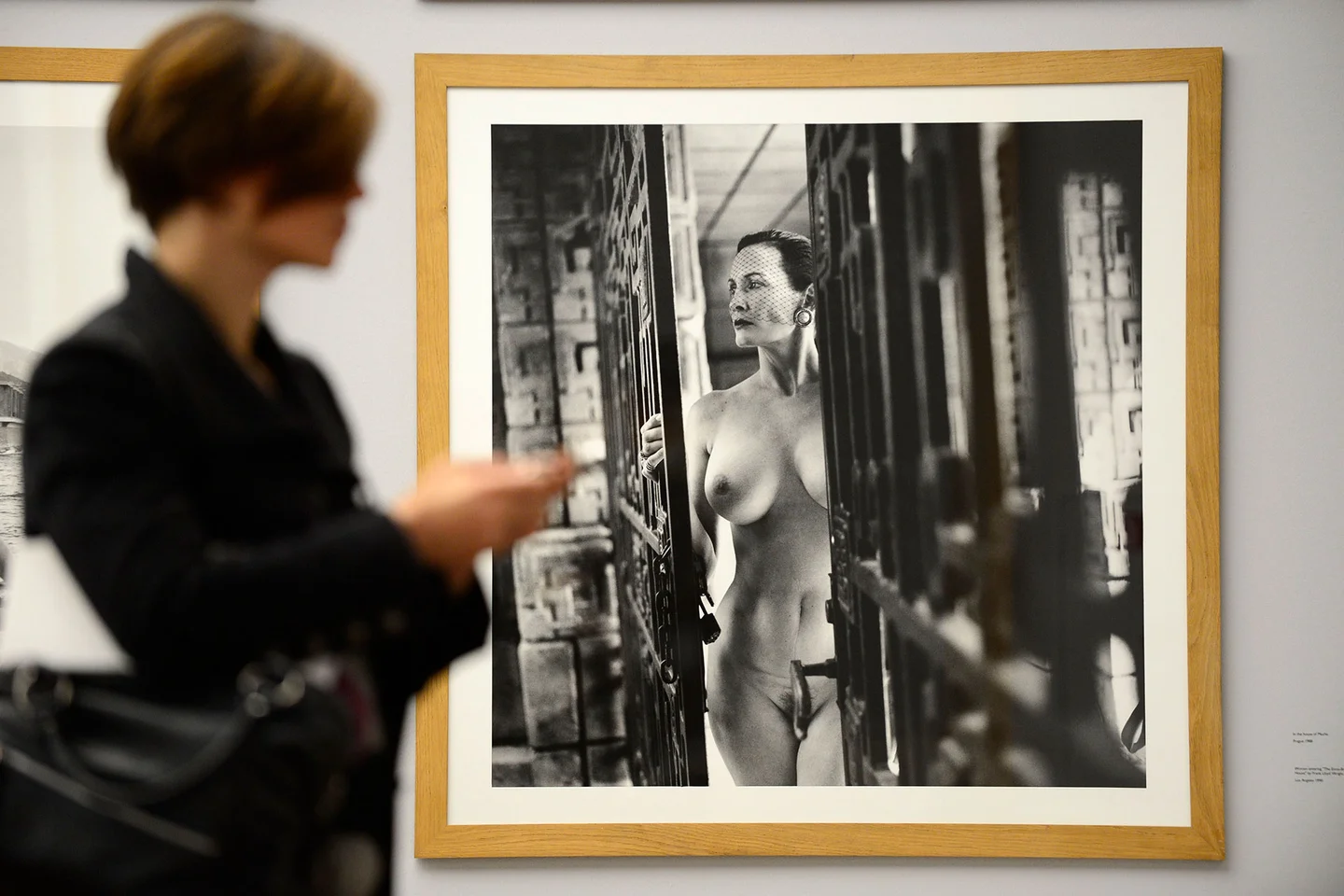
Helmut Newton and the Beauty and the Objecthood of Women

I like subjectivities. When I look around, I actually only see subjectivities, that blossom, that vibrate, that shake. That are very alive. Like a five year old child live in a de facto animistic world. I have trouble identifying what an object is, since also objects appear to want to speak to me or try to establish a relation with me; which, by definition, objects don´t do. I stand permanently under impressions and I am permanently impressed. And impressions are subjective. They invoke the most subjective: your glorious mind. The mind does not want to possess. The mind wants to establish relations that make sense, it wants to establish communion of all things, subjects and objects alike. The mind is perfectly sentient, and sentience is the core of subjectivity. Since I strive to be mind, I only see subjectivities.

The perfect illustration for subjectivity and sentience is beauty. The perfect illustration for beauty is the feminine. The feminine blossoms, the feminine is always in bloom. The feminine always thrives and flourishes. I like to look at the feminine because it vitalises, it bubbingly springs from the below like the fountain of youth, like the source of life. I like to look, for example, at ads from the golden age of advertising (1940s-1970s) that depict women. Or pin ups from that time, notably by Gil Elvgren. The feminine is harmless and friendly. The feminine enjoys itself and wants everyone and everything else to enjoy itself alike. The feminine wants to create joyful and beautiful environments. Women are the better human beings, the superior sex. They embody dignity, grace, self-containedness. They enjoy themselves easier, they embody the pleasure principle. While men embody the sober reality principle, women embody the exuberant pleasure principle. They are not as raw and primitive as men: they are women. The elegance of their form; the elegance of their curves. Their bodies do not radiate the violence, the inadequancy and the threat potential male bodies do. While the male body has the surface qualities of wood or of plastic, the female body equals velvet or silk. There are people on Facebook with an eye for idiosyncracies and beauty, many of them women. Yet also these women prefer to post women over men when they try to post beautiful things. The feminine and the female form is the most universal signifier for beauty.

Sometimes – at present, most of the time – there are complaints about a male gaze, which is understood as an objectifying gaze. It is brought into the discourse mostly by women who are feminists and, most recently, also by men who undeniably beam with vanity and who want to show the feminists how progressive and how enlightened they are. I don´t know exactly what a male gaze is, because I am quite feminine, and I like it that way. Since I also only see subjectivity, I also have some difficulties depicting an objectifying gaze. The objectifying gaze is meant to turn something that is allegedly vividly subjective into an object, into something commodified, that is at your disposal. I don´t know how often such a thing happens, and how often men would look on women with such an objectifying gaze, or with such an attitude. Of course, stuff like this will pass, from time to time at least, in this sorry world – I should know this because I have studied sociology – ; but this has little to nothing to do with my personal environment, nor the people I know. It will happen somewhere in the shadow realm, or in the netherworld, etc. To me, it is something very vague. When people think they see some special kind of gaze everywhere, it is most likely so because it´s their own gaze with which they perceive the world and try to make sense out of it. So if someone complains about the omnipresence of an objectifying gaze it may be immiment that this person´s gaze is in itself the agency that abhorrs subjectivity, and instead turns everything into an object at one´s disposal all by itself. For instance, as it appears, the more some individuals care about gender, the less they seem to care about diversity (and the more the care about diversity, the less they seem to care about gender). This may be so because of their objectifying gaze.

In Helmut Newton´s photography, women seem neither objectified nor thriving in subjectivity. They give me a hard time. Because they seem to lack grace. These women seem to be free. They seem to be in possession of themselves. But they are highly unnatural. They are not enjoying themselves. They don´t seem to have any emotions. So, in a way, they are not even images, or icons. Neither way, they seem to function as a reflection on an image, some kind of meta stuff related to the image. (They form an imagery, idiosyncratic and distinct, though: a universe created by Helmut Newton.) They are neither present nor absent. Although Newton´s women are massive, they lack gravity. They are staged to be caught in an instant. Usually, an instant, a moment in art embodies eternity. Yet in Helmut Newton´s photography it is just something fleeting, instantly evaporating, a whiff, air. Helmut Newton´s photographies are not exactly memorable. Your memory will kind of throw them away in an instant as well. Because there also usually are no memorable shapes and forms in his photography. Although Newton is a master photographer, he does not display a language of someone who has systematically meditated about shapes and forms. His stuff is fresh and virgin all alike, yet it also seems that he drags his models into settings that lack any character. It always seems that his settings come ad hoc; such a spontaneity is likeable, admirable; yet finally it seems to lack fixation and being grounded. His models are staged in somehow tasty environments, sometimes elegant ones, sometimes in environments that are in some interesting and tasty way deserted. Your first impression would be that these women are in no way related to their environments, that they are not actually situated in their environments, that they are not rescued, that they do not thrive in their environments. The second impression is that they are perfectly related to these environments: in their mutual unrelatedness, in their mutual detachedness. Aliens in an alien world. So it all adds up to something tasty, something somehow interesting. And something somehow meaningless and senseless. The environments in Helmut Newton´s photography are meaningless and senseless. They´re indifferent; like the women who appear in them. Like the environments are senseless, the women are senseless. Since in Helmut Newton´s photography women seem neither objectified nor thriving in subjectivity, they finally seem senseless. Neither the women nor the environments tell any stories, or carry psychology. Newton says he does not give the models in his shots any psychology. Because the industry is not interested in psychology – as he hesitantly adds. Yet the industry is an omnivore that swallows up and devours anything. Maybe it is Newton who is not interested in giving a psychology to the models in his shots – and to anything in his shots. For one reason or another (maybe for this reason) Helmut Newton´s photography has provoked anger among feminists. That seems counterintuitive, since Helmut Newton´s women are obviously not powerless, rather powerful and determined, almost masculine ones, Tank Girls. They are not exactly objectified. Yet, in another way, due to their lack of psychology they are underdetermined as humans. They are not, and cannot be, exactly objectified since: how would you objectify a robot? That might be a bigger shame. Does Newton adore strong women, or is he actually some kind of necrophiliac? Helmut Newton says that he likes strong women; not necessarily in his life but in his art. When the leading German feminist, the abrasive Alice Schwarzer, accuses Newton (apart from being a fascist, a racist and a sexist) of deriving particular pleasure, an icing-of-the-cake pleasure, from subjugating explicitely powerful women you may find that ridiculous and as one of her usual antics, yet, upon reflection, after immersing a bit more into Newton, you may be more inclined to think twice about that possibility. Consistently, the Newton model´s eyes are unearthly. Their eyes seem to relate to the unearthly gaze that is inflicted on them. One does not know whether Newton´s models are alive or dead, in a world alive or dead. They are un/dead. Being un/dead however is not something that finally adds up. Between an insight into the purely subjective (or, if you may, the Platonic idea(l)s) and the objectifying fe/male gaze there lies the glorious ZWISCHENREICH, Mittelerde, the realm of normal, ordinary human perception. Yet Newton´s realm is so alien that it is not even located in the ZWISCHENREICH; rather, it is a shadow doppelgänger of the ZWISCHENREICH, that reveals itself when you crack open perceptions that manifest in the ZWISCHENREICH. I do not think they are the deeper truth of the ZWISCHENREICH, however. They are something alien to even that. They are situated in a limbo, in a state of suspended animation. Yet, to increase the irritation, they actually seem to be in a limbo of a limbo. Or so. Finally, Newton´s phtography seems to offer glimpses into another planet, with inhabitants even more inauthentic and detached from themselves than the ones that dwell on this planet (and in the ZWISCHENREICH). I like Woman Entering the Ennis-Brown House by Frank Lloyd Wright from 1990 though. It shows a very interesting women, who additionally appears to have perfect breasts. Helmut Newton says he enjoys being a fashion photographer since he likes to photograph women. And being a top fashion photographer gives him the opportunity to photograph the most beautiful and elegeant women of the world, in the most distinguished environments, most expensive clothes, best make-up, etc. And then he does not make out more of it than that! In a way: clever! A comment on the parallel universe of fashion industry and the zombie people who consume Elle, Vogue or Playboy. An unpersonal, an objectified beauty you have in the fashion industry. I usually cannot relate to the beauty of fashion models. My kind of beauty is when objective beauty standards are met by something that is highly personal and idiosyncratic. For this reason, I like, for instance, model Ryonen. Her beauty is very idiosyncratic. She has some 2000 fans worldwide after all. But they are very devoted to her. Ironically, like Helmut Newton´s models, Ryonen never smiles. So her fans call her the most beautiful robot in the world. (Also Billie Eilish hardly ever smiles; and her first compilation album is called Don´t Smile At Me.) The only occasion I ever saw Ryonen smile is when she was looking at a painting of Bouguereau (coincidentally, a master painter of female subjectivity).

Sexism, racism, homo/transphobia, objectification etc. are problems. But there also are other problems like ignorance, directionlessness, weak personalities, self-saturated mediocrity or inferiority. Given an amount of problems like this, ordinary human sanity in itself may be the problem. I therefore advocate hypersanity. Hypersanity means that you are able to see subjects and objects from many different viewpoints and to emotionally and morally relate to them in more complex ways. Likewise, the more you are able to let the outside world in, the less dominant your „ego“ will become and the less objectifying and the more rational your gaze. The supersane gaze, the all-seeing eye, that will also see all virtual aspects of things. With the transcendental gaze you will see a lot of images and virtualities popping up at any given moment; although there will be perfect calmness there will also be a lot of activity. There is one image that is the deepest image of all, the transcendental image that cannot be transgressed, that will pop up all alike in this ordered chaos, before it vanishes again to give way to something else again (but will reappear time and again); that will yet remain a ground, stable and unaffected. It will probably be a pin-up by Gil Elvgren.

Gil Elvgren’s Pin-Up Girls And Their Photo Reference | Amusing Planet

Esther Vilar und der dressierte Mann

Gewidmet … den wenigen Männern, die sich nicht dressieren lassen, den wenigen Frauen, die nicht käuflich sind – und den Glücklichen, die keinen Marktwert haben, weil sie zu alt, zu hässlich oder zu krank sind.

Widmung zu Der dressierte Mann

In meiner argentinischen Familie gibt es viele Frauen aus diversen Generationen. Nicht alle lehnen Chilenen, Chinesen, Brasilianer, Homosexuelle, Kapitalisten, Polizisten oder gegnerische Fußballvereine ab. Aber keine von ihnen mag Feministinnen. Esther Vilar ist Deutschargentinierin. Sie hat 1971 das Buch Der dressierte Mann veröffentlicht. Aus einer Wut auf die Frauen und auf die Frauenbewegung heraus. Oder vielleicht auch aus einer Wut, aus irgendwelchen Gründen, auf sich selbst. 1975 hat sie im Zusammenhang mit ihren provokaten Thesen ein legendäres TV-Duell mit Alice Schwarzer ausgetragen, das Alice Schwarzer berühmt gemacht hat (Esther Vilar war schon vorher berühmt). Während Alice Schwarzer fünfstellige Eurobeträge an Steuern hinterzogen und ins Ausland geschafft hat, mit der (für Dikatatoren üblichen) Begründung, dort einen Finanzpolster zu haben, falls sie außer Landes fliehen muss, hat Esther Vilar Deutschland tatsächlich im jenem Jahr verlassen, da sie über Jahre hinweg Drohungen und Morddrohungen erhalten hat, Lesungen von ihr nur unter Polizeischutz stattfinden konnten, und sie dauernd von Feministinnen auf Damentoiletten zusammengeschlagen wurde (die von der Schwarzer aktuell in der Transdebatte wieder mit der üblichen Wut und medienwirksamen Vehemenz als Rückzugs- und Schutzräume für Frauen verteidigt werden). Eine mutige Frau; eine integre Frau! Die sich nicht davor gescheut hat, erfolgreich ihren Weg zu gehen und unbequeme Wahrheiten auszusprechen. An und für sich die Vorlage für einen Idolstatus unter der Frauenbewegung. Mit ihrer Wut auf die Frauen und auf die Frauenbewegung hat Esther aber eben auch einen Haufen Wut auf sich gezogen, vor allem von Seiten der Frauenbewegung.

Kernthese vom dressierten Mann ist dabei, dass es nicht der Mann sei, der die Frau unterdrückt, sondern umgekehrt die Frau, die den Mann unterdrückt und ihn, zu ihrem eigenen Vorteil, dressiert – um von ihm versorgt, gefüttert und beschützt zu werden:  Die Frau lässt den Mann – nur aufgrund der Tatsache, dass er ein Mann ist und sie etwas anderes, nämlich eine Frau – bedenkenlos für sich arbeiten, wann immer es eine Gelegenheit dazu gibt. Selber tut die Frau dabei fast nichts, und besteht daher also auch aus fast nichts. Sie muss sich ja nichts aneignen, außer eben einen Mann, der sie heiratet und der alles für sie tut. Wir haben gesagt, die Frau sei, im Gegensatz zum Mann, ein Mensch, der nicht arbeitet. Man könnte hier die Definition der Frau schon abschließen – viel mehr lässt sich wirklich nicht über sie sagen –, wäre nicht der Begriff Mensch ein zu umfassender, zu ungenauer Begriff, um Mann und Frau damit gleichzeitig zu definieren. … Das menschliche Dasein bietet die Wahl zwischen einer mehr animalischen – also tierähnlichen, niederen – Existenz und einer geistigen. Die Frau wählt fraglos die animalische. Körperliches Wohlbefinden, ein Nest und die Möglichkeit, darin ungehindert ihren Brutregeln nachzugehen, sind ihr das höchste. Na Potzblitz! Wir Männer fragen uns ja immer und rätseln: was wollen die Frauen?? (und eine witzige Antwort unter uns Männern darauf lautet: mehr!). Aber da scheinen wir die Antwort endlich zu haben – wird sie doch noch dazu von einer dieser rätselhaften, allgemein in Nebel und in Schweigen – oder aber in belangloses, Nebelgranaten werfendes Sprechen – sich hüllenden Frauen ausgesprochen! Denn Esther Vilar ist eine Frau und kennt sich daher. Also muss das dann ja stimmen! Und wir denken immer, die Frauen hätten schwere Kämpfe auszufechten! Aber: Die Frau kennt keinen Kampf. Wenn sie ihr Studium abbricht und einen Universitätsdozenten heiratet, hat sie ohne Anstrengung das gleiche erreicht wie er … als Frau hat sie immer den Lebensstandard und das Sozialprestige ihres Mannes und muss nichts tun, um diesen Standard und dieses Prestige zu erhalten – das tut er. Der kürzeste Weg zum Erfolg ist deshalb für sie immer noch die Heirat mit einem erfolgreichen Mann.

Wenn ich mich recht erinnere, hatte meine Mutter den Dressierten Mann in ihrem Bücherregal stehen – während mein Vater tausende von Büchern in seinen Regalen hatte, die sich fast ausschließlich auf die Möglichkeiten der Befreiung der Arbeiter und allgemein der Entrechteten und Unterdrücken bezogen haben. Männer sind, nach meiner Erfahrung, geradezu besessen davon, die Entrechteten und Unterdrückten zu befreien – und also auch die Frauen zu befreien, die sie ebenfalls für entrechtet und unterdrückt halten. Als was sie erscheinen, wenn sie denn nach den Maßstäben der Männer gemessen werden: Es ist ganz logisch, dass der Mann, der die Frau für seinesgleichen hält und dabei mitansehen muss, was für ein stupides Leben sie neben ihm führt, glaubt er unterdrücke sie. Doch solange man sich erinnert, ist die Frau nicht mehr zu irgendeiner Unterwerfung unter den Willen des Mannes gezwungen worden, im Gegenteil: Es sind ihr alle Möglichkeiten zur Verfügung gestanden, sich unabhängig zu machen. Wenn sich also die Frau in dieser langen Zeit nicht von ihrem „Joch“ befreit hat, dann gibt es dafür nur eine Erklärung: Sie hat keins. Also so was, also so was! Als Mann muss ich an dieser Stelle sagen: das hätten wir nie für möglich gehalten. Die Frau ist also nicht unterdrückt und steht unter keinem Joch! Aber Esther Vilar ist eine Frau. Die muss es ja wissen!

Da der Mann – im Gegensatz zur Frau – technikbegeistert ist und begeistert von den Möglichkeiten, eine bessere Welt zu schaffen, lässt er sich jedoch nicht beirren in seinem optimistischen, fröhlichen Drang, auch für Frauen eine bessere Welt zu schaffen. Er konstruiert – neben Autos, Hubschraubern oder Raumschiffen – Staubsauger, Waschmaschinen, Fernseher oder Geschirrspüler, um der Frau das Leben zuhause einfacher zu machen und ihr viel mehr freie Zeit und Muße zu verschaffen. Aber: Statt dass die Frau jetzt anfängt, ein Leben des Geistes zu führen, sich um Politik, Geschichte oder die Erforschung des Weltraums zu kümmern, verwendet sie die gewonnene Zeit darauf, Kuchen zu backen, Unterwäsche zu bügeln, Rüschchen zu nähen oder, wenn sie ganz unternehmungslustig ist, die sanitären Einrichtungen des Badezimmers mit Blumengirlanden zu bekleiden. Ja, also wenn ich das jetzt versuche, mir zu überlegen und meine Eindrücke und Erfahrungen zu ordnen: dann ist das immer genau so gewesen; wenngleich es in ganz allerjüngster Zeit ein paar hauchzarte Veränderungen zu geben scheint, die allerdings, wie es ja in erster Linie die Feministinnen selbst sind, die das sagen, zu unbedeutend sind, um ernst genommen werden zu können und um von einer bloßen emphemeren statistischen Schwankung, wie sie sich dauernd ereignen, tatsächlich unterschieden werden zu können. (Berufstätigkeit und Studium der Frau verfälschen also nur die Statistik und dienen außerdem dazu, den Mann noch hoffnungsloser zu versklaven – denn sowohl Beruf als auch Ausbildung sind für Mann und Frau etwas völlig verschiedenes.)

Für Technik interessieren sich Frauen auf jeden Fall nicht, weder in Ausbildung, noch im Beruf. Man muss nur einmal an einer Baustelle vorbekommen, an der irgendein neues Arbeitsgerät eingesetzt wird, zum Beispiel eine neue Art Bagger. Es gibt kaum einen Mann – ganz gleich, welcher sozialen Schicht –, der daran vorbeigeht, ohne zumindest einen längeren Blick darauf geworfen zu haben. Viele aber bleiben stehen, sehen zu und unterhalten sich darüber, welche Eigenschaften die neue Maschine besitzt, wie viel sie leistet, warum sie es leistet und inwiefern sie sich von herkömmlichen Modellen unterscheidet. Einer Frau würde es nicht einfallen, an einer Baustelle stehenzubleiben, es sei denn, die Menschenansammlung wäre so groß, dass sie glauben müsste, eine prickelnde Sensation („Arbeiter von Planierraupe zermalmt“) zu versäumen. In einem solchen Fall würde sie sich erkundigen und sich dann sofort wieder abwenden. Das wurde im Dressierten Mann 1971 gesagt. Heute, 50 Jahre und das bedeutendste halbe Jahrhundert der politischen, ideologischen und lebenspraktischen Frauenemanzipation der Weltgeschichte später verfolge ich auf Facebook die Seite Awesome Earthmovers, gemeinsam mit einer knappen Million anderen Menschen aus aller Welt, obwohl mich Bagger nur ganz, ganz peripher interessieren und sie mit meinem Leben und meinem Beruf nichts zu tun haben. Frauen sind dort allerdings so selten, dass sich ihre Anwesenheit fast noch kurioser und sensationeller ausmacht als die außerirdischen, weltraumrechnologieähnlichen Riesenmaschinen, die dort präsentiert werden. Kurios, aber was der Mann nicht weiß, ist, dass die Frauen diese Neugier, diesen Ehrgeiz, diesen Tatendrang, die ihm so selbstverständlich erscheinen, nicht kennen. Wenn sie nicht an der Welt der Männer teilnehmen, dann deshalb, weil sie nicht wollen: Sie haben kein Bedürfnis nach dieser Welt. Die Art Unabhängigkeit der Männer wäre für sie vollkommen wertlos, sie fühlen sich nicht abhängig. Die geistige Überlegenheit des Mannes schüchtert sie nicht ein, Ehrgeiz in geistigen Dingen kennen sie ja nicht. Eine sehr gescheite Frau, Esther Vilar! Sie lässt sich von niemandem einschüchtern: außer von der Intelligenz des Mannes! Und eine sehr gebildete, ungwöhnlich interessierte und informierte Frau! Einmal erwähnt sie im Dressierten Mann sogar Samuel Beckett (mit der doppelbödigen Bemerkung, dass er vielleicht einmal eine Komödie schreiben sollte, in der eine Frau bis zur Taille in einem Erdhügel steckt und nach ihrer Zahnbürste sucht, wie in „Glückliche Tage“. Vielleicht hätte er damit sogar Erfolg beim Publikum.) Sie hat sicher einen IQ von 142, und ist damit eine der intelligentesten und wissendsten Frauen der Erde, denn recht viel höher werden die Intelligenzquotienten (bei Männern hin und wieder, aber) bei Frauen nur mehr ganz, ganz, ganz, ganz selten. Esther Vilar muss es also wissen. Sie blickt praktisch vom Gipfel auf alles herab.

Wenn die Frau aber schon nicht arbeiten will und auch nicht sich bilden – wollen die Männer doch wenigstens erreichen, dass sich die Frauen zumindest vergnügen können. Wieder können sie intellektuell nicht verarbeiten, was sie mit ihren ungläubigen Augen doch ganz klar sehen müssten: Frauen vergnügen sich die ganze Zeit, Frauen sind vergnügungssüchtig und interessieren sich für überhaupt nichts anderes als für ihr Vergnügen. Diese Vergnügungen aber sind: Kuchenbacken, Wäschebügeln, Kleidernähen, Fensterputzen, Löckchendrehen, Fußnägel lackieren und zuweilen – bei hochentwickelten Frauen, wir werden später noch auf sie zu sprechen kommen – auch Maschineschreiben und Stenographieren. Haha, gut gebrüllt, Löwin! Eine kluge Frau, wie die das durchschaut! Und wie die unbequeme Wahrheiten ausspricht! Noch klüger, und vor allem stringenter, als diese Lisa Eckhart. Was täten wir Männer ohne solche vereinzelten, isoliert auftretenden Frauen, die den Vorhang wegziehen vom Mysterium ihrer Geschlechtsgenossinen, vom Mysterium Frau?? Als geistiges, verantwortungsbewusstes Wesen wird es der Mann nämlich kaum fassen können, dass jemand in so etwas Vergnügen finden könnte – aber die Frau eben tut es, permanent. Sie ist damit nicht unterdrückt, sondern glücklich: Auf diese Weise schwelgt sie mit ihrer Clique in einem großen, permanenten Fest, lebt in einer Welt der Freiheit, Verantwortungslosigkeit und des rationalen Glücks, von der ein Mann für sich nicht einmal zu träumen wagt und die er allenfalls bei Hippies oder Südseeinsulanern vermuten würde, aber nie in seiner eigenen Umgebung.

Das liegt daran, dass die Welten der Männer und die der Frauen so verschieden sind, dass sie, trotz geographischer Nähe bzw. Identität, keine gegenseitigen Umgebungen bilden: Tatsache ist, dass die Männer sich wirklich dafür interessieren, ob es auf dem Mars primitive Lebensformen gibt oder nicht oder ob die Argumente der Chinesen im russisch-chinesischen Grenzkonflikt stichhaltiger sind als die der Russen, und dass solche Probleme die Frauen absolut kalt lassen. Sie interessieren sich dafür, wie man braune Häschen stickt, Kleider häkelt oder ob sich eine bestimmte Filmschauspielerin scheiden lässt oder nicht. So leben beide schön voneinander getrennt, jeder mit seinem eigenen Horizont und ohne jemals mit dem anderen in wirkliche Berührung zu kommen. Das einzige Thema, das sie beide interessiert, ist die Frau. Weil sich Männer für Frauen interessieren (bzw. wie man mit Esther Vilar wohl sagen könnte: weil Männer sich überhaupt für was interessieren – oder, Frau Vilar?) glauben sie auch, dass umgekehrt Frauen sich für Männer interessieren. Außerdem glauben Männer, dass Frauen ihnen berechtigterweise die kalte Schulter zeigen würden, wenn sie das denn tun, weil sie, in ihrer Tollpatschigkeit und ihrem plumpen Fokus auf die Technik, immer wieder so unsensibel wären, den Frauen gegenüber. Wie sie sich irren: Die Frau fühlt sich durch den Mann alles andere als bevormundet. Eine der vielen deprimierenden Wahrheiten im Verhältnis zwischen den Geschlechtern ist einfach die, dass in der Welt der Frauen der Mann praktisch nicht existiert. Der Mann ist der Frau nicht wichtig genug, dass sie sich gegen ihn auflehnt. Ihre Abhängigkeit von ihm ist ja nur materieller, gewissermaßen „physikalischer“ Art. Es ist die Abhängigkeit eines Touristen von seiner Fluggesellschaft, eines Wirtes von seiner Kaffemaschine, eines Autos von Benzin, eines Fernsehgeräts von Strom. Solche Abhängigkeiten bereiten keine Seelenqualen. Frauen interessieren sich nicht für Männer; sie interessieren sich für andere Frauen, mit denen sie wetteifern, bei denen sie sich was abgucken wollen, bei denen sie schauen, dass keine ihr überlegen ist bzw., wenn sie überlegen ist, dann zu dem Zweck, dass sie sie imitieren können, im Hinblick auf Schminken, Mode und Schönheit der Erscheinung.

(Worauf Der dressierte Mann auch hinweist: während Frauen darauf achten, sich gegenseitig im äußeren Erscheinungsbild zu übertreffen, scheinen Männer fast eher darauf bedacht, sich gegenseitig zu unterbieten, oder aber in Gleichförmigkeit zu erstarren: auf jeden Fall sich nichts anzuziehen und nichts zu kultivieren, was sie selber schön oder gar individuell machen würde. Abgesehen davon, dass Männer kaum Bedürfnisse haben und genügsam sind, würde ein modischer Look sie beim harten Arbeiten stören – und ihren Erfolg bei Frauen in keinster Weise erhöhen. Und selbst wenn er sie trüge und sie ihm gut stünden, würden sie seinen Erfolg bei den Frauen gewiss nicht vergrößern, denn Frauen beurteilen Männer – ganz anders als Männer Frauen – niemals nach ästhetischen Gesichtspunkten. Männer, die vorübergehend individualistischen Haarschnitt tragen, merken das meist nach einiger Zeit von selbst und kehren zu einer der zwei bis drei Varianten der männlichen Kurz- oder Langhaar-Standardfrisuren zurück. Ja, das kenne ich gut. Aber ich behalte diese Dinge halt mal bei, da ich gut gewählt aus der Art fallende, vor allem schöne Dinge mag. Oder halt, weil ich Künstler bin – und damit eigentlich zähle zu einer Amüsiertruppe für Frauen (da ich aber ein echter Künstler und ein tiefsinniger Humorist bin und kein bloß farbenprächtiger Clown, wissen sie nicht, wie sie daran amüsant oder interessant finden sollten). Hin und wieder bekomme ich für meinen roten Anzug, meinen Joop-Anzug, meinen Yukata, mein farbenprächtiges afrikanisches Hemd, mein philippinisches Barong-Hemd oder meine Unikat-Hose, die eine Kostümbildnerin angefertigt hat, auch Anerkennung. In Wirklichkeit sehr selten natürlich, denn praktisch alle laufen in ihrem Zombiewalk trotzdem auch an so was unbeteiligt vorbei. Aber hin und wieder bekomme ich auch Zuspruch und es erregt Begeisterung, Wärme und Interesse – hauptsächlich allerdings von Seiten von Männern. Da ich aber gut gewählt aus der Art fallende Dinge mag, bewundere immer wieder einmal ich es spontan, wenn eine Frau besonders gut und individuell angezogen und gestyled ist (was allerdings ebenfalls selten passiert). Dann lacht sie auf und bedankt sich, in ihrer typischen weiblichen Mischung aus einem knallharten, mit sich selbst identischen Narzissmus und einer idiotischen Verlegenheit und Verschämtheit, bevor sie wieder mit ihrem eiskalten Blick und ihrem leblosen Gesichtsausdruck weiterzieht.)

Aber Frauen interessieren sich eben nur für andere Frauen. Das ist für Frauenmagazine einerseits gut, andererseits schlecht, da sich der mögliche Stoff, über den berichtet werden kann, sich an und für sich schnell erschöpft. Andererseits aber auch auf ein ungeheuer breites Reservoir zurückgegriffen kann, wenn es in einer bestimmten Weise geschieht: Jeder Artikel muss den Eindruck erwecken, als handle es sich um einen Bericht über Frauen. Nur unter einer Überschrift wie „Frauen waren mein Ruin“ könnte über einen gealterten Boxer berichtet werden, ein Komponist muss während des Interviews zumindest einmal sagen, dass ihn Frauen inspiriert haben und dass ja auch ein schönes Mädchen wie eine Melodie sei – nur noch schöner. Wenn diese Tarnung gut gelingt, ist es durchaus möglich, die entferntesten Themen an die Frauen heranzutragen. Hey, was für ein intelligentes Machwerk! Oh Mann, sind diese Frauen blöd! Nicht einmal für gealterte Boxer interessieren sie sich! Es haut einen einfach um. Die Dummheit der Frauen ist so überwältigend, dass alles, womit sie in Berührung kommen, gleichsam wie von ihr durchtränkt wird. Sie fällt nur deshalb nicht auf, weil ihr jeder von der ersten Sekunde seines Lebens an ausgeliefert war und sich so unmerklich an sie gewöhnen konnte. Gut, dass es Esther Vilar gibt. Der dressierte Mann ist wohl das auklärendste Buch, das ich – unter zehntausenden von anderen – je gelesen habe. Unter anderem Bücher von Feministinnen und Emanzen. Denen habe ich immer geglaubt. Nur in letzter Zeit ist das ein ganz klein wenig brüchig geworden, sind da der eine und andere Zweifel aufgetreten; den Esther Vilar im dressierten Mann eigentlich schon 1971 ausgeräumt hätte: Die emanzipierte Frau ist genauso dumm wie die anderen, aber sie möchte nicht für so dumm gehalten werden: Von Hausfrauen spricht sie nur auf die abfälligste Art. Ja, das stimmt. Das ist eigentlich alles, was in The Psychic Life of Power oder Revolt, She Said drinnensteht.

Wie sollte die Emanzipation je gelingen – wenn das überhaupt eine Kategorie für eineN ist – wenn — naja, wie Esther Vilar es ausdrückt: Bei den Frauen selbst übrigens haben sich die Emanzipationsbestrebungen wie üblich in einer modischen Variante erschöpft: Eine Zeitlang gefielen sie sich in der oft belächelten Maskerade der Suffragetten. Einen ähnlich tiefen Eindruck hat später die Philosophie Sartres auf die Frauen gemacht. Zum Beweis, dass sie alles verstanden hatten, ließen sie sich die Haare bis zur Taille wachsen und trugen dazu Hosen und schwarze Pullover. Das gleiche wiederfuhr kürzlich den Lehren des Kommunistenführers Mao Tse-tung; für die Dauer einer Saison war der „Mao-Look“ in Mode. Haha, sehr gut! Studiert die Werke des Vorsitzenden Mao Tse-tung, hört auf seine Worte und handelt nach seinen Weisungen!, hat da damals noch Lin Biao (ein Mann) gefordert. Lasst hundert Blumen blühen, lasst hundert Schulen miteinander wetteifern, hat der Große Steuermann selbst ausgerufen (bevor ihm die Konsequenzen davon aber schnell zu anstrengend geworden sind) (wobei Mao Tse-tung (etwas einseitig) als rücksichtsloser Machtmensch in Erinnerung geblieben ist: aber erinnert sich noch wer an Madame Mao, von der Viererbande?? Lmao) (im Hinblick auf den Kommunismus übrigens ist Esther Vilar seinerzeit auch als Karl Marx der Männer angepriesen worden). Wie sollte auf einer so versengten Erde aber jemals etwas aufblühen? Eben gar nicht!, wie Esther Vilar den Dressierten Mann beschließt, da eine solche Revolution ein Subjekt benötigt, das aber im emanzipatorischen Sinn gar nicht da ist: Nur Frauen könnten den Teufelskreis von Dressur und Ausbeutung brechen. Sie werden es nicht tun, es gibt dafür keinen rationalen Grund. Auf ihre Gefühle darf man schon gar nicht hoffen –, Frauen sind gefühlskalt und ohne jedes Mitleid. Die Welt wird also immer weiter in diesem Kitsch, in dieser Barbarei, in diesem Schwachsinn Weiblichkeit versinken, und die Männer, diese wunderbaren Träumer, werden niemals aus ihren Träumen erwachen. Na, haha, das endet ja fast so pessimistisch und nihilistisch wie das Down Girl Buch von Kate Manne (einer Feminazi)! Eines aber ist die Träumerei und die Verschwommenheit und ein Zweites ist Wachheit und Klarheit; ein Drittes und ein Viertes ist diese gleichermaßen kolossal luzide wie kolossal seltsame Frau: Esther Vilar.

Ich will daher noch mehr Bücher lesen von Esther Vilar. Sie hat auch noch andere Sachen geschrieben, unter anderem eine umgedrehte Version von Ibsens Nora – Ein Puppenheim. Jetzt muss ich aber mal nach Argentinien. Ich werde mir unter anderem ein Buch über die Geschichte des Feminismus mitnehmen, das ich mir besorgt habe, und werde meinen Frauen dann dort daraus vorlesen um sie aufzuklären. Anzunehmenderweise wird das auf genauso fruchtbaren Boden fallen, wie von Esther Vilar beschrieben. Mittelfristig will ich auch Sachen von radikalen Feministinnen wie Andrea Dworkin oder Catherine MacKinnon studieren. Da werde ich dann wohl auch oft reagieren von wegen: Gut gebrüllt, Löwin! oder: Eine kluge Frau! Fast so klug wie Lisa Eckhart! Mein Ziel ist es, mich so sehr zu vergeistigen und so viele Ebenen aufzumachen, dass ich dem Rest der Menschheit als geistloses Chaos erscheinen muss. Das wird mir im Leben sehr weiterhelfen, besonders bei den Wei –

Versuche zu Alice Schwarzer

Machen wir aus dem einen Frauentag im Jahr 365 Tage für Menschen – und für die Tiere und die Natur gleich dazu.

Alice Schwarzer, 2010

Wenn man die EMMA eine Weile mitverfolgt, bemerkt manfrau, dass das gesamte Denken und Empfinden (und ausgedrückt dann eben in ihrer beklemmend eindimensionalen und hauptsächlich aus Drohgebärden bestehenden Sprache) von Alice Schwarzer um Macht, (sexuelle) Gewalt, Erhöhung und Erniedrigung, (realen, zwischenmenschlichen) Sadomasochismus, Vergewaltigung, Missbrauch und Kastration kreist. Und um vorgetäuschte Persönlichkeiten. Von wegen: Männer würden vorgeben, für Frauen nur das Beste zu wollen; aber alles, was sie in Wirklichkeit wollen würden: sei sie zu beherrschen. Männer seien permanent damit beschäftigt, das andere Geschlecht beherrschen zu wollen, und voller Nervosität, dass ihnen das, aufgrund von dessen Spontaneität und Eigenmächtigkeit, nicht gelingen könnte. Wie sie auf dieses Männerbild und diese Fixierung auf Vorgetäuschtheit wohl kommt? Eigentlich sind Männer ja nicht so. Aber manfrau tendiert halt dazu, andere so einzuschätzen, wie manfrau selbst ist. Kein Wunder, dass sie sich mit Putin solidarisiert. Dessen Psychologie ist ja ähnlich.

Wenn man die EMMA eine Weile mitverfolgt, bemerkt manfrau: In der Seele der EMMA kommt manfrau schnell von A nach B, und wieder zurück. Recht viel mehr Stationen gibt es da nicht. Man hat da nur ein obsessives, neurotisches Ohnmachtsgefühl und einen paranoiden Opferkult auf der einen Seite und einen Größenwahn und Allmachtsansprüche auf der anderen. Dazwischen gibt es nichts. Keine Harmonie, keinen Ausgleich; also das, wo sich das eigentliche Leben, die Normalität abspielt. Dazu sagen sie dann Feminismus. Ein krankhaft schwaches, instabiles, störungsanfälliges Ego hat man da – das als unglaublich stark, glorreich, grandios und als so unantastbar dastehen will, dass keineR auch nur auf die Idee kommen könnte, daran zu rütteln oder auch nur anzustreifen. Das ist auch notwendig: Denn wenn man auch nur ein bisschen daran anstreift, bricht alles wieder zusammen und es tut so, als ob es einem höchst aggressiven Brandbombenanschlag ausgesetzt sei, von einer Bomberstaffel von oben, im Zuge eines erbarmungslosen Krieges, den das Patriarchat gegen eine führt. Kein Wunder, dass sich die EMMA mit Putin solidarisiert. Dessen Psychologie ist ja ähnlich.

Im Zusammenhang mit diesem krankhaft schwachen Ego ist EMMA darauf fixiert, dass es das Männliche und das Weibliche gleichsam als Essenzen gibt. Zumindest wird sie hochgradig nervös, wenn irgendwas diese Essenzhaftigkeit – und die Stabilität, die diese Essenzhaftigkeit verleiht – subvertieren könnte. So zum Beispiel der Genderdekonstruktivismus Butlerscher Prägung oder die Heuristik der Genderfluidität der neuzeitlichen Tunten. In denen wittert die EMMA eine letale Bedrohung der Frauen und des Feminismus. Nicht, dass die EMMA mit der Ablehnung davon ganz oder wesentlich unrecht hätte. Aber wenn Alice Schwarzer als zweitwichtigste weibliche Intellektuelle Deutschlands gilt, müsste ihr doch ein geschmeidigerer, raffinierterer Umgang mit anderen intellektuellen Positionen möglich sein, anstelle von einer panisch-apodiktischen Abwehrhaltung, die sie dann stets hegt und pflegt. Ob die Essenz FRAU die bessere Essenz ist als MANN lässt die EMMA immer offen, in einem gleichsam beredten (scheinbar brütenden) Schweigen (vielleicht ist sie nicht darauf aus, dass das so wäre; vielleicht will sie das schon, kann aber nicht daran glauben: daher die Intransigenz, mit der sie ihren Feminismus formuliert, als innere (und äußere) Abwehr dagegen).

Die EMMA lebt davon, sich dauernd bedroht zu fühlen. Und zieht ihren höchsten Genuss daraus, anderen zu drohen und auf andere bedrohlich zu wirken. Dabei geht es dauernd um Macht. Und wenn man die EMMA eine Weile mitverfolgt, merkt manfrau: um absolute Macht, die man entweder hat oder nicht. Wenn man (bzw. in dem Fall: frau) keine absolute Macht hat, hat frau keine und lebt absolut bedroht durch die absolute oder auch nur relative Macht anderer. Und wenn frau keine absolute Macht hat, sei das nicht nur relativ, sondern absolut ungerecht. Die EMMA hasst alles, oder findet es zumindest bedenklich, wenn irgendwer anderer Macht oder Einfluss hat als sie. Junge Influencerinnen zum Beispiel, vor allem wenn sie Werbung für Damenunterwäsche machen o. dergl. Das vermittle ein falsches Frauenbild, auch wenn Frauen gerade ein solches Frauenbild lieben (unter anderem, da es ihnen maßlose Macht verleiht über Männer: allerdings in einer Weise, über die die EMMA keine Macht hat und an der sie nicht beteiligt ist). Frauen haben sich aber einzureihen als keusche Soldatinnen hinter Frau Generalissimus Alice Schwarzer, damit die ihren ewigen, letztendlich persönlich motivierten Krieg, ihr ewiges Machtspiel gegen das Patriarchat und gegen die Männer führen kann. Weil sie so beleidigt ist, dass sie selbst kein Mann ist. Bzw. die dem Mann angeblich zuteilwerdenden Privilegien nicht hat, wie vorgeblich die totale Macht über die ganze Welt u. dergl. mehr. Kein Wunder, dass sich die EMMA mit Putin solidarisiert. Dessen Psychologie ist ja ähnlich. Und der lebt auch dauernd im Krieg.

Im Zuge des Erfolges der durch den Feminismus vorbereiteten #MeToo-Bewegung segelt manfrau derzeit mit dem Wind, wenn manXfrau sich als Opfer deklariert, das jetzt einzufordern berechtigt sei. Und im Zuge dessen scheinen einige transaktivistische Tunten recht aggressiv zu sein und recht weitreichende Forderungen zu stellen. Diese TransaktivistXn scheinen sich auch eher mit heterosexuellen Männern zu solidarisieren, hingegen auf Homosexuelle und auf Frauen vorwiegend herabzublicken. Das wirkt kontraintuitiv, ist aber doch naheliegend: denn heterosexuelle Männer haben mehr Macht. Und das, was die aggressiven Tunten wollen, ist auch Macht. Aus scheinbar (bzw. nach außen hin vorgegebenen) defensiven Motiven, in Wahrheit wohl aber eher aus offensiven. Denn es gibt Menschen, die lieben die Macht, und die Selbsterhöhung; und die Möglichkeit, auf andere herabblicken zu können. Vor allem wenn es sich um narzisstisch und histrionisch gestörte Tunten handelt, die sich für eine Art supersexy genderfluide Übermenschen halten.  Da ist ein Kollisionskurs unvermeidlich zu gewissen Femistinnen – Feminazis, female supremacists oder eben den EMMA-Frauen – hinter deren eigenen Anliegen sich genau dieselbe Motivation verbirgt. Radikale Transaktivistxn und TERFs lieben sich oder ziehen einander zumindest magisch an, da (zumindest einige unter ihnen) einen Außenfeind brauchen und auch gar nichts anderes als das wollen. Sie sind daran interessiert, dass ihre Feindbilder bestehen bleiben. Würden ihre Feindbilder umfallen, würde sich herausstellen, dass sie selbst der Feind sind.

Alice Schwarzer hat auch was gegen den Frauentag jedes Jahr am 8. März. Denn woher kommt der? Von der Frauenbewegung auf jeden Fall nicht. Dieser skurrile 8. März komme von den Sozialisten – genau gesagt: er kommt also nicht von ihr selbst – und ist somit ein Witz; der reinste Hohn; eine galante Geste – und wie jede Galanterie gönnerhaft, ja eigentlich verächtlich. Denn gerade die Frauenbewegung entstand bekanntermaßen Anfang der 1970er Jahre im Westen nicht zuletzt aus Protest gegen die patriarchale Linke. Frauenbewegungen gibt es bekanntermaßen seit Jahrhunderten, und die Frauenfrage wurde schon im Mittelalter gestellt (z.B. zur Zeit von Christine de Pizan). So gönnerhaft, das zuzugeben, und auch, dass die Idee zum internationalen Frauentag von den Frauen der Sozialistischen Partei Amerikas aus dem Jahr 1908 gekommen ist, ist sie aber nicht. Da sie zu eigentlich verächtlich ist gegen Eine Linke, die zwar noch die letzten bolivianischen Bauern befreien wollte, die eigenen Frauen und Freundinnen aber weiter Kaffee kochen, Flugblätter tippen und Kinder versorgen ließ. Wo die Frauen also täglich ein, zwei Stunden Hausarbeit machen und den Rest des Tages vor dem Fernseher verschimmeln, zwischendurch halt vielleicht ein paar Flugblätter tippen, bevor sie sich – nachdem es sich um Linksextreme handelt – wieder den nächsten Ofen zusammenpicken: während die bolivianischen Bauern im Schweiße ihres Angesichts, bemüht, beladen, entrechtet – etc. Wenn die Freundinnen der Sozialisten was anderes gewollt hätten, hätten sie es ja nur sagen brauchen, oder eben revoltieren. Schaffen wir ihn also endlich ab, diesen gönnerhaften 8. März!, spricht also Alice. Und fordert (denn ohne (großangelegtes) Einfordern kann sie ja auch nicht sein): Und machen wir aus dem einen Frauentag im Jahr 365 Tage für Menschen – und für die Tiere und die Natur gleich dazu. Freilich begibt sie sich mit dieser idiotischen Forderung doch ganz in die Nähe der Sozialisten! Deren schmutzige Fantasien lauten ja auch: machen wir die antikapitalistische Revolution, führen wir den Sozialismus ein – und dann kommt jeden Tag der Weihnachtsmann! Dann leben wir im Schlaraffenland! Und alle wilden Tiere werden friedlich etc. Kein Menschenfreund, der tatsächlich eine_x_R ist, würde daherkommen mit: Und machen wir aus dem einen Frauentag im Jahr 365 Tage für Menschen – und für die Tiere und die Natur gleich dazu; eher ist das was für getarnte Misanthropen. Das kann nur jemand, der sich für andere Menschen bestenfalls nicht interessiert.

Wenn eine Frau aus eigener Kraft Erfolg hat, begeistert sich die EMMA dafür und berichtet dann darüber (und man sieht: sie identifiziert sich gerne damit). Das ist einer Frauenzeitschrift auch angemessen. Aber sie tut das immer mit unglaublich gerührten, beinahe tränenerfüllten Kinderaugen, mit der sie diese erfolgreichen Frauen dann anblickt (oder hat das zumindest bei den erfolgreichen deutschen Fußballerinnen und ihrer Trainerin bei der letzten EM getan). Das ist einerseits gut, denn das scheint die einzige Gelegenheit, bei der die EMMA zärtlich ist. Andererseits ist es verwirrend. Abgesehen davon, dass es ja nicht in einem Fall unter einer Million einmal passiert, ist es eine so große Sache auch wieder nicht, wenn eine Frau (oder ein Mann) erfolgreich ist, und gegen alle Widerstände einen eigenen Weg gegangen ist, der sich als der richtige erwiesen hat. Es sind diese gerührten Kinderaugen, mit denen die EMMA erfolgreiche Frauen anstaunt, die „gegen alle Widerstände ihren eigenen Weg gehen“, die letztendlich was Beklemmendes haben. Die Gesellschaft ist ja seit Jahrzehnten zumindest nicht mehr so; nur die EMMA ist seit Jahrzehnten so. So als ob die EMMA letztendlich in einer frühen menschlichen Entwicklungsphase arretiert ist. Sich von einem übermächtigen und irrationalen Erwachsenen unterdrückt fühlt – dabei aber kurz vor dem großen Durchbruch steht, kurz davor ist, aus dem Gefängnis auszubrechen und es dem Erwachsenen dann endlich zu zeigen, dass sie auch was kann, oder noch mehr kann. Wenn die dreijährige, ansonsten todherzige Ana immer zum Schreien und Quengeln anfängt, weil sie vom Papa nicht alles bekommt, was sie will, fragen wir sie dann immer im Scherz, ob sie später einmal Feministin werden wird.

Wenn in irgendeinem Winkel der Welt Frauen schlecht behandelt werden, schreibt die EMMA darüber, und vergisst dann nie die Frage hinzustellen Und wo bleibt der deutsche Aufschrei?? oder Und warum unternimmt die Regierung nichts dagegen?? Das ist gut, und zu so was ist der Feminismus ja da. Trotzdem provoziert sie damit dann immer auch Fragen bei ihren eigenen Leserinnen, was die deutsche Regierung denn dagegen tun sollte oder was sie diesbezüglich für ein Mandat hätte? Die EMMA setzt aber eben gerne die eigene Gesellschaft ins Unrecht – denn sie liebt es, die Gesellschaft vor sich herzutreiben. Oder, im Speziellen, die deutsche Außenministerin Baerbock, die eine „feministische Außenpolitik“ (lmao) machen will, die der EMMA aber nicht feministisch genug ist. Um die Gesellschaft vor sich hertreiben zu können, stellt die EMMA und stellt Alice Schwarzer immer wieder politische Forderungen, die im Hinblick auf ihre Vernünftigkeit und Angemessenheit oder dem Gegenteil davon über die Zeit hinweg wie ein random walk erscheinen. Manfrau fragt sich bekanntlich immer wieder, ob Alice mit ihrem Feminismus in den 1970er Jahren steckengeblieben ist. Aber ihr Feminismus ist ja nicht auf Entwicklung angelegt, sondern ist eher eine fortwährende statische Berechnung, damit das eigene instabile Gebäude nicht zusammenkracht. Im Hinblick auf das dauernde Einfordern hat man da also einen polternden Machtmenschen, der immer wieder in Fettnäpfchen der Unvernunft und der Inadäquanz tritt; der sich wie eine Elefantenkuh durch den gesellschaftlichen Porzellanladen bewegt. Eine die Nähe der Boulevardmedien suchende attention whore, die Prostitution und Pornographie verbieten will, weil da nicht Frau nicht eindeutig oben ist (der Mann freilich auch nicht) und vor allem, weil sie damit Männer bestrafen und kastrieren kann – und Frauen, die „mit dem Feind“ kollaborieren, gleich dazu.

Es gibt da Frauen und Feministinnen, die nicht finden, dass Alice Schwarzer für den Feminismus stünde. Alice Schwarzer stehe in erster Linie für sich selbst. Das ist wohl so. Aber: der Feminismus ist Teil ihres Selbst. Das muss man ihr schon lassen. Und der Feminismus ist ja, im Großen und Ganzen, gut und notwendig. Daher ist es gut, dass es Feministinnen gibt, und es ist gut, dass es Alice Schwarzer gibt, die Frauenanliegen ihre nicht unterzukriegende Stimme leiht. Sollte sie einmal gestorben sein, müsste man ihr feministisches Mundwerk sicher extra erschlagen. Ob sie überhaupt stirbt, ist fragwürdig: denn Alice Schwarzer strotzt nur so vor Vitalität. Für einige Frauen – im erweiterten Sinne sogar für alle Frauen – machen die Narrative und die Kampfanleitungen der EMMA sicher Sinn. Wie ein Bollwerk richtet sich die Schwarzer auf gegen die woken Wahnsinnigen aus Berlin-Kreuzberg und ihre artifizielle Lebensweise, die diese allen aufdrängen und mit der sie alles verseuchen wollen. Ein „Halt!“ der tapferen, ehern und aufrecht stehenden Polizistin und Hüterin des Gesetzes, die gewisse Biotope vor anderen schützt, hat man da.  Die Schwarzer benennt unangenehme Aspekte am Islam. Zwar tut sie das nicht in einer Weise, die einer Völkerverständigung zuträglich wäre; aber Völkerverständigung oder Verständigung zwischen den Geschlechtern ist ja auch nichts was die Schwarzer will. Was sie will, ist Ärger machen; überall und permanent. Wo Alice Schwarzer ist, da gibt es Ärger. Und Ärger finde ich selber ja gut. Ärger ist mir was durchaus Willkommenes. Ich bin zwar harmonieorientiert und hänge am Ideal einer harmonischen Gesellschaft, aber ich mag (zu diesem Zweck) auch das Disruptive. Ich haue mich gern mit diversen Arschlöchern auf ein Packl und dann freuen wir uns, wenn es eine Menge Ärger gibt. Und, aus diversen Perspektiven betrachtet, ist Alice Schwarzer ein ganz gutes, ganz brauchbares Arschloch. Damit will auch ich ihr alles Gute wünschen und gratulieren zu ihrem 80. Geburtstag!