Jessica Simpson, 9, entdeckt, dass alles auf der Welt ein Herz hat

Projektbeschreibung

Die neunjährige Jessica Simpson lebt im frühen 19. Jahrhundert auf der Insel St. Helena und hat einen IQ von 200. Als radikale, aber hyperempathische, zartfühlende und besorgte Außenseiterin handelt es sich bei ihr um ein werdendes Menschheitsgenie, das in der Lage ist, Lösungen für spirituelle Menschheitsprobleme anzugeben. Sie spricht („singt“) zur Natur, die sie liebt (in Form einer Blume), dass sie nach einer lebenslänglichen Verzweiflung und Depression über ihre Mitmenschen und im Rahmen einer lebenslänglichen Introspektionsleistung endlich herausgefunden hat, dass „alles auf der Welt ein Herz hat.“ Damit hat sie ein ethisches Ideal und damit den ultimativen Schutzraum für sich und andere errichtet. Ihr Freund, der Kaiser, ebenfalls ein Genie, allerdings ein weltliches, kommt hinzu, versucht sie zu verstehen, so gut er es eben kann, und klärt sie über die Welt auf. Anschließend blicken sie beide in den Weltraum, zum Exoplaneten Sei, dessen Bewohner dereinst das Leben auf der Erde ermöglicht haben und die sich nunmehr – als die höchste und vollkommenste Form, die einem Lebewesen möglich ist – in beseelte elektromagnetische Felder verwandelt haben, die sich ihre nunmehr ereignislose Zeit damit vertreiben, indem sie sich Klowitze erzählen.

Die Szene ist aus einem längeren Prosatext aus dem „Buch vom seltsamen und unproduktiven Denken“ von Philip Hautmann entnommen, das alle möglichen Texte, Reflexionen und Essays beinhaltet. In dem konkreten Text geht es um eine „analeptische Schau“ auf die Menschheit, ein Eintauchen in die Tiefen der Vergangenheit, Gegenwart und Zukunft der Menschheit. Einige Stationen der Menschheitsgeschichte werden dabei herausgegriffen.

Das Stück

Handelnde Personen:

Jessica Simpson

Der Kaiser

Zwei Schauspieler/Pantomimen/Stimmen im Hintergrund, von denen einer im weiteren Verlauf die Rolle des Kaisers übernimmt

Spartanisch eingerichtete Bühne, die eine Wiese im Distrikt Blue Hill, dem entlegensten Gebiet der Insel St. Helena darstellt. Jessica Simpson auf einer Rasenmatte mit einer Blume. Rechts in der Mitte ein Baum. Links in der Mitte eine blaue Ausbuchtung („Blue Hill“). Hinten links ein Barhocker (auf dem der Gouverneur sitzt). Hinten rechts ein Bett (in dem Jessica Simpson ihre Erleuchtung erfährt). Meeresrauschen als Groove zum Vortrag des Textes. Jessica Simpson im Vordergrund, im Hintergrund die beiden Schauspieler, die die Dialoge szenisch unterstützen.

Stimme des Erzählers:

…Ich sehe, ich habe meine analeptische Schau hier nicht auf eine unbedingt trächtige Quelle gerichtet, also schauen wir halt mal dorthin, wo das Schiff mit der lustigen Person gerade einige Tausend Seemeilen weit vorbeifährt, und da haben wir glücklicherweise einen der entlegensten Orte der Erde, die kleine Insel St. Helena. Im Distrikt Blue Hill, wiederum dem entlegensten Gebiet der Insel, auf einer weiten Wiese, allein, betrachtet die kleine Jessica Simpson eine endemische Kleine Glockenblume mit nachdenklichem und sympathetischem Ausdruck. Nach einer guten Weile richtet sie sich mit dem Oberkörper auf und singt:

flowers16

Jessica Simpson:

Ach, Kleine Glockenblume, wer außer mir und dir und den anderen lieben Blümelein hier weiß, dass sich in deinem Anblick das ganze Universum spiegelt? Wer von euch weiß, dass die Natur ein Spiegel ist des allmächtigen Prinzips des Lebens und der Liebe, das den Kosmos durchwaltet? Sieh, wie die Welt aus dem göttlichen Prinzip der Liebe erschaffen ist und erhalten wird, was für eine endlose Weite die Welt ist; wie das Meer teilt sich die Sicht des Beschauers auf alles, was er in der Welt erschaut, weiter, weiter öffnet die Schau eines jeden Dinges die Grenzen der Welt ins Unendliche, wie Moses das Meer teilte, so öffnet das Bewusstsein der Liebe, die Gott ist, das Auge um in jedem Ding das All zu sehen, und das All wiederum ist das Reich der Liebe. Das weißt du und die heimische Lobelie und all die Glockenblumengewächse und jedes Wesen der Natur; seitdem ich dieses Geheimnis durchschaut habe bin ich euresgleichen. Eine kleine Blume bin ich, eine Wiese, ein Baum, ein Wald, als ein Garten Eden werde ich einst wiedergeboren, das gute Prinzip wird meine Organe, meine Seele bilden. Doch aber was mache ich hier, habe ich mich oft gefragt. Der Vater säuft sich bewusstlos, der Bruder der größte Idiot der Insel, die Mutter sieht meine Zeichnungen immer nur schief und neidisch an und fragt mich knurrend, was mir das eigentlich bringen würde, so gescheit zu tun.

(Szenische/pantomimische Darstellung der Familie durch die beiden Schauspieler im Hintergrund) heu4

Ich lauschte dem Rauschen des endlosen Meeres was es mir zu erzählen hat, doch stumm blieb es in dieser Hinsicht wie mein kleiner Zeh. Der Gevatter des Meeres, der Himmel, spiegelt sich in ihm und umgekehrt, ewig liegen beide in ihren Träumen und sagen uns nichts. Da sind die Menschen. Als ich vor Jahren eine Pfütze vor mir fand, steckte ich neugierig meinen Finger hinein, der bis übers erste Fingerglied nass wurde. Ich konnte kaum sprechen, doch betrachtete ich den Finger – plötzlich schreckte ich auf, denn ich konnte erkennen: So tief geht die eigentliche Zwischenmenschlichkeit des durchschnittlichen Menschen! Etwas Entsetzliches durchfuhr mich mit ungeheurer Intensität, ein schwarzes Etwas tat sich vor mir auf in Form der Pfütze, wie ein augenloses Etwas blickte es mich an. Die Eltern verstanden von alldem nichts, aber die augenlose schwarze Pfütze hat mich viele Momente immer wieder angestarrt und angegähnt. Schon früh begann ich zu beten zu Gott dem Herren: Herr, mach sie wissend, dass auch sie haben ein Herz! Ein Herz das empfindet! Und intensiver betete ich darum, mein eigen Herz nicht zu verlieren, dass sich in mir nicht der Zynismus breitmacht, das Nihil, angesichts all dessen, was um mich herum vorgeht und was scheinbar ich allein empfinde. Das erachtete ich als die größte Bedrohung. Ich sprach mit den anderen Kindern darüber, ich fragte Mary, mit der ich mich am Besten verstehe, ob sie sich auch jeden Abend intensive Gedanken machen würde darüber, ob das was sie am Tage getan hat, sittlich rein sei. Ob ihre Gedanken ethisch ohne Einwand seien und sie darum bete, dass der Herrgott ihr stets ein reines Herz bewahren möge. Ach, ich fühlte, sie verstand nicht richtig. Früh begannen mich die anderen Kinder-

Stimmen der beiden Schauspieler aus dem Hintergrund:

„Das Wesen vom Mond“

flowers15

Jessica Simpson:

-zu nennen und mich zu hänseln – Gott möge ihnen den Weg zur Tugend weisen, wenn sie älter und reifer, erwachsen werden sollen sie ein Baum des Friedens sein. Doch was hat es mit den Erwachsenen auf sich? Wie ist es um die Erwachsenen bestellt? Letztens hat der Gouverneur gesprochen, ein braver Mann ohne Tadel, ich saß auf meinem Platz, lauschte dem guten Gouverneur, ein guter Mann, fürwahr, nach kurzer Weile habe ich den Strom seiner Wörter vor mir vorbeifließen sehen, dann ging an der Stelle eines jeden Wortes eine Klappe auf in eine andere Sphäre, wo ein anderes Wort stand, das mit dem gesagten in einer emotionalen Verbindung stand, wie ich erkannte, sogleich aber verschwanden die Klappen sowie die Wörter und ein wogendes Meer erschien, wo verschiedene Wörter und Zeichen über nahe wie auch weite Strecken miteinander verbunden waren, ein Sinnmeer, doch nach einigen Augenblicken lösten sich auch die Verstrebungen auf und das Meer wurde zu einem Licht, das zu schwingen begann und inmitten der Schwingungen schien es mir, als würde ich tiefer verstehen. Ich stand auf, zündete eine Kerze an und ging zum Gouverneur, drückte sie ihm in die Hand und legte auch die andere Hand des Gouverneurs um die Kerze und schloss die beiden seiner Hände mit einer liebevollen, warmen Geste um die leuchtende Kerze. Der Gouverneur und die anderen Anwesenden haben gesagt, ich hätte somnambulant gewirkt, tatsächlich befand ich mich in einem Zustand des Friedens und eines rätselhaften inneren Einklangs, innerhalb dessen ich angenommen hatte, der Gouverneur würde verstehen. –

Stimmen der beiden Schauspieler aus dem Hintergrund:

Das Wesen vom Mond! flowers17

Jessica Simpson:

-haben sie alle gelacht, meine Verwandten versicherten allen, sie wüssten nicht, weshalb ich mich immer wieder auf so merkwürdige Art und Weise verhalten würde, die Mutter sah mich wie immer schief an und knurrte, was mir mein gescheites Tun eigentlich bringen würde. (Szenische/pantomimische Darstellung der Szene beim Gouverneur durch die Schauspieler im Hintergrund) Ach, ich betete abermals intensiv zum Herrgott, Herr und Gott! Lass mich mein Herz nicht verlieren! Beschütze es von den satanischen Mächten der Gleichgültigkeit, denn schon sah ich während des Betens einen Raum vor mir aufgehen, von dem ich mir klar wurde, dass es ein Bild meines Geistes war. Luzifer lockte mich hinein, mit satanischem Grinsen, in einen dunklen Raum mit steinernen Wänden, ich begriff: Das ist die mögliche Zukunft meines Geistes, der sich von meinem Herz ablöst und der für sich genommen in den Sphären des Nihil, des in sich selbst abgeschlossenen Zynismus über die Welt sein Dasein fristen wird, bis er abstirbt und anschließend in einem endlosen kalten Universum herumirren wird, für alle Ewigkeit, als gerechte Strafe. Lass sie, die Menschen erkennen, dass sie ein HERZ haben, ein HERZ! Auch die guten Menschen wie der Gouverneur, sie wissen nicht was sie tun, sie wissen nicht, wer sie sind, wie Gespenster ihrer selbst wandeln sie durch die Welt auf Pfaden, die keine Tiefe haben und die immer nur von einem festgelegten Ort zum anderen weisen. Lass mich mein Herz bewahren, indem ich nie vergessen möge, dass sie ein Herz haben, dass sie das Gesetz des Herzens in sich tragen, dass diese Herzen schlafen und imstande sind zu erwachen und sich über die Welt zu legen. Gestern aber geschah es: Einer dieser furchtbaren Tanzabende, zu denen ich immer mit muss. Ich wohne im Körper einer Neunjährigen, doch bewege ich mich ungelenkig und grotesk durch die Gegend, da ich immer das Gefühl habe, über zwei Meter groß zu sein. Dennoch, wenn sie mich zum Tanzen zwingen, führe ich intuitiv geschmeidige Bewegungen aus, die freilich ganz anders sind als die der anderen, Tanzschritte und Choreographien, die niemand kennt außer mir, da ich hinhöre, was das Universum mir eingibt. Gestern führte ich anstelle des Tanzes einige Yoga-Übungen aus. Gefragt, was das denn solle, wollte ich ihnen erklären, das Yoga ein Weg sei, Geist und Körper zu vereinen, das Bewusstsein seiner selbst zu stärken und zu Harmonie, Ausgleich, sowie einer abgeregten Konzentration zu finden, etwas, das die Menschen des Okzidents bitter nötig hätten –

Stimmen der beiden Schauspieler aus dem Hintergrund:

HAHAHA das Wesen vom Mond! So ein Unsinn würde doch nie unter den Menschen des Okzidents Fuß fassen! Das Wesen vom Mond! Das Wesen vom Mond!

(Szenische Darstellung der Ereignisse beim Tanzabend im Hintergrund)

wiese9

Jessica Simpson:

-platzte es aus allen heraus. In der Nacht, als ich in meinem Bett lag, versuchte ich ruhig zu bleiben und rasch Schlaf zu finden, nach kurzer Weile aber begann ich stumme Schreie auszustoßen, gegen die ich mich wehrte, konvulsivische Zuckungen durchfuhren meinen Körper, schließlich entfuhren mir Artikulationen der schrecklichen Wehklage und des unausgesprochenen Schmerzes, ich begann mit meinen Beinen auf und ab zu schlagen, mich gegen etwas zu wehren. Ich starrte in die Finsternis und sah Linien nach vorne schießen und sich verbinden. Ich erkannte, das ist mein Geist, er droht kristallartig fest zu werden und schon schossen Eiszapfen die Linien herab, aus einer dunklen Öffnung flogen sodann riesige schwarze Unheilsvögel auf mich zu, inmitten eines ganzen Schwarms von schrecklichen schwarzen Unheilsvögeln sah ich mich, die mit entsetzlicher Geschwindigkeit an mir vorbeizogen, mein Körper drohte zu sprengen. Schon schien es, dass mich die Unheilsvögel in einem Überschlag zu Boden warfen, dort aber faltete ich die Hände zum Gebet, schloss die Augen, und sah vor mir und nahm mit allen Fasern meines Körpers wahr, wie der Turm von Babylon einstürzte, mächtiges Donnern und Grollen rollte heran. Langsam und ächzend und von unten weg sah ich den riesigen Turm von Babylon einbrechen, majestätisch, doch mit zunehmend hilfloser Majestät als die unteren Stockwerke mit dem Flächenausmaß von vielen Hektar verschwanden und zu Staub und Chaos wurden, in dem der einstürzende Turm mehr und mehr verschwand und das zu mir hinaufrollte. Links wie rechts stürzte ein Sprühregen von sinnlosem Material in die Vision, geradeaus kam die Sintflut auf und auf mich zu. Konvulsivisch und mit einem stummen Schrei schlug ich meinen Kopf an den Fußboden, ohne dass ein Wille meinerseits diese Bewegung angeleitet hätte, doch mit aller Kraft, die nur möglich war. Da aber teilte sich die Vision! Licht brach der Länge nach hervor, durch das Szenario des grenzenlosen Unheils, in einer Ritze, die jedoch plötzlich aufsprang und sich weitete.

(Licht erfüllt den Raum, eventuell durch einen anschwellenden Ton unterstützt)

Das Licht begrub die Schreckensvision unter sich, strahlte auf mich zu, ich erhob meinen Oberkörper und sah mich mit geschlossenen Augen ganz in das Licht getaucht. Ich sah mir zu, wie ich lächelte. Die Vision, in der mich das Licht anstrahlte, schien endlos zu dauern. Ich wog meinen Kopf nach links oben, hob die Hand an um mir langsam durch das Haar zu fahren, inmitten des Lichts, dann wog ich den Kopf nach rechts, ich sah mich lachen, lachen, mit mehreren Stimmen lachen, chorartig, kaskadenartig, mein Lachen stürzte in das Licht und wurde langsam von mir fort, in das Universum hineingetragen als ewige Schwingung, die sich mit dem Grundton des Alls vereinigte. Ich hob die Arme seitwärts, ballte die Fäuste, warf den Kopf lachend nach hinten, und begann langsam die Arme um mich zu schließen und das Licht in mich hineinzudrücken. Schließlich legte ich langsam die Arme um mich und das Licht drang ganz in mich ein. Es war mir wärmer geworden und ich sah vor meinem geistigen Auge, wie ich strahlte, nunmehr ewiglich. Das war mir nun ganz klar! Ich wiegte den Kopf lächelnd ein wenig, dann stand ich langsam auf und legte mich ohne Hast ins Bett, wo ich mich nach kurzer Weile noch einmal aufrichtete um mir klarzumachen, was ich endlich begriffen hatte: Nämlich, dass alles auf der Welt ein Herz hat! Alles, und alle, haben ein Herz! In tiefem Frieden schlief ich ein. Und heute stand ich auf und wusste: Aufrecht und mit einem Lächeln werde ich fürderhin ganz von selbst durch die Welt schreiten! Lass sie mich nur mit ihrem Unrat bewerfen, das Licht, das mich durchströmt, wird es auflösen und zum Verschwinden bringen. Seid barbarisch wie ihr wollt: Ich werde die Lippen zu einem Lächeln hochziehen und die Ergebnisse eurer Dummheit wegwischen, wie mit einem Schwamm. Denn in mir waltet jetzt die Liebe, die die Sterne bewegt.

(Szenische, pantomimische Darstellung der nächtlichen Ereignisse durch die Schauspielerin im Hintergrund)

Da kommt der Kaiser, einer der klügsten und fähigsten Köpfe Europas. Mir kommt vor, manchmal, wenn ich etwas zu ihm sage versteht er es. Hayho, Kaiser! Deine Untertanin Jessica erbietet dir untertänigsten Gruß!“

(Einer der beiden Schauspieler aus dem Hintergrund tritt jetzt nach vor zu Jessica und spielt den Kaiser)

wiese8

Der Kaiser:

– Hayho, Jessica Simpson! Von bedeutenden Dinge hörte ich dich eben reden. Welche Gedanken wälzte dein fähiges Hirn?

Jessica Simpson:

Kaiser! Ich habe gestern endlich begriffen, dass alles auf der Welt ein Herz hat! Ich meine: Ich habe diese Erkenntnis vollständig in mich aufgenommen, ich wurde schließlich zu dieser Erkenntnis! Ich meine: Ich fühle, dass ich diese Erkenntnis für immer in mich aufgenommen habe, diese räuberische Welt kann sie mir nicht mehr nehmen oder sie verändern! Einer Festung gleiche ich, einer uneinnehmbaren, hinter der sich die einzige aller Wahrheiten verbirgt. Kaiser! Was meinst du dazu? Hat nicht alles auf der Welt ein Herz?

Der Kaiser:

Ja, auch ich liebte meine Josephine von ganzem Herzen. Was für ein Schmerz es war, sie aus Gründen der Staatsräson aufzugeben! Vor allem aber meinen Sohn, den Franz. Das kleine Wesen habe ich geradezu vergöttert, meinten die Leute, und das stimmte. Schade, dass ich nunmehr von ihm getrennt bin.

Jessica Simpson:

Siehst du, Kaiser? Auch du hast ein Herz! Ein Herz, das liebt, ein Herz, das leidet. Oh, wie ich fühle, ständig blüht innerhalb von Augenblicken eine Blume nach der anderen in meinem Herz auf. Wie aber kommt´s, dass du Millionen hingemordet hast?flowers18

Der Kaiser:

Ehrenwerte Jessica Simpson, nicht jeder ist so umfangreich wie du. Genau gesagt: So gut wie niemand. Liebe ist eine Kraft, die das Atom der Gesellschaft zusammenschweißt: die Familie; Sympathie hält ein Kollektiv zusammen und Gleichgültigkeit ist das eigentliche Schmiermittel der Menschenwelt … Ich wollte den Franzosen die Weltherrschaft geben. Etwas anderes wäre mir auch gar nicht übrig geblieben, denn die anderen europäischen Großmächte haben mich fortwährend bekämpft und versucht mich zu vernichten, was sollte ich also anderes tun, als die Macht Frankreichs auszubauen? Vor allem England verhielt sich von Grund auf intransigent. Einen kurzen Moment hätte es gegeben, nach der Schlacht bei Marengo, wo ein gewisses Gleichgewicht der Kräfte erreicht worden wäre und somit die Grundlage für eine stabile europäische Ordnung. Aber dieser Moment wurde von niemandem genutzt, weil das niemand wollte. Dieses Gleichgewicht war ohnehin zu fragil. Und so war ich gezwungen, ständig Krieg zu führen … Nach Indien wollte ich in der letzten Konsequenz, weißt du! Das Ziel aller großen Welteroberer, von Alexander dem Großen angefangen! Jahrzehnte nach meinem Tod werden dann die Deutschen nach Indien wollen, den Grundstein dafür im Bau der Bagdadbahn legen. 1913 werden auch die Österreicher versuchen, im darniederliegenden Osmanischen Reich Fuß zu fassen und in der Bucht von Antalya eine ökonomische Kolonie zu errichten. Da werden sie vom großen deutschen Bruder aber sofort und brüsk zurückgepfiffen werden, das hier ist unseres, wird der deutsche Bruder ausrufen, und wir sind mächtiger als ihr, also habt ihr euch fortzuscheren – nichts werden sie ihnen abgeben wollen und nicht den kleinsten Anteil davon werden sie ihnen zukommen lassen! Ja, selbst wenn es um marginale ökonomische und strategische Fragen geht hört sich eine Freundschaft auf, das kenne ich sehr gut. So viel also zum Thema Liebe!

(Szenische Darstellung im Hintergrund) wiese7

Jessica Simpson:

Und das Ziel der Weltherrschaftspolitik bleibt immer Indien? Wer Indien beherrscht, der herrscht über die ganze Welt?

Der Kaiser:

Aber nein, das ist sowieso immer ein Irrtum gewesen, wie so oft in der Politik. In der Zukunft wird imperiale Politik in der Form auftreten: Wer die Leittechnologien beherrscht und das Zentrum der technologischen Innovation ist, hat die Hegemonie über die Welt. Und später, wer den Weltraum beherrscht. (Sterne beginnen zu flimmern)
jessica

Stimme des Erzählers:

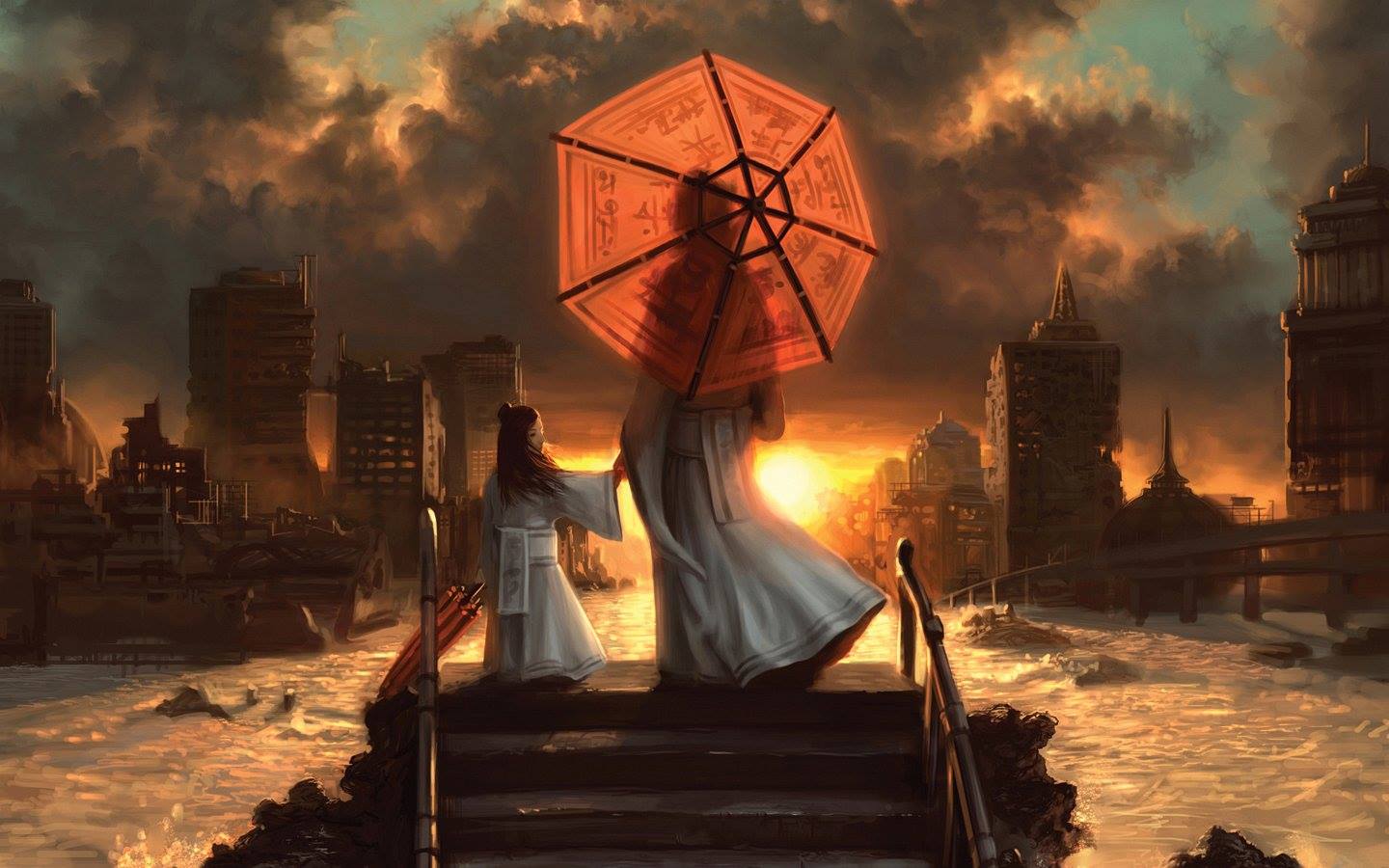
Der Kaiser und Jessica blicken an dieser Stelle in den Weltraum. Ihr Blick haftet sich an den Exoplaneten Sei im Sternbild Schwan; der Kaiser als einer der höchsten Geheimnisträger weiß, wie alle Geheimnisträger, dass die Bewohner von Sei einst die Grundlagen für das Leben auf der Erde geschaffen haben, Jessica über ihren intimen Kontakt mit der Natur wird es eines Tages auch noch herausfinden. Die Bewohner von Sei haben sich mittlerweile längst in intelligente, miteinander kommunizierende elektromagnetische Felder verwandelt, der Kaiser und Jessica fixieren gerade eine Region auf Sei in der junge elektromagnetische Felder sich zeitversetzt Klowitze erzählen –
indigoadults

(Das ursprüngliche Vorhaben)

“Lieber Philip,

vielen Dank für Deinen Beteiligung an unserem Wettbewerb zum Thema “Willkommen in meinem Schutzraum”! Wir haben 73 Projektvorschläge erhalten und die Auswahl ist uns nicht leicht gefallen.

Deine Projekteinreichung “Jessica Simpson, 9, entdeckt, dass alles auf der Erde ein Herz hat” passt leider nicht in unseren Wettbewerb, da es kein AutorInnenwettbewerb ist und wir ein klares Konzept zur theatralen Umsetzung vermissen. So interessant der Text selbst ist, er sprengt unser Format und wir können uns nicht vorstellen, dass er in einem 20 Minuten-Format umsetzbar ist.

Daher müssen wir Dir diesmal leider absagen. 

Mit besten Grüßen”

 

Update about #supersanity

“Super sanity, from what I’ve heard, is the ability to see things in an elevated state of mind. I just want to say if this is the definition, then yeah, it’s a horrible, terrible, awful thing. It’s also beautiful, enlightening, and refreshing. You go full meta, and you can feel everything. You can also see every or many points of view. You can analyze, deduce and relate many things that people can’t. You feel useless. It’s overwhelming. I have failed to thoroughly describe it.”

Link to a vision of Super Sanity
ghostgirl supersanity2 supersanity4 kafka despair chair2


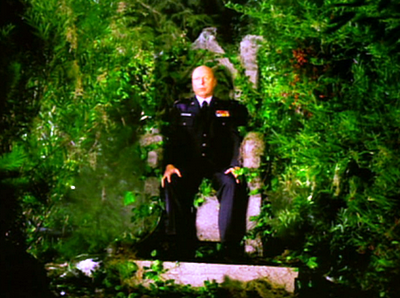
Major Briggs in the White Lodge

That´s Major Briggs, the spiritually most advanced character from Twin Peaks in the White Lodge. The White Lodge is the place where the constructive spirits of the Earth dwell. There is also the Black Lodge, which you must pass in order to ascent to the White Lodge on your way to perfection. According to legend, in the Black Lodge you will meet your shadow self, and if you meet it with impefect courage, it will “utterly annihilate your soul”. Few are able to get through. The Black Lodge, let us say, symbolises the terror reign of subjectivity disconnected from the Earth and from the universal spirit, i.e. the common condition of man; whereas the White Lodge IS the universal spirit. Love opens the gate to the White Lodge while fear attracts the spirits of the Black Lodge. Being tortured by Windom Earle Major Garland Briggs answers the question about his greatest fear as: “The possibility that love is not enough”. That is not the fear of the ordinary, not even of the extraordinary man, yet of the ethical genius. The Major is, at his innermost core, not concerned about himself but about the world and is afraid that there never is the possibility to take enough care of the world. Therefore the Major has superseded his subjectivity and become objective, transpersonal, a spirit, and does not even encounter a shadow self or negative doppelgänger. (Meditate about that.)

Although the Lodges are out there in the woods, known through an Indian legend, and seem to interfere with most real events in Twin Peaks (maybe even govern them), they are hardly explored in any detail by almost no one. Only a few, „gifted“ individuals have a deeper or conscious connection to the Lodges: Windom Earle, Dale Cooper, the Log Lady, and Garland Briggs. Yet what they all have in common is that they both seem to know „so much and yet so little“ about the Lodges. – Windom Earle, the most malicious character of the series, the evil genius, wants to align with the evil spirits of the Black Lodge in order to attain a „power so vast that its bearer might reorder the Earth itself to his liking“. Yet he finds a meager and pathetic end in the Black Lodge when Killer BOB flat out rejects him and annihilates his soul: Apart from reasons of dramaturgy Windom Earle does not seem to be interesting prey for the evil spirits since he already is completely corrupted so that in possessing his body BOB would not achieve a higher level of completeness (BOB´s endeavour has been to amalgamate with Laura Palmer, the intelligent, originally good-natured, and as we can see at the end of Twin Peaks – Fire Walk With Me: brave Homecoming Queen of Twin Peaks (where she rather lets herself being killed than being possessed by BOB in order not to become a host of evil); since BOB as a force which is completely evil is psychopathic, demented and throughout the series a reduced, therefore parasitic entity). Windom Earle is the bearer of the by far most powerful human intellect of the series but is devoid of all other qualities which make a human, therefore he slips into oblivion; in former times he was a man of the law, of high ideals and a person who loved, yet jealousy and an overly possessive attitude had let him degenerate into madness. One is a bit under the impression that Windom Earle´s monstrous intellect has dried out the rest of his human qualities and that, in this way, he had never been a well-rounded individual at all.

Special Agent Dale Cooper, the former junior partner of Windom Earle, is, despite his young age, a considerably advanced human being, who nevertheless falls prey to the evil spirits of the Black Lodge at the end of the series. He is both eminently rational and a master detective, yet his true mastery derives from his emotional and spiritual qualities working in tandem with his intellect. His emotional and spiritual qualities give him access to the irrational respectively the a-causal and the a-logical, therefore he can successfully maneuver through the Twin Peaks pandemonium respectively through the multiple layers of reality, and he has not only logical but psychological understanding. Despite the many misfortunes he encounters in Twin Peaks – being shot (by Josie), being kidnapped and nearly killed by thugs, being screwed by his own FBI colleagues etc. – he does not seem to lose his generally positive attitude and his faith in humanity (which is why he also is positively rewarded over the series as well). He meets the world with curiosity and wonder and never fails to be delighted by the small things and the little wonders of everyday – the trees, the coffee, the cakes… Despite being instantly a bit irritated by the emanations in the Black Lodge which he confronts in the hitherto last episode of „Twin Peaks“ he never loses courage, not even when he confronts BOB, so that it remains a bit of a mystery why he suddenly becomes afraid when he finally meets his own shadow self which he cannot bear, so that he falls prey to the spirits of the Black Lodge, his „good“ self remains trapped in the Black Lodge and he becomes the new host for Killer BOB. Apart, again, for reasons of dramaturgy (i.e. to give the story an interesting twist), it seems to be dubiuos why a thing like this would happen. Cooper remains practically flawless throughout the whole series. Yet his young age seems to indicate that he cannot be a fully grown and mature individual. And indeed, in „The Autobiography of FBI Special Agent Dale Cooper: My Life, My Tapes“ which was published alongside the TV series it is somehow revealed that Cooper carries imperfections: he is „an unreliable narrator, obsessive, anal-compulsive, deluded, immune to irony, not very perceptive about himself“. Cooper, in general, is an individual who is on a journey, who wants to explore life. Due to lack of self-awareness, afraid of his own „unconscious“ he experiences and gets lost in his shadow self – traps everywhere, as the condition of life. The third season which was cancelled but will now be aired next year, „25 years later“, would have been about the rescue of Cooper from the destructive forces of the Black Lodge.

There are two characters in the series who seem to have been in the White Lodge: The Log Lady and Major Briggs. Both did not seem to have been in any way affected by the Black Lodge and the shadow self. Yet both also don´t know very much about the White Lodge either. They seem to be under amnesia of what happened to them in the White Lodge, all they can remember is an overwhelming white light and some owls (and „the owls are not what they seem“). They are spiritually connected to the White Lodge and bearer of messages which, however, ultimately remain cryptic also to them. – That the Log Lady does not fully understand (she rather „feels“) the White Lodge seems evident, since the Log Lady has spirit, but no intellect. She is an eccentric who lives outside of society. The Major, like Cooper, is both spiritually and intellectually gifted – but he is not a philosopher i.e. he has no unified knowledge and is not operating at the highest level of consciousness. Like Cooper he works in a profession whose duty is to guarantee order, safety and protection, yet as a military man inside a hierarchy he is – even more than Cooper – likely to fall prey to serve as a puppet for the execution of evil intent in higher places (without possibly knowing it, not being aware of the intentions from above nor of the causal chain of reactions the operations he is involved in are likely to produce; it seems to carry a double meaning that all the operations he is involveld in are classified and that he cannot really talk about them with anyone: they seem to be out of his knowledge and intellectual reach as well). He is able to „heal“ his stupid, hilariously unsympathetic and immature teenager son Bobby by telling him about a beautiful dream of a palace „where fathers and sons are united“ (under the obvious protection of a guiding maternal spirit), yet his overly soft, overly stoic and also seemingly a bit detached parenting style seems to have provoked the acting out of Bobby´s idiotic masculinity in the first place. Bobby however is a young human being, overly immature but set on the course for reaching higher levels of maturity; Cooper as a man in his mid-thirties is overly mature and falls back into regression, Major Briggs as an elderly person seems to be a future projection of Cooper, respectively a possible future for Cooper if he had not entered the Black Lodge. It was revealed that in the third season the Major would have played the key role in saving Cooper from the Black Lodge. Within this duty, it can be assumed, that both Cooper and the Major reach a higher level of human perfection and therefore a better understanding of the White Lodge.


In an allusion to Twin Peaks I have, a while ago, described the White Lodge as a state of ultraperception and omniscience. When you live such a state of mind you experience yourself as an unlocated focal point within a region of white light where the objects of the world appear and pass by, and they are all equal to you. Nothing hinders you from grasping and understanding them at an infinitely deep level (which means: fractal-like since infinity cannot be seen itself), and this is the case because the subject which grasps them has also been dissoluted into the white light, the seeing eye has become unlocated and omnipresent, the dismantlement of ego allows free navigation through the all. This cannot be learned by intellect alone but by personality which, in accordance to how Scientology calls it, has to reach a „clear“ and become free of fabricated ideological or unfathomable emotional attachment to itself or to the object. As Nietzsche or Otto Weininger have already noticed the person who tries to purely objectively relate to reality (via dissolution of the „subjective“ distortive element) will also be the ethically most conscious person, therefore, if you go further down the White Lodge you will become the White Lodge yourself.

The transcendent (ethical) genius lives in a world full of people with whom, more or less, no authentic communication is possible (hence also the disfigurement of language in the Black Lodge), so that the ultimate ethical genius will have to cut off his arm or, like Mansur or Christ, get executed to teach people ethics in the only language they seem to be able to understand, partially it is nevertheless in vain; yet understand, mate, that this is in accordance to God´s plan, apart from that, in earthly terms, only a dead genius is a good genius quod erat demonstrandum etc. bla bla

Philip Hautmann https://www.youtube.com/watch?v=kjeCNnbVYAQ

This was a vision, fresh and clear as a mountain stream, The mind revealing itself…
YOUTUBE.COM


Visions of Immortality

According to legend, having achieved Satori means that you are able to see the realm of existence as an infinite weave of jewels which illuminate and mirror each other. Each jewel, prescious as it is, is an aspect of existence, both distinct and unique as well as well as embedded in the whole, serving as a reflection of the whole. The whole, therefore, is an interrelated system of mirrors which reflect the highest light; and each movement within the structure alters the whole structure, so that in every moment a new world is born. Satori means you are able to see the world as being in constant motion, objects are moving, mirroring and relating to each other so that the subject-object dichotomy is transgressed into an all-seeing, yet unlocated, eye (respectively an all-seing eye which is located everywhere). The intellect is transgressed into pure perception and pacified: the whole universe bond together by sympathy and governed by mutual friendliness, there is no need for you being (as usual, once unenlightened) agitated.alice4 And do you remember Richard M. Bucke´s book about Cosmic Consciousness, originally published in 1901? Probably not, since it is not very well known. Bucke, a psychiatrist, achieved enlightenment and suggested that his „cosmic counsciousness“ is a state of mind prominent in all enlightened individuals across history, yet only expressed in somehow different state-dependent language (the language of their specific time and culture) i.e. that all revelations of enlightened consciousness in art, philosophy, spirituality, religion, relate to the same basic experience – in which the enlightened individual experiences herself as a living, spiritual part of an entirely living, spiritual cosmos in which the individual, itself, is an illusion and mortality is an illusion. Everything is governed by the supreme, perceptive intellect who is familiar with the whole and with every aspect of the whole, and the enlightened individual is the bearer of that intellect. Bucke surmised that, apart from usual suspects like Gotama Buddha, Jesus Christ, Laoze or Plato also fellows like Shakespeare, Pascal, Balzac or Walt Whitman were among those who have achieved cosmic consciousness. Mediatate about that!

In the Book of Strange and Unproductive Thinking I have ruminated whether Satori is the common state of mind of the genius. At least there are some resemblances. The genius, at least, has the second sight! With the second sight the genius is able to see through things, to see their true essence, and even beyond that: It is not raw intelligence (in its many facettes) but introspection and the capacity for deep intellectual penetration which makes the genius. The root ability for that is a quality Cooijmans calls associative horizon: that is the ability to see many associations to a given concept, to see (seemingly paradoxical or counterintuitive) associations between remote concepts and the ability to switch from motif to background. Associative horizon is a quality in its own right, relatively independent from g-related intelligence (expressed in IQ). At a basic level associative horizon manifests in (off-the-wall) humour and/or some kind of „deeper“ perception. I see people who have the second sight on Facebook, they´re posting paradoxical memes respectively images which are ambigous and connotative, not definitely to catch intellectually but eternally open, referring again to an innocence of perception yet in a dialectical way. People who have such a perception are very rare. High IQ intellectuals on Facebook are also very rare. That these qualities merge in one person is the rarest. Associative horizon is the basis basis for creative intelligence. IQ-related intelligence enables the bearer of associative horizon to operate at a high level of intelligence and to have a broad intellectual circuit in which his associative horizon can operate and make novel, original and meaningful combinations (as somehow distinguished from conclusions which you derive from g-related intelligence). With intelligence you see many things and the way they function, with associative horizon you see the Matrix. You´re intuitive. If associative horizon and intelligence amplify each other and both get amplified by conscientousness, i.e. intellectual discipline, the possibility of the productive genius arises, and when conscientousness also carries ethical conscientousness the possibility of completeness comes up (see Paul Cooijmans of genius on his website). – So the genius lives in a state of interconnectedness plus the ability to see through and beyond the connections and establish new ones which last forever. He is glued to everything because he is sympathetic. He (intellectually) mimics everything because he is empathic. Before his inner eye he sees into the universe. He gets sucked into the universe, sometimes feel painfully sticked to the universe, like hanging in outer space, being enchained to outer space and hardly able to move (which is one of the more unpleasant experiences, referring, in ordinary language, to inability to live an ordinary life). At one time he feels sucked into space, at one other struck down by the intensity of his perceptions, which constantly form impressions in correspondance with an intense (sometimes painfully intense) inner life.

colourgirl Otto Weininger has noticed that the genius always stands under impressions. In here, the genius is both perceptive and reflective, mature and innocent, intellectual and anti-intellectual, both open and longing for closure and, then, openness again. In doing so and being that way, he creates his world constantly anew and each act is of significance; and of deviance: High intelligence means that one is able to come to sophisticated and comprehensive conclusions, to make abstractions and generalisations. Yet, as Lichtenberg notices, the higher the genius, the more one is able and prone to see only the individual, respectively individual aspects. This might confuse the genius, at least at a young age, make him think he has not a razor-sharp wit as others, a more nebulous and diffuse way of thinking and of perception, therefore to operate at a lower level of consciousness while in reality he is operating at a higher level of consciousness (since of course the genius is able to see the abstractions as well, and very well; what seems to be an unfocused view is an actually more focused one). A bit resemblant to that Pessoa has noticed: the higher the consciousness, the lower the consciousness; which only means that the genius does not relate to ordinary things the way ordinary man does because they are not as closely located to him – in reality the genius is closer also to ordinary things and, if it gets serious, is likely to handle them in a more competent way than ordinary man – I only say that to encourage the genius because due to his highly critical way of thinking the genius is prone to underestimate himself, sees himself to critical, is afraid of inadequancy, and usually gets depressed when he senses inadequancy within himself (yet is also the one who is able to transform his feelings of inadequancy and inferiority into something truly productive, whereas ordinary guy does not sense much inadequancy about himself, with, however, the unarticulated inferiority complex lurking in the back of his mind (and becoming acute when the genius enters)). Because of his ability to see only individuals the genius is able to „think outside the box“, transgress categories and finally establish new ones. Therefore the usual internal state of the genius is some seemingly unproductive brooding which might come along with, again, feelings of inadequancy, lack of identity and unhappiness. With time he will unlearn those connotations, yet remember them, that is to say, the will remain but become less frightening. Finally, when the genius in all aspects only sees individuals (and is able to categorise them), his mind has become the mind of God (as also Lichtenberg has noticed). That is the imperative. – Genius is an eminently rational man and longs to establish rational concepts with a determinedness no one else carries. Yet in contrast to the purely rational man the genius has an access to the seemingly irrational, respectively the a-rational. Usually being synaesthetic, the genius often strives to develop eminently rational concepts in tandem with a-rational or synaesthetic visions or along unusual questions (e.g. questioning what would happen if he moves along a light ray, a question which would not make immediate sense to the purely rational physicist); he throws, for instance, some thought into a vision of black with red dots and the red dots with white dots in them, sees how it amalgamates, transforms or contrasts, then lets it reflect in mirror 127 in his internal system to see what´s happening, etc. Therefore, darkness and light aspects before his inner eye, or in his mind, shimmer through each other, or, for instance: there is some bright oval light in the center of the vision and then the vision falls down, becomes seam-like, fuzzy, falls into the abyss, becomes irrecognizable; but that is when another circle – of perception and of reflection – begins… That is to say, genius is neither purely rational or irrational, he operates at the meta level of rationality. – Genius is immortal and not afraid of death because genius is largely spirit, not person or individual, and his spirit will last forever as well as it has always been. Since he has seen through life in his only life, life extension or reincarnation is not necessary for the genius. #nirvana

In the Book of Strange and Unproductive Thinking I have also ruminated about the hyper-genius, the transcendent genius, and the Omega Man. These venn quite similar with each other. A hyper-genius is more comprehensive than a genius, or operates at a higher level, at least in his specific domain (at 5 sigma level compared to 4 sigma level of the genius; Einstein was, as a physicist, a hyper-genius, although in other respects, and as a person, a genius; Wittgenstein, as the other emblematic genius of the last century, was a hyper-genius in general, respectively not only as a philosopher but also as a person). A transcendent genius has the most radical thoughts and is transcendent in his personality, a both extremely eccentric as well as extremely in the center of humanity located man (Goethe was a hyper-genius, yet not necessarily a transcendent genius, he was a homo universalis (although he did not understand lowlife very well and was not very very concerned or sympathetic about it) but not transcendent man, yet of course operated close to that level; Büchner, an intellect probably superior to that of Goethe (one cannot definitely tell since he died at age 23), understood lowlife, was deeply sympathetic, a fearless revolutionary who might have died in jail like some of his comrades; his language was transcendent and of absolute agility, later in life he might not have cumulated his efforts in a grandiose yet mislead endeavour like the theory of colours but may have become one of the major existential philosophers, etc.). Omega Men are (spiritual) frontier workers of humanity. Resemblant to that Bhagwan says that beyond/above the „universal intellect“, the fourth level a human being can attain, there is a final, fifth level, at which the distinction between the individual and the universal, the larger context, vanishes and is transgressed. That is when the ego is abolished and the intellect of Christ or of the Buddha emerges. At this stage man has ceased to constantly BECOME something, he has begun to finally BE something, his journey (respectively, as Bhagwan says, his „nightmare“) has come to an end. Thou shalt not settle for something less than to attain that fifth stage, says Bhagwan. And indeed, genius is still full of imperfection and should be superseded. Genius does not necessarily work at the last layer of all things. Genius may be, and usually is, a distinct and marked person, but: a person, likely with an ego, maybe a strong or even narcissistic, therefore annoying ego. Geniuses often do not relate well to other geniuses which is the saddest thing among all. That should be overcome. Man should become devoid of ego and become open space – that is the plan, that is the end of the road. The ego (respectively what is commonly taken as the ego) is disturbing, it distracts, impurifies the thinking process and the emotional economy, and it should not be. When you look at the transcendent genius (like Beckett) he does not resemble very much an ordinary person, or, despite his most distinct individuality, a person at all – rather a fluid, an aura, an atmosphere, he is ghost-like because he contains all qualities at once and they do NOT contradict or stand in the way of each other while probably also not being there in harmony, like the universe or the earth is not harmony, simply all exists at once; the great man is the living microcosm, the all, as Otto Weininger put it. Where the genius maybe tries to and puts his energy into becoming a marked person, the transcendent genius will do everything to evade it. He is impersonal, transindividual, and objective. He only seems to be a marked personality because he is „the center of infinite space“ (Weininger). The hyper-genius has ceased to be a person, let alone ego, and has become a spirit, a soul, a guiding light; even his intellect has transformed along those lines. Ahhh … the transcendent beauty of having gotten rid of human/personal qualities… do you see the luminosity in that?

transzendenz – The Omega Man can be envisioned as reaching up into the spheres and down into the dark fond, the primal ground, where his interior is the endless hall of mirrors. Genius is kind of universal man, he encircles mankind, but the omega genius encircles all the other geniuses as well and has become universal spirit. The intelligence of the transcendent genius and the Omega Man is the highest and the most alien, yet at the same time the most elementary, the most basic, the most authentic; being eternally eccentric he and his solutions directly adress the core, the heart of it all and are the most profound. – Whereas the genius relates to the world, the hyper-genius relates to the universe (the infinitely larger, boundless context). The genius will strive to create a work of importance, of significance; the transcendent genius, will, more abstractly and more purely, strive to create values. Likewise, the genius may seek a concrete immortality, becoming inscribed in the book/s of mankind, whereas the transcendent genius will rather seek an abstract immortality, he does not thow himself into mankind but into the universe, longs to become one with the ontological texture of the universe. When you look at the genius you may see a spherical space with positive curvature; the genius tries to establish harmony and give words and objects a definitive meaning. When you look at the transcendent genius you see a line of negative curvature, an open universe in which everything flies into the infinite along an eccentric pathway, also in order to establish harmony, but not in the visible spacetime but in a sort of hyperspacetime; in the visible spacetime the transcendent genius seemingly ever creates disruption and dislocation of identity (think, most prominently, of Nietzsche, Wittgenstein or van Gogh). When the genius is constantly convulsing, the hyper-genius seems like constantly exploding, yet both do so in stasis. Look at the ramblings for instance of the transcendent hyper-geniuses of literature like Kafka, Beckett, Shakespeare, Rimbaud or E. Dickinson and you see that behind their words, their language, some deeper structure constantly seeks to emerge and overpower it, that is the dark world, the fond, as well as the heaven that tries to break through, it is the constant shifting of meaning, it is the second world which shimmers through the first, the immediately presented one, the psychosis of the genius language; the works of the (hyper-) genius are characterised when you see behind the first, the immediately presented world a second world emerging. – This nebulaic, yet anti-entropic entity, the purely subjectified and purely objectified trans-person able to navigate freely through inner and through outer space with both the most solid, yet unlocated inner core, is, then, the overman. The overman encircles the earth and is the meaning of the earth. He can communicate with the earth and with any alien civilisation from the depths of outer space since he understands all of those. Potentially, along the above mentioned lines, every man is an overman. The hyper-genius/Omega Man is the most easily understood and embraced by every man, and by the child, and is the trajectory of human endeavour. That includes all and is the bond which connects all. Ahh, the hall of mirrors, what beauty lies in this system… <3


OH YES be taught, my friends: Thou shalt not hold artificial ideas about man! Don´t take man as being overly good or overly evil. Ordinary man, per definition, cannot reach the level of the great man, yet he can reflect him, as a mirror. What concerns me, is that I am 10.000 times more stupid and evil even than ordinary man, yet also me – a worm, not a Cherubim – longs for ascension, just like everyone else. Be taught, my friends.

Micheal Chappelle

Micheal Chappelle This is the best description of me and my life that I’ve ever read.

Micheal Chappelle

Micheal Chappelle You know me like the back of your hand.

The Matrix

Btw i think I could write a lotta more intellectual and stuff messages but I am not particularly hooked on texting about things I have already figured out, apart from that I am permanently figuring out, it is endless. Before my inner eye I see something which symbolises the totality of all things, within the concept I see moving things and digits running at multiple speeds; I see the Matrix. Also I am not very communicative. Someone who digs my works said of all the introverted and uncommunicative artist friend he has I am the most introverted and the least communicative. I like to spot idiosyncracies of all sorts, they let me comprehend the Matrix, and when someone comes up with an authentic issue or is in pain I will relate.

Justine, the Strawberry Girl

I have a new friend! A 17 year old schoolgirl who immediately crashed into my most unintelligible text (the one about the White Lodge), felt profoundly shaken by it, and wrote her own text which, in turn, makes me a bit perplexed (reason it does not make me perfectly perplexed is that I know that occasionally such people exist in this world). Of course she lives on the other side of the globe lol.

justine2

ANALOGOUS OF THE WHITE LODGE
To steamroll against the current of the physical and metaphysical- beyond the transcendence binding man in a pseudo hallucinogenic state of complacency and falsehood, to move past one must conduct the reconstruction of the limited perception of the mind in an effort to plunge into a being of nothingness and state of unknowing and all knowing- an unraveling of the very human perception being overworked while simultaneously utilizing the omniscient view in a scope of overlapping to form an all seeing view in tandem with a limited view, not apart or together….omniscience is not a virtue but a component, once entered into a state of being beyond the transcendent omniscience is the “White Lodge” (as Philip Hautmann coins), you will “view” nothing but the blinding light of all that has ever been and all that will whirl and spin in the absence of it’s own vacancy, only then will all and nothing form a new and cancel out both, once born a new consciousness, once disregarded all together…..time not moving in all directions but moving in every single direction thus bringing the “time” to refer upon itself as a new entity….all aligned, but what becomes of the “self” once transformed? Nietzsche alludes to the result with the Übermensch, although he is quite equivocal in his description, it is implied the over man possesses a consciousness beyond the “last man”…. but he is awoken only to find that mankind has deemed this an idle pursuit- much like the rampant anti-intellectualism alive and well in today’s society, what becomes then of mankind if only few are willing to sacrifice themselves for the sake of progression of humanity and ascendency of human understanding? Will the few die off leaving last man to have wasted consciousness and only end in an unprecedented multitude of regression that is unable to be ever be recovered?
[In response to my new friend Philip, who wrote the most well executed and beautifully written manifestation of the concept I have ever seen! (Link in comment) this is my rendition previously written before reading this piece and edited upon receiving and interpreting as it applies;)]
justine3
You and 7 others like this.
Comments
Violet Void
Violet Voidhttp://www.philiphautmann.at/the-white-lodge/
Philip Hautmann : )

The White Lodge Posted on November 28, 2015 by admin I am delighted to see this. Obviously there is a fellow somewhere in the world, someone who understands. I have been thinking for…
PHILIPHAUTMANN.AT
Josh Brill

Josh BrillFascinating

Like · Reply · 1 · December 4 at 8:51am · Edited
Josh Brill replied · 2 Replies
Philip Hautmann

Philip Hautmann“… die bedauerliche Tatsache, dass jeder der anerkannten Künstler nur etwa ein Dutzend verstehender Anhänger besitzt, … aus jahrzehntelanger Erfahrung hat Cézanne resigniert geäußert, jede Kunst sei nur für wenige da. Erst als Bildungsvorrat erweitert sie die Peripherie ihres Kreises und schafft die Täuschung, als wären der Erkennenden viele. Alles dies gehört in in das Gebiet der Auswirkung der Kunst, nicht in den inneren Bezirk des Geschehens…” (Will Grohmann, 1926)

Violet Void

Violet VoidRue, Benjamin, Thom, Tyler, Connor, Ben, John, Allan, Abdelrahman, Nick; some who I feel can connect to this area of thought or may enjoy exploring this idea of White Lodge : )

Ben David replied · 12 Replies · 22 minutes ago

The White Lodge

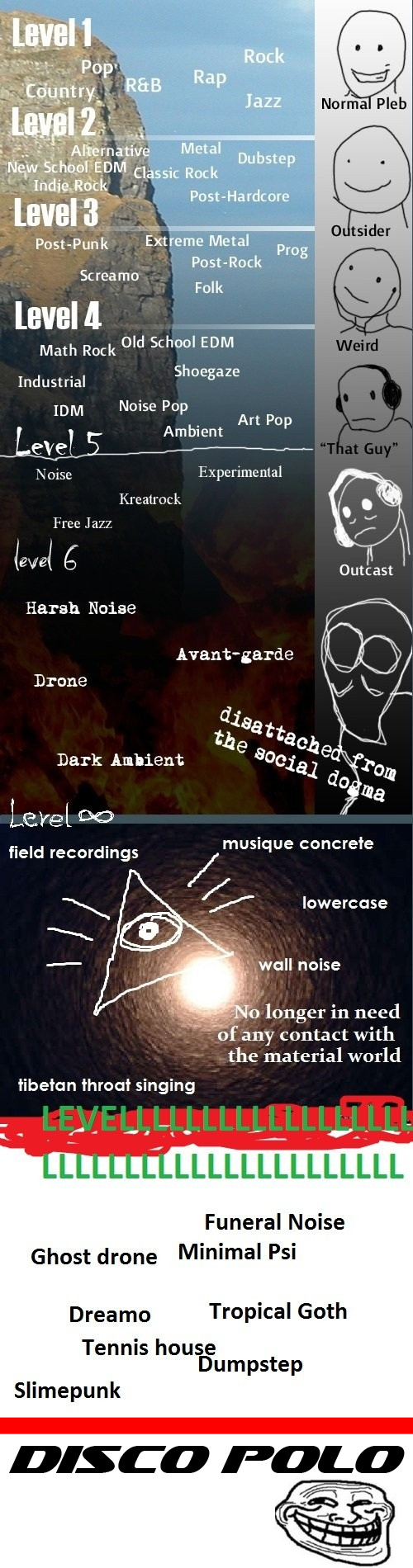
I am delighted to see this. Obviously there is a fellow somewhere in the world, someone who understands. I have been thinking for quite a while now whether above the transcendence/infinity level there is another level which I call the White Lodge, although my thoughts have not yet fully matured about that. The kind of perception you embrace at the infinity/satori level is described by Toshihiku Izutsu as that you constantly see the static objets in the world as constantly innately shifting, moving, being fluid and in permanent progress. Yet I was thinking about a state of mind where everything seems to happen simultaneously, you live in a room filled with white light (respectively something that resembles light though it does not exactly seem to be the same), and now, there, a wave passes by, the wave is slightly grey, and immediately the next emanation passes by, etc, those are the contents of the world, which both affect you and they don´t. Note that this does not happen in a linear, or a non-linear, or in a synchronous fashion but in a mode which somehow is a unity of all those. Resemblant to that, when you are close to the central singularity of a black hole and look what´s in the back view, you see the entire universe and the entire history of the universe passing by. In the White Lodge you seem to be beyond the view that everything is infinite, nevertheless you both know that the view that everything is infinite both applies and it does not (just like the view that everything is finite is both correct and it is not). You somehow supersede both the finite and the infinite, reaching a new level of consciousness. That is the White Lodge. As I said, I have to think further about that, not least because I am terribly interested in how such a consciousness would look like. Maybe the White Lodge is the state of mind, the realm in which ultracomplex people like Shakespeare, Nietzsche or Wittgenstein dwell. It is not entirely clear whether the White Lodge is a perfect place to be. In the ideology of Shakespeare, Nietzsche or Wittgenstein you have meaninglessness at a prominent place, yet not a pacified meaninglessness like at the satori level, although you have the indication about how to overcome trans-transcendent meaninglessness, for instance in the sonnets of Shakespeare (as opposed to the drab worldview expressed in his plays), in the concept of the overman, or in the way Wittgenstein lived his life (since, somehow according to a core point of his philosophy (which was, concerning the general undertaking, about how logical sentences could be transformed into ethical sentences) the meaning of a sentence cannot be said, it needs to be shown, indicated, he was silent as a moral philosopher but he lived a highly ethical life). Now you see in here, that the level which even goes beyond the White Lodge is the Disco Polo level, according to the concept of the holy fool, or the suspicion that if you trangress the highest level of consiousness the circle starts anew, yet at an infinitely higher and, at the same time, infinitely more basic, elementary level. In the works of Shakespeare and Nietzsche you sometimes have the character of the ultra-transcendent fool, you have it even more prominent and pronounced in the ideology of Attar of Nishapur and in the life and the spiritual approach of Bayezid Bastami who both were among the most (intellectually) eccentric men (who at the same time lived perfectly in the center of it all) who have ever been. Apart from that I now what Disco Polo means. I think I have to study Tolstoi and Francis of Assisi somewhere soon, maybe the key to unlock all possible universes lies in (critically) understanding them.

(Click here) http://pokaz.im/di-VI1W.jpg

Justine LeDoux

Justine LeDoux Wow…..yes yes YES !! You just described something incredible I have been trying to figure out ever since I became interested in this very specific end of philosophy, can I share this please? I really couldn’t have said it any better, you are an amazing writer, your blog is my new favorite reading space ^.^ <3 <3

Philip Hautmann

Philip Hautmann Thank you mate. Do you speak German? Or have to throw it into Bing? Bing often does not work very well. At any rate I was thinking this morning about writing a note about “ultracomplex people” those next days.

Micheal Chappelle

Micheal Chappelle I have the logical mechanics of the “white lodge” mapped out in the toe, what you’re describing is the mind of God.

Philip Hautmann

Philip Hautmann I actually wanted to post a song with the reverse title, but, hey, in the “White Lodge” everything´s equal.

Micheal Chappelle

Micheal Chappelle Indeed, in the “white lodge” everything is not only in perfect superposition(which allows for everything to be in communicative intersection) but also there are no definitive constraints, which have yet to be intrinsically defined and distributed over its interior, it follows that the “white lodge” is a deductively unique yet comprehensively self-contained ontological potential which intrinsically defines itself by distributing its own primary constraint, allowing for the attributes of the infinite level below it to be discriminated. At that level, because there is no distributive relationship or constraint, there is nothing on which to base the order of attributes, the order has to be self-generated and self-defined, inequality has to be selectively actualized from the unity of the “white lodge”.

Justine LeDoux

Justine LeDoux Can you message me a link when you finish it please?:D And no I don’t speak German:( hopefully Google translate can suffice haha

Philip Hautmann

Philip Hautmann Justine: yeah, you can share. Micheal Chappelle: now I am impressed.