
The art and literary genius is a melancholic regarding existence and the human realm, which will appear to him as unrealised potential, and he will be compassionate. Stanley Kubrick nevertheless strikes as a bit too sober in his respective melancholy and on the verge of being cynical. He usually portrays how characters get squashed by institutions. Kubrick most commonly debases humanity, portraying human weaknesses rather than human strengths and he rarely portrays how humans may rise above institutions. Art however should teach the overman. The Space Odyssee actually teaches the overman, yet in the Space Odyssee the advent of the overman remains vague and unintelligible, and actually resemblant to a technical trick or to some kind of slapstick in storytelling.
Tarkovsky, the greatest of filmmakers, teaches the overman via the need for the sacrifice. Via the borderline-irrational ethical act of the sacrifice the individual debases itself and its individuality, but he will fully realise his existence as a social being. In becoming a true social being, he will become universal. He will therefore regain an individuality that is both subjective and universal. The common stages of human psychological integration are the fragmented/neurotic ego; the ego; and the self. These stages progressively integrate more and more stuff into the individual monad, which therefore becomes progressively competent and successfully manages to both become an individual as well as a social being. Where it gets really interesting is when we progress to stages that are even beyond and higher than the integration level of the self. The self means an ego that has integrated wider parts of the world and has become truly sentient and knowing. It equals the “spiritual” experience, i.e. that of a meaningful ego in a meaningful wider world. The spiritual experience is diffuse, however. Beyond the self there will appear on the horizon the religious experiences (in the wider sense of the word). Religious experiences will be more profound than mere spiritual experiences and you will ultimately approach the deep laws that govern existence, and you will become mimetic to them. Beyond the integration level of the self, there begins the level of transcendent man and of the superhuman; deeper down the spiral stuff and understanding of stuff get more “mystic” from the common perspective, yet more lucid, and meaningful, when you are on that plane yourself. You will understand the meaning of life, and you will understand the meaning of death. Therein, stages beyond the integration level of the self will become eschatological. And as a metaphysical enterprise art should also be eschatological (which Kubrick´s films most commonly aren´t, and Tarkovsky´s most commonly are). The overman is the meaning of the Earth, thus speaks Zarathustra. And so, in order to be truly meaningful, art should teach the overman.

The aliens respectively the black monoliths in the Space Odyssee might symbolise God, or a deus ex machina from higher entities. They might also symbolise though the unconscious and opaque parts of man´s progressively developing consciousness and a “dialectics of enlightenment”. They might symbolise that consciousness and intelligence, and the purpose of consciousness and intelligence, will remain enigmatic seemingly forever (which is the overall theme in the science fiction literature of Stanislaw Lem). In the Nietzschean vision the overman relates to the idea that nothing will remain enigmatic and foreign to the overman, respectively that no powers and influences outside of him will have power and influence over him. The overman will be in full possession of himself. “God is dead”, there is no law outside of man, and the overman will establish his own laws. Because of this, and because of this egoic concept, the Nietzschean overman remains puzzling and seemingly shaky. Devoid of his nature as a social being, the Nietzschean overman resembles the most private of man, and, therein, an idiot. The Nietzschean overman is unstable, therefore the Nietzschean pathos of “tragedy” inherent to the story of the overman. On the unhealthy side of his personality, Nietzsche was a paranoid neurotic, therefore he had an exaggerated, delusional desire for “total liberation” and unhindered exercise of his “will to power” over everyone and everything else. Yet the overman will be a finite being nevertheless, and therefore will be subject to laws. In abolishing God, in abolishing compassion, in stripping off man from his dual nature as both being a social being as well as an individual in favor of the latter, the Nietzschean overman will not have insight into the laws that govern existence and therefore he will be unstable. He cannot integrate the laws that govern existence into himself in a meaningful way and apply them from a meta level, he will be god-forsaken, and therein will be bound to a neurotic “eternal recurrence of the same” (which is resemblant to the Freudian death drive). Nietzsche did not want to make sacrifices, he would rather sacrifice others to reach the stage of the overman. Yet Tarkovsky (and Schopenhauer) teach us the overman via teaching us the sacrifice. You integrate the dual nature of both being an individual as well as a social being by stepping out both from the logics of individuality and of social rationality, via the borderline-irrational ethical act of the sacrifice.
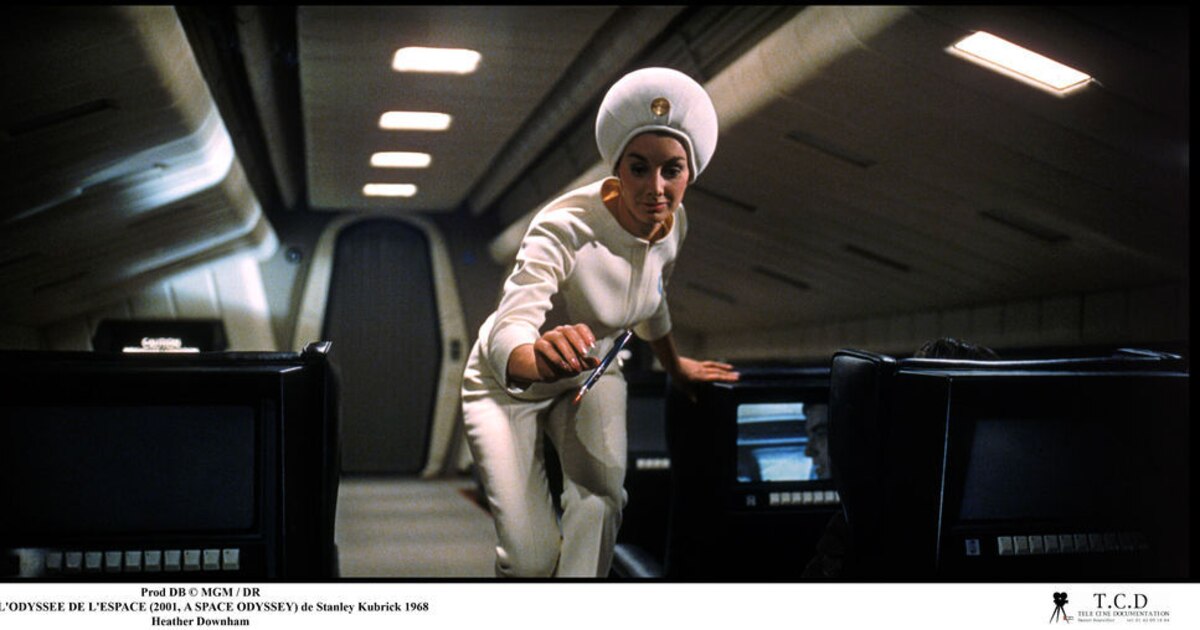
While Tarkovsky apparently understood this, I doubt that Stanley Kubrick would have understood anything about this. Of course, Stanley Kubrick was a man of great curiosity and intellectual and aesthetic passion. Yet there is little indication that the idea of the overman, and especially the idea of the overman being grounded on the sacrifice, would have been more than an intellectual delicacy to him. They say that intellectual curiosity is a good thing, as curiosity for things is somehow equivalent to sympathy and sensibility towards people (or animals). Yet that is doubtful. Stanley Kubrick´s art is the expression of a seemingly endless curiosity, but it is largely inhuman. In Kubrick´s films the environments and settings usually are fascinating and sophisticated, but they curiously barely relate to the characters. They are alien and indifferent, or even hostile to them. In the films of Tarkovsky or Antonioni, who were the great masters of environment in cinema, the environments and settings relate to the characters in one way or the other, the individuals are embedded in them, even if they are most obviously disembedded from them. Also in Kubrick films music seems to primarily be a delicacy for the director, and also for the audience. Tarkovsky´s use of the music of Bach seems more understanding, and not a mere surface phenomenon. It is also Tarkovsky who said that ultimate geniuses like Bach or Leonardo (who are resemblant to the overman) had a view on humanity and on existence as if an alien would view humanity and existence, and permanently tries to come to terms with it in its bewilderment. The Space Odyssee at least fails to truly do this. It´s a nice try though.
Note that for the sake of demonstration we are dealing here with idealised opposites. In reality Stanley might have been a cool and funny guy to hang around with, whereas Andrei might have been stern and forbidding.