If the doors of perception were cleansed every thing would appear to man as it is: infinite, says William Blake. Infinity is but a (paradoxical) concept of the human mind; to which nothing in the empirical world actually seems to correspond to. The Abstract Expressionists (or at least a branch of them) tried to reach infinity via introspection. Out of the black hole of heavy introspection that willfully collapsed under its own weight, they created a wormhole of creativity through which contemporary modes of perception and expression were genuinely twisted and transformed, and a white hole at the end of the tunnel through which new forms, new modes of perceptual matter were emitted. This must be considered a perfect undertaking in metaphysics and creative transformation!
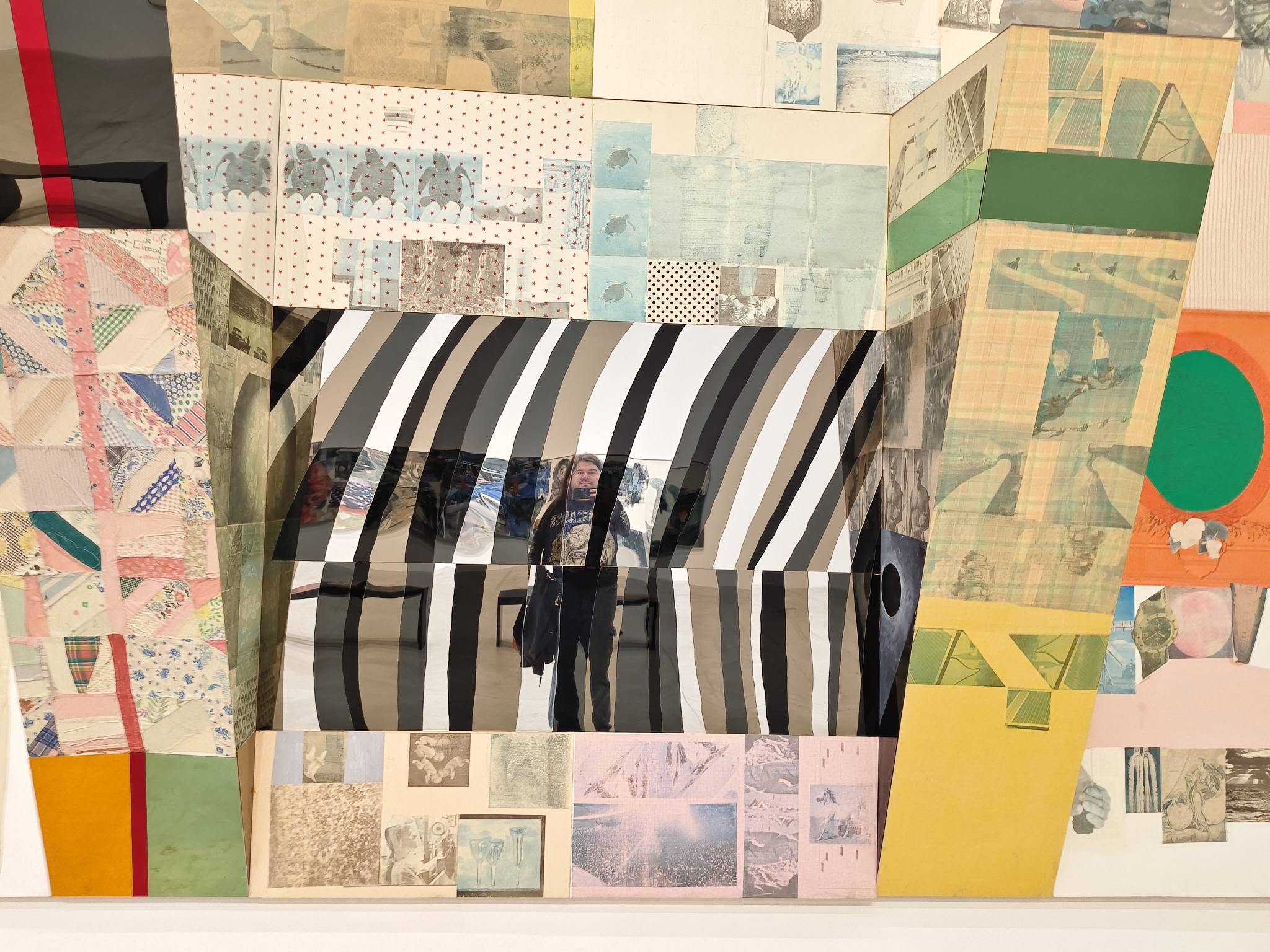
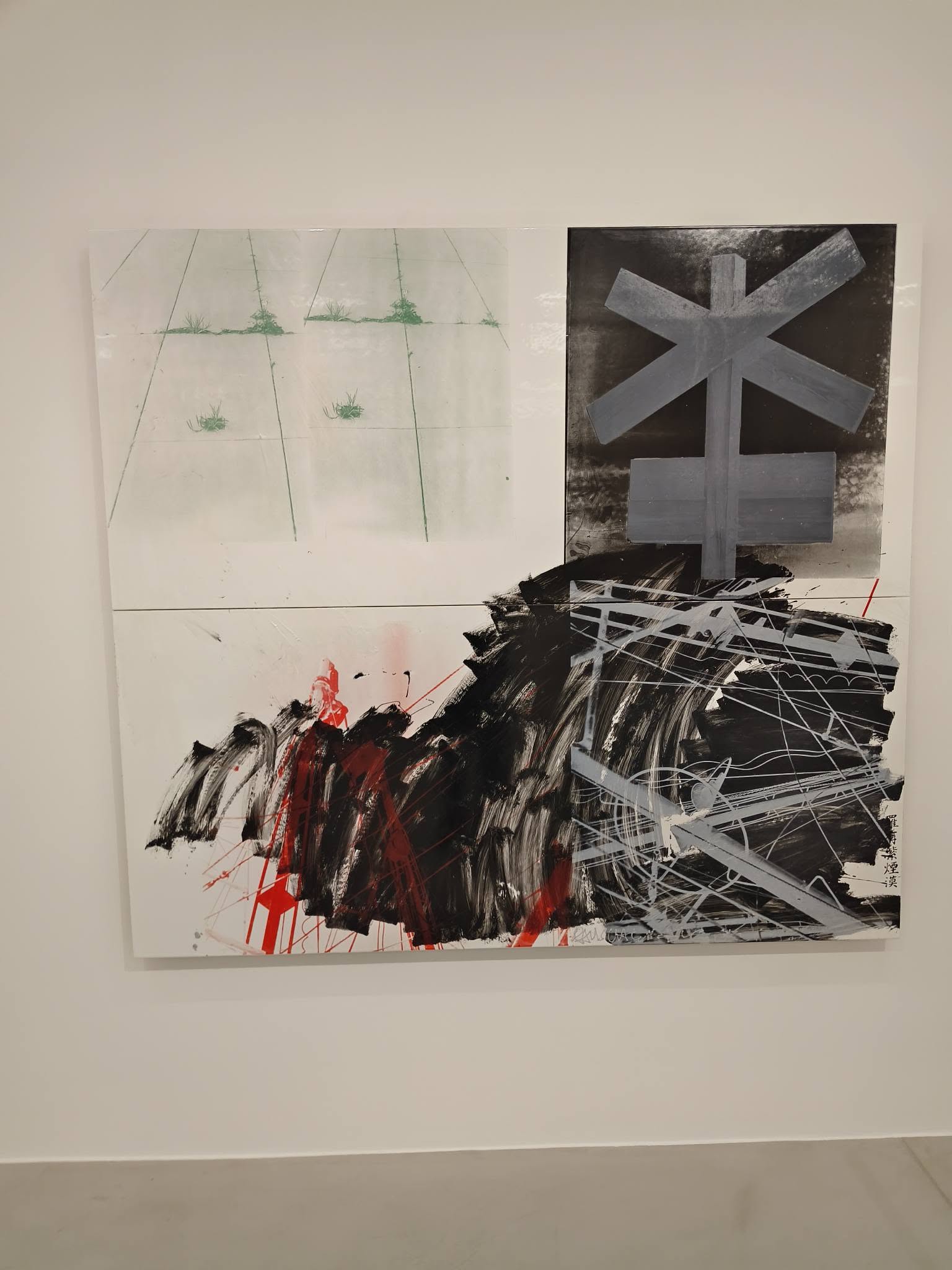
Robert Rauschenberg relied on abstract expressionism, at least in the beginning, but he tried to let the world, the perceptual matter, in – to a degree it becomes virtually infinite – by just opening the doors of perception (not necessarily intellectually “cleaning” them via introspection or some other intellectual technique). He let in mundane objects as well and included them in his artworks, therein becoming a forerunner of pop art. (Once again in art history) he levelled the distinction between “high” and “low” objects, therein also “high art” and “low art”. Many Abstract Expressionists, who longed for elevation, did not like that so much. But that is the general dialectics of things. I like elevation too, but I also like Robert Rauschenberg, because he championed the unitary consciousness, a democratic, non-discriminatory total consciousness and perception that tries to include all things. In order to achieve the unitary consciousness, you need to have a genuine faculty of being able to establish contact. The Combines truly are spaces of encounter and contact. In some ways, the intellect and its faculties may be too discriminatory to establish a true unitary consciousness. Via intellectual means, the Abstract Expressionists have achieved to express the infinite. The infinite is a metaphysical thing. But it is not the only thing out there. It is not even a thing at all; it is a state of mind, a category. Robert Rauschenberg did not try to achieve contact with things – with the virtually infinite number of things and their variations – via intellectual means or categorisations, but by practical contact. He was a truly practical man.
The Abstract Expressionists were “heroic” in many respects (and an awful lot of them had a short and complicated life). Yet also Robert Rauschenberg was ready to put his fortune and fame at risk more than just once for the sake of art, or for the sake of humanity. With the Rauschenberg Overseas Cultural Interchange project he tried to establish intercultural dialogue and exchange, and penetrating the hermeticism of dictatorial regimes like in Chile, Cuba or the USSR via the means of art in the 1980s. While the Abstract Expressionists cultivated some form of macho attitude, Rauschenberg was a friendly homosexual. The Abstract Expressionists tried to reach the infinite via intellectual means, but Rauschenberg´s friendliness – and the general friendliness of the unitary consciousness – mimics the infinite. With the unitary consciousness you are on solid ground.
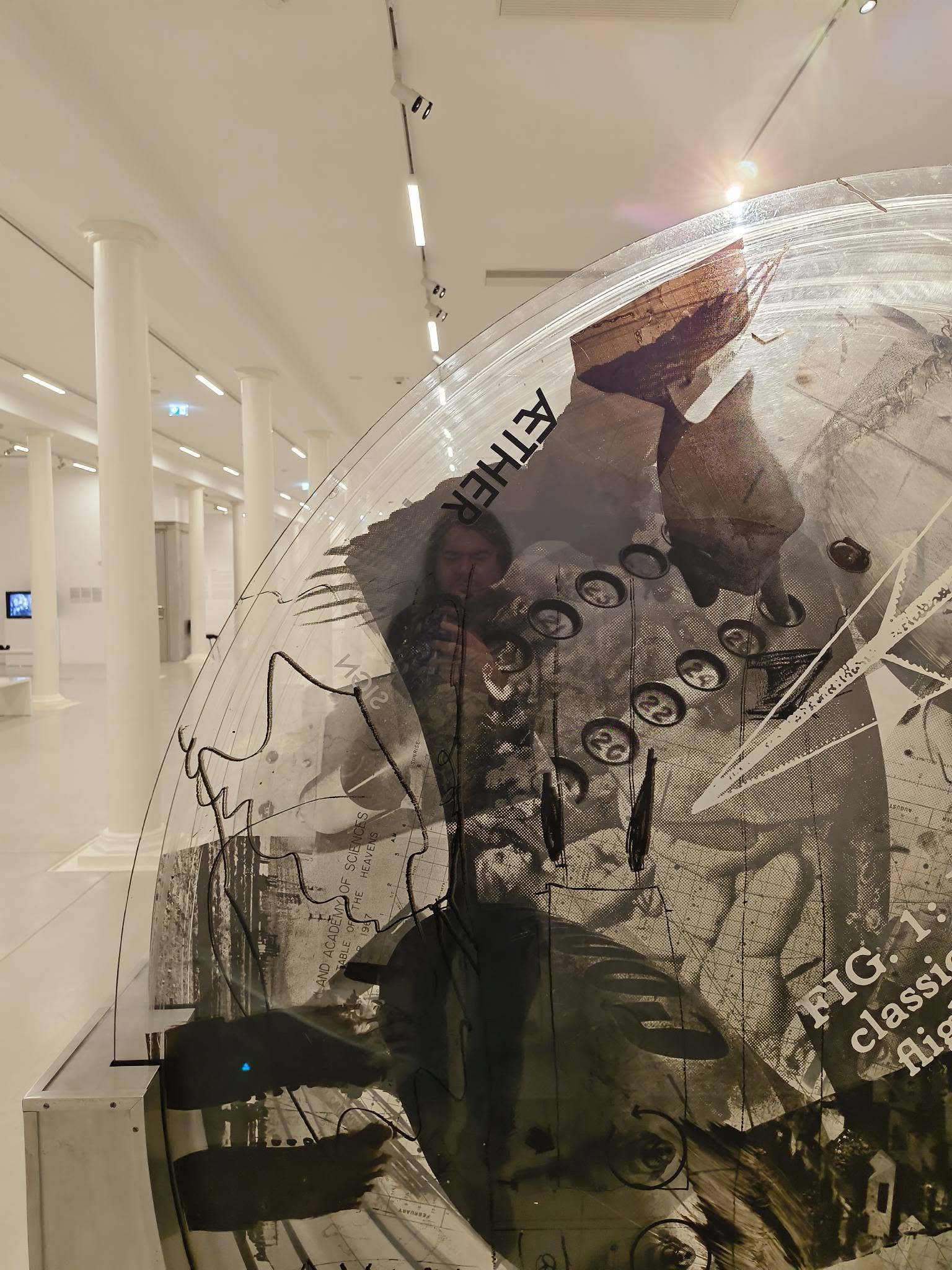
Rauschenberg, like his friend Jasper Johns, was a marvellous painter and artist. He had a talent to get his artworks “right”. A talent that is obviously innate, since you cannot tell and you cannot predict how a work of art will look “right” in advance. This is unpredictable. And it seems to be the case even more with the art of Rauschenberg (or Johns). Since the art of Robert Rauschenberg is highly arbitrary. In every artwork of his you feel that the elements could be arranged in a completely different manner as well. That seems to make it especially difficult to tell how he manages it to get them “right”, since you cannot tell how the arrangement would look “wrong”. While this is not so easy to tell in any case it indeed seems to be especially complicated in the case of Rauschenberg´s artworks. On the other hand, you seem to feel that any other arrangement done by Rauschenberg would be “right” all the same. Via his innate talent he masters the entirety of the blank canvas.
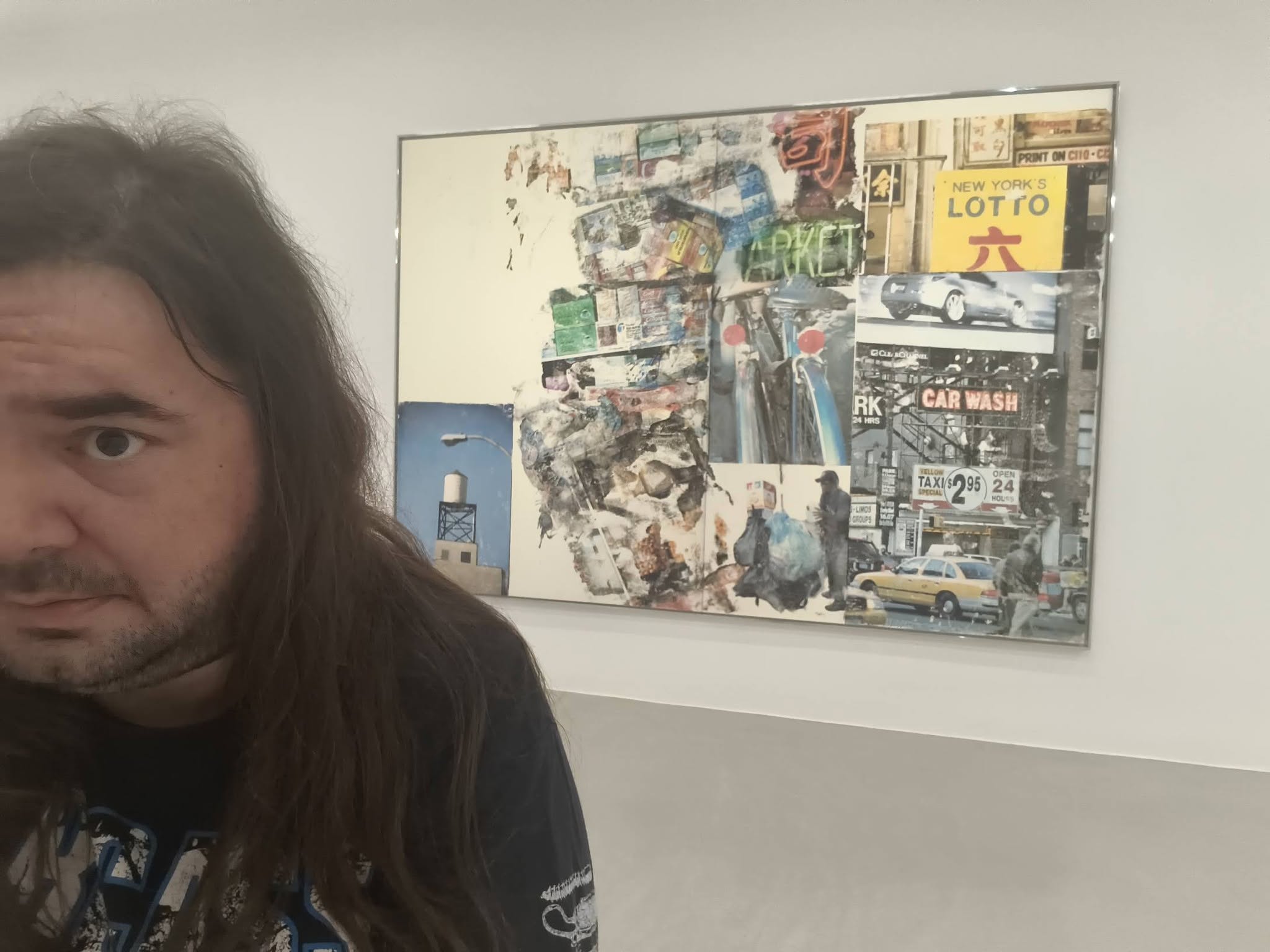
Yet because of this innateness, this arbitrariness, friendliness and looseness, this practical talent that does not seem to rely so much on the intellect, Rauschenberg´s art seems to lack some sort of cohesion and solidity. It seems to lack focus. You know, art also should be a statement, a message, an Aussage. The works of abstract expressionism and of pop art are Aussagen in a strong sense. There is an intellectual concentration vibrant in them; an intellectual concentration that strives for deep and universal meaning. Introspection is something art should radiate. And the weak point of Robert Rauschberg´s art is that it radiates a lack of introspection. That makes it look like a bit feeble, compared to the movements of abstract expressionism and pop art, in between which Robert finally got sandwiched in the eye of art history. However, to reiterate, the intellectual is only one thing among some more. Practical ability, like that of the practical Texan Robert Rauschenberg, is another, and may make up for most. Practice makes perfect.