Edward Hopper

American Regionalism and the Ashcan School were (pseudo-) movements in the first decades of the 20th century where (among other concerns) American painters tried to establish a territory against European predominance in modern art and tried to find their own voice and to develop their own style. However (as the term „regionalism“ indicates, and also due to the nationalism and conservatism of some of its proponents), they did, on the whole, not transgress and transcend the particular and the peculiar, the „local colour“ as Vincent would have said, into something more universal.

Edward Hopper, who originally was embedded in those traditions respectively who was confronted with them, he did. – The possibility of great art arises when someone embraces the local, the contigent, and penetrates it to such a degree as that he finds the universal and the eternal in it. The idiosyncratic is an emanation of the abstract, of totality, respectively is the modus in which the abstract, totality, seems to actualise itself, as a shade of God; at least that´s how great art presents it to us, the incompetent. In that fashion Hopper was not only a „painter of modern America“ but of universal truths.

hopper7Art, painting in particular, is about the evocation of things (respectively their inner essence). In the paintings of Hopper what immediately seems to be evoked is the facade of objects; of unspectacular Houses by the Railroad, whose facades seem impenetrable; an unmysterious, unspectacular exterior as an inside-out of an interior supposedly of equal quality; if these houses in the middle of nowhere are inhabited at all. They´re presented as outposts of civilisation, maybe, as evidence that man has penetrated into nature by the means of culture, construction, technology, standardised mass production and taste, yet not into a nature that is presented to us as particularly violent, dangerous or overwhelming (i.e. with which man had to struggle which would involve drama), though also not actually as peaceful and tranquil. In Hopper´s paintings they´re presented as inexpressive objects in a vacuous nature. And that is where the actual artistic quality is rooted. It´s the inexpressiveness and the vacuousness which establishes a dialogue, telepathy, with the recipient. True art does not confront us with the meaning of something within a particular setting, but with meaning per se. It distills objects in a way that they become signifiers of meaning per se. And, as such, can circulate as a currency of meaning within all human context.

As Markus Gabriel notes, the meaning of art is that it confronts us with meaning per se. Art presents us objects of everyday life in a light in which they suddenly seem questionable, respectively in which their meaning isn´t entirely clear anymore. It displaces and disturbs objects in a way that both the objects as well as the entire world in which they are situated become both unfamiliar and hyper-familiar. Within such a loosening as well as definite identification of an object with itself, meaning itself, meaning per se, is revealed, as a both clear-cut and nebulous center which both can be located and always seems to be, evasively, on the move, which can definitely be looked right in the eye just to (make you) twinkle in the next moment, opening another perspective – in sum: a multitude of perspectives, a (pseudo-fractal) geometry of perspectives, etc. The greater the art, the higher and more comprehensive is the evocation of meaning.

hopper8In their unspectacularity Hopper´s objects are highly charged with meaning and they are highly evocative. AAAAAAHH… what an evocation of facade! AAAAAAHH… what uneventfulness! AAAAAHH… what flatness! You have ambiguity in unambiguity; metaphysics in flatness; eventfulness in uneventfulness; familiarity in unfamiliarity; alienation in intimacy. A world, an object world (populated by subjects), which is so much identified with itself that it becomes truly meditative. It is not spectacular, but it is authentic. Hopper´s paintings bring out the element and cast light upon it. They function as a regognition of the single element, the uneventful, the imponderous. In great art you have a singling out of elements which then are charged with meaning. In great art the concretisation of the element at the same time means extraordinary abstraction of meaning from a regional context into the universal context.

hopper3However it is not a world locked in itself, and although Hopper was somehow conservative he was not reactionary und staunchly unprogressive. It is not a small world, a petty world, a regionalist, xenophobic world that is presented; you rather have the openness of the prairie and of the city – although you have, of course, an ambigous look upon openness as well. Hopper´s paintings usually are cut-outs and out-takes, although, in some way, they are not actually segments. The roads and railroads usually seem to come from nowhere in particular and seem to go to nowhere in particular (House by the Railroad (1925), Road and Houses, South Truro (1930-33), The Camel´s Hump (1931), New York, New Haven and Hartford (1931), etc.). In Solitude (1944) the destination is an uninviteful one. In Road in Maine (1934), however, you have a curved road, leading to somewhere you cannot look at (which I find therefore terribly interesting). In Gas (1940) you have a solitary gas station explicitely as an outpost of civilisation along a street which leads into a seemingly consuming wilderness – it can be noted that in those paintings Hopper presents seemingly frail human architecture which obviously is bound to eventually get digested by nature the same way he seems to present is as an upright, in a humble way even heroic human effort to create his own realm and shelter within nature – and it seems the conflict between meanings is resolved that both visions are true, in addition to that: that there both seems to be a communion between man and his artifacts and nature as well as that there is incommensurability between them. What he actually seems to present is the synthesis of a kind of (meditative) indifference between them and the possibility for both communion or incommensurability, depending on the subject and depending on circumstances. There is, at least, a juxtaposition between nature and culture as well as there is a sense for amalgamation of both realms. (And concerning Gas, it was the metaphysicist De Chirico who spoke of the suggestiveness of an obscure background the picture seems to get drained into.)

hopper6Such a kind of outtakes which – paradoxically – do not actually appear to be segments but expressions of a, probably obscure, continuum Hopper not only sets within geography and space but also within time. Hopper suggests that he is displaying moments in time both in animated scenery and in unanimated, uninhabited scenery (Five A.M. (1937), Seven A.M. (1948), Early Sunday Morning (1930), or in the Cape Cod series, although Hopper may admit that their primary purpose is the study of light at a specific daytime). In the animated scenes Hopper seems nothing to depict but a moment. He is, on the surface, not at all a narrator. Yet those moments seem to reveal the narration of a whole life, not only in the physical dimension but also in the metaphysical dimension. – It has been remarked that Hopper is a painter who captures lonelieness, melancholia and alienation – and indeed, one of his significant epiphanies he had as a young painter who has spent some time in Paris and became aware of the stark contrast between the French joie de vivre and the vibrating intensity of Paris and the compartmentalised, secluded social life which was standard in America. But what Hopper actually seems to reveal is not a culturally relative isolation and melancholia – it is the shallowness of the ordinary human experience, an uneventful narrative, a drama of mundane scenes.

hopper1You are inclined to get to know what´s on those people´s minds or what they are looking at, reflecting upon. What are those women in Eleven A.M. (1926), Morning Sun (1952) or Room in Brooklyn (1932) gazing at as they look out of the window – or gazing into themselves as their view seems to be unfocused? What does the piece of paper the scene in Office at Night (1940) obviously is revolving around contain? What film are people watching in New York Movie (1939), with the exception of the female usher who seems to be mulling over her own thoughts (apparently it is a romantic, but trivial Hollywood movie)? What do those women read in their magazines in Hotel Lobby (1943) or Compartment C, Car 293 (1938)? Apparently there is no actual secret, and those people are but an reflection of their unspectacular circumstances, a mirror image – „emptiness reflected in emptiness“ (as one scholar, Wieland Schmied, puts it). More generally, in Hopper´s paintings – from his perspective of the „silent witness“ – you get a seemingly painfully precise and voyeuristic view on the most intimate realm of people – but what is revealed is that there actually seems to be nothing in particular, no secret, or what you would like to expect.

hopper2Likewise Hopper often depicts people who are on the move, who are waiting in a hotel lobby, riding a train, who are on vacation or who are in a transitory situation: in a restaurant, in a cafeteria, etc. The possibility of connection between strangers might arise, for instance in Sunlight at a Cafeteria (1958) or in People in the Sun (1960) but it is indicated they will not unfold. A scenario of a permanent transition which is a mirror image of a permanent stasis (in a more general sense, Hopper depicts moments that on the one hand are opened up into the unconcrete, the unspecific, the potential, the durable, the continuum; on the other hand they are frozen and static). Like everything in Hopper´s paintings the mimics and gestures of people are reduced but on the other hand more clear-cut and precise, evoking the essence and the core of the object/subject portrayed, yet again diffuse and ambiguous. Hopper´s people apparently do not display joy, it may be indicated that they express melancholy and inner tension but also that is resolved in some kind of quiet desperation, then some kind of stoicism, finally into a facade which does not actually reveal nor hide a lot – that´s the physiognomy of Hopper´s personage. Kind of unsettled are also the women/girls who look up at the sun or into a greater outside world (Summertime (1943), High Noon (1949) or Second Story Sunlight (1960)) where possibilities of another life seem to be indicated – though as a potential that is not likely to become actualised. (The light, in general, remains external in Hopper´s world. It is not a world of light but a rather dismal world where a cold light from above simply lays bare existential shortcomings, be it of the object world or of the subject world. Only the artist, the metaphysicist is light itself: As Hopper´s wife, Jo, surmised, the lighthouses Hopper often depicts in his paintings may be an alter ego; when asked about one of his last paintings, Sun in an Empty Room (1963), should express, Hopper at least replied: „Myself“.)

hopper4Hopper´s people are usually reduced to their social roles, or their genders, indicating they are, on the whole, identical with themselves, with not very much room for maneuvre. Children, who symbolise growth and potential, as well as innocence and complete absorption as well as realisation in themselves and in the moment they are situated, are absent. As Füssli/Fuseli remarks, children are lovely and charming to us because in their gestures the fullness and richness of the moment is revealed. In Hopper´s adults you seem to have the same thing – but it appears as a moment which is drained of its own substance, and of jouissance. And nevertheless: You never know what kind of drama may actually depicted and be the true substance of these mundane scenes. If the realities depicted in Hopper´s paintings do not strike you as truly meaningful to the spectator – respectively to the „silent witness“ – who knows what meaning and importance they carry for those who are situated in them? To reiterate: Great art establishes a constant dialogue with the spectator concerning what is the meaning the artwork carries, what does it try to tell, and it is, in those respects, always fluctuating. That is how those pieces of art are alive and are full of life. Yet another aspect of great art is that it immerses you. Not only intellectually or concerning pure curiosity, but also emotionally and ethically. You feel with those people and even with those unanimated scenes in Hopper´s paintings. They demand dignity and respect. They attract empathy. In the uneventfulness of the scenes a lot might go on. There´s a lot of potential, you see. In those moments, those segments, those outtakes you equally see the continuum. In those definite scenes you sense the possibility of openness. In those depictions of everyday lives, objects and people you have a singling out, an emphasis of the specific element, of the concrete, an appreciation for it. That makes the meditative, transcendent quality of Hopper´s paintings. That is how communion is established. 

hopper5Hopper´s paintings are epiphanies of everyday life. While the Hyper-Genius presents a world that constantly explodes, into negatively curved space; while the Hyper-Genius constantly dislocates objects from their meanings and therefore opens room for maneuver, the Genius strictly identifies objects and meanings, to establish lucid clarity and (ambiguous) harmony. In doing so, he reveals the complexities and the ambiguities of the world as well. The gestures and the approaches differ, the significance is the same. In Hopper´s view upon the world there is only a narrow space between an entity and its possibilities. But there is vibration and fluorescence all alike. Luminosity. That is to say the artist casts light on the world and we see a lotta more. That will feel good.

Duncan Wylie, Contemporary Metaphysical Painter

With reference to Schopenhauer Nietzsche calls art „the highest task and the true metaphysical activity of this life“. – Metaphysics aims at discovering the true, comprehensive design of reality. The true, comprehensive design of reality is not given to us, only to a hypothetical omniscient being (and I doubt whether such a being can ever exist). The metaphysicist or ultimate truth-seeker – the true scientist, the true philosopher, the true artist, and the true saint ( = the ethical genius) – aims at breaking open another window, or to remove another brick in the wall, in order to establish a potent view, a fresh perspective on the fabric of reality and its (so-called) mysteries. The scientist, the philosopher, the artist, the saint, are avatars of the truth-seeker, and the higher the personal truth of the metaphysicist the more she will encircle all those aspects, respectively embrace them, establish familiarity with them; in her endeavours to establish a new, potent perspective upon reality, therein trying to imitate omnipotence, and omniscience.

duncanwyliebild6Nevertheless the arts do not seem to be in a very good shape today. True metaphysical effort does not seem to actually be around; no omnipotence, no omniscience. We might attribute this to „the postmodern condition“, (playful) rejection of universalism, respectively the insight that the global perspective cannot effectively catch or pay tribute to the many perspectives that have legitimately been established or found their own voice in postmodern, post-colonial society from the 1970s onwards, in addition to the differentiation of art and the medias with which the expression of art became an increasing possibility, going hand in hand however with the notion that the display of true innovative power has become less and less possible in an age where, concerning modern art, all seems to already been said and done, only footnotes could be added or the perspectives upon modernity could be changed/challenged, multiplied or subverted – yet not revolutionized…

Indeed, the true metapysicist, who – in order to put it simple and in convenient terms – aims at revolution and establishing a revolutionary perspective upon the totality of reality, at first experiences herself to live in an ungrateful epoch, a non-epochal age nowadays. The non-epochal age does not seem to reveal comprehensive or ultimate truth, neither about itself nor about history in general. The grasp on „totality“, including the possibilities of establishing such a grasp, seems to be gone. Hence the depression of the true metapysicist in the postmodern age.

duncanwyliebild7However, after a while the true metaphysicist will realise that she will find truth and the possibilities of establishing views upon totality in every thing, notably in local aspects, in the unglamorous, in non-places. Apart from that, and foremost, metaphysical activity means exposing the essence of a thing, to reveal something about its inner core. The inner core might well be ambiguous, reveals itself to be embedded in a semi-darkness respectively extends into a seam which vanishes into, or amalgamates with, the „infinite“, or with the „primal ground“ – signifying the flexibility of meaning, of the multiple aspects of reality, and of any real thing. The signature of the truly metaphysical artwork is that you immediately realise someone has revealed, and is permanently revealing, the inner essence of a thing. In the case of some metaphysicists that may strike as that something, respectively the whole structure, seems to permanently emerge, to step out of itself. It fluctuates, it may even explode, it seems to process itself, it seems to live. The essence of something seemingly gets chased through its form, permanently, it seems to run over. It seems in the perception of the metaphysicist the inside of a thing is permanently turned out, and to permanently emerge out of this constellation, due to its own inner intensity.

duncanwyliebild4

Things of that order, of that kind, of that magnitude usually aren´t around in today´s art world. Therefore I was delighted to get acquainted to Duncan Wylie a while ago when he got featured in the Drome art magazine. When you look at his paintings it immediately arises that there is someone who actually has enhanced and refined painting, and the possibilities of painting – and that he obviously has established a deep perspective upon reality, respectively a perspective upon the deep structure of reality, from which new possibilities of painting – the deep structure of painting – arise.

(What is the deep structure of reality? All aspects of that what is given, of what is actualised as well as the projections of the virtual. What is the deep structure of art, of writing, of science, philosophy, of any human effort to grasp reality? The Experimentierfeld, the field of experimentation of its own possibilities. That is the deep structure of painting.)

duncanwyliebild5What you seem to look at and gaze into when you get exposed to Duncan Wylie´s paintings is – the multiverse, the multi-layeredness of reality. They give impression of the density of the world, of the richness of the world. In the works of the art genius a typical signature is that behind the „given“ world, as presented via the object that is portrayed, a second, a hidden and a subtle world seems to emerge, where enigmatic though profound meanings seem to be located, including the possibility that they are only illusory, deceptive, unimportant, a wrong path, or a kind of Bedeutungsrest, leftovers of meaning in a twilight zone… When both of these worlds are given, presented, illustrated, you have, so to say, the totality of reality. You have an indication of the thing and the thing in itself. You have metaphysics. That is how it has always been in great art, in great painting. In an age like ours, via the seemingly infinite layers that you have in the works of Duncan Wylie you have the metaphysical painting of our post-postmodern age.

duncanwyliebild3Duncan Wylie, a nomad and a white deviant from Zimbabwe who has been living in a number of countries, has his eccentricity somehow rooted in his origins and in his biography. His early paintings through which he has developed his peculiar style are revolving around the traumatic experience of the danger of having his house destroyed, his home, his shelter, by the government. His early works indicate violence and destruction and especially in the mechanical, semi-anonymous way the acts of destruction are undertaken, they seem to expose the direness of reality, respectively that at the core of reality there is no shelter, no possibility of a refuge, that the core of reality is not meaningful architecture but a meaningless ruin, exposed in a scenery where there is no actual communion, no participation, no commiseration. But what also is indicated seems to be that violence, destruction and the ruins do not have the final say. The scenery isn´t empty. The density of reality announces itself.  – Duncan Wylie, at that time, was interested in capturing the moment, via the expression of impact. His paintings seem to indicate that while the impact within the moment originates from the past, the future is already/virtually there as well. The past is closure, the future is openness. The moment is transition as well as totality. In order to understand the world you have to understand the past as well as the future as well as the moment. Embrace the moment and you embrace the universe. In Duncan Wylie´s paintings you see the the plethora of the moment. (And maybe, Duncan Wylie indicates, what you may sense in this approach to painting is that you must destroy your old identity and way of making an image/painting (which was the symbol of the house), while making a new one at the same time. Again, you have a kind of density of the moment, as containing and enabling transition.)

Duncan Wylie says: „My paintings are composed of many opposing forces, and must be understood from a very paradoxical viewpoint. The inherent contradictive nature, on all levels: real/abstract, local/global, individual/universal, emptiness/fullness, city/ nature, instantaneous/perpetual, order/chaos, mental/physical, create for me a fertile ground to explore the possibilities of paint. Thus I can say that these are not ruins or disasters, but constructions.“ And: „There’s always an interplay of contrast between the real and the abstract, and this involves overlaying as much as it does dovetailing.“ And yes, you can say you both seem to have the playfulness and the seriousness of the world, the ephemeral and the sublime in his paintings – indicating that both are different avatars of the same quality. Is it actually the Tao, respectively the immediate emanations of the Tao, respectively the fluctuating interchange of the material world and the Tao, that is presented to us in his paintings? In my humble opinion I am inclined to say yes. In this respect, Duncan Wylie´s world, both seemingly exploding as well as imploding, stabilises itself into and onto itself, via its own inherent competence.

duncanwyliebild2Duncan Wylie´s paintings reveal the metaphysical design of objective reality, the glamour/clamour of being. The purpose of art is to reveal the metaphysical design of reality. – One can, however, say, that the highest point of art is when not the true metaphysical design of objective reality is displayed, but of subjective reality, i.e. the embeddedness of man in objective reality. Duncan Wylie´s paintings display, in their majority, an inanimated scenery (inanimated by man, though the scenery is full of vibrant life itself). If anything, humans are kind of semi-covered by and within the multiple layers of objective reality, they do not seem to be able to transgress material reality, rather they seem to be spilled by and submerged to it. Yet more recently as a prominent figure in Duncan Wylie´s paintings emerges a tightrope walker. The tightrope walker cautiously, yet with increasing competence, seems to walk the thin line between cosmos and chaos. The thin line between cosmos and chaos is where true art happens, and all constructive human endeavour. It is where the actual human condition is situated, and the creative process itself.

duncanwyliebild1What will become of the cautious tightrope walker? Duncan Wylie´s art is an art of that kind that will come up with new solutions/revelations to those questions situated at the core of the human question also in the future (I guess). And maybe we can say that the ethics that derives from his art is the call for a flexible adaption to circumstances. And somehow within the physical and the metaphysical insecurity, the rootlessness, the Unbehaustheit of man the possibility of concealment seems to indicate itself and be guaranteed via the density and playful stability of the world, seen through the mind of Duncan Wylie. That may account for the religious aspects of Duncan Wylie´s art.

Duncan Wylie´s website

Art since 1940/Strategies of Being


„Every intelligent painter carries the whole culture of modern painting in his head. It is his real subject, of which everything he paints is both an homage and a critique, and everything he says a gloss.“ – Robert Motherwell

„I´ll tell you what´s going to happen: The public will keep on buying more and more art, and husbands will start bringing home little paintings to their wives on the way home from work, and we´re all going to drwon in a sea of mediocrity. Maybe Tinguely and a few others sense this and they are trying to destroy art before it is too late.“ – Marcel Duchamp

„Painting has reached a point where youngsters can only add a footnote. It depresses me a little tot hink that what was once Indian territory is now pretty thoroughly mapped out.“ – Robert Motherwell

„I pursue no objectives, no system, no tendency; I have no program, no style, no direction. I have no time for specialized concerns, working themes, or variations that lead to mastery. I steer clear of definitions. I don´t know what I want. I am inconsistent, non-commital, passive; I like the indefinite, the boundless; I like continual uncertainty.“ – Gerhard Richter

„Cobra is a form of art which heads toward childhood, tries to recover folk art and child art for itself with the means available to adulds, non-naive means“ – Pierre Alechinsky

„The art audience is the worst audience in the world. It´s overly educated, it´s conservative, it´s out to criticize, not to understand, and it never has any fun. Why should I spend my time playing to that audience? … I´ll play with the street audience. That audience is much more human, and their opinion is from the heart. They don´t have any reason to play games.“ – David Hammons


(Quotes from: Jonathan Fineberg: Art since 1940 – Strategies of Being, London, 2000)

Giorgio de Chirico


„Damit ein Kunstwerk wirklich unsterblich ist, muss es vollständig aus den Grenzen des Menschlichen heraustreten: Gesunder Menschenverstand und Logik werden ihm fehlen. – So rückt es in die Nähe des Traums und auch des kindlichen Gemüts.“

„Was im Mittelalter die Künstler auf einen Irrweg führte, als sie die gotische Kunst erfanden, war die Naturbetrachtung; dasselbe Phänomen lässt sich bei allen modernen Künstlern beobachten: bei Dichtern, Malern und Musikern. Ein wirklich in die Tiefe gehendes Werk wird vom Künstler aus den entlegensten Tiefen seines Seins geschöpft; dort plätschert kein Bächlein, singt kein Vogel, raschelt kein Laub; Gotik und Romantik verschwinden; und an ihrem Platz erscheinen die Dimensionen, die Geraden, die Formen der Ewigkeit und des Unendlichen. Dieses Gefühl der Offenbarung lenkte die Baumeister Griechenlands; dasselbe Gefühl schuf die römische Architektur; deshalb glaube ich, dass die griechischen und die römischen Bauten und alle, die, wenn auch leicht abgewandelt, nach deren Prinzipien errichtet wurden, die größte Tiefe in der Kunst erreicht haben.“

„Vor allem ist ein großes Feingefühl nötig. Sich alles auf der Welt als Rätsel vorstellen, nicht nur die großen Fragen, die man sich immer wieder gestellt hat – warum die Welt erschaffen wurde, warum wir geboren werden, leben und sterben -, denn vielleicht liegt in all dem, wie ich schon gesagt habe, kein Sinn. Aber das Rätsel mancher Dinge verstehen, die im Allgemeinen als belanglos betrachtet werden. Das Geheimnis mancher Phänomene im Bereich der Gefühle, der Merkmale eines Volkes spüren, so weit kommen, dass man sich sogar die schöpferischen Genies als Dinge vorstellt, als äußerst merkwürdige Dinge, die wir nach allen Seiten drehen und wenden. Auf der Welt leben wie in einem unermesslichen Museum voller Seltsamkeiten, voller wunderlicher, bunt gescheckter Spielsachen, die immer wieder anders aussehen, die wir manchmal kaputt machen, um zu sehen, was drinnen ist, und enttäuscht merken, dass sie leer sind. – Die unsichtbaren Bande, die ein Volk mit seinen Schöpfungen vereinen. – Zum Beispiel, warum die Häuser in Frankreich auf ihre bestimmte Weise gebaut sind und nicht anders; man kann noch so viel Geschichte zitieren; die Gründe nennen, die zu dem oder zu jenem beigetragen haben, man beschreibt, doch erklärt man nichts, aus dem ewigen Grund, dass es nichts zu erklären gibt und das Rätsel doch immer bleibt.“

„In erster Linie ist es nötig, die Kunst von allem freizumachen, was sie bis jetzt an Bekanntem enthält, jedes Sujet, jede Idee, jeder Gedanke, jedes Symbol muss beiseitegeschoben werden … Den Mut haben, auf alles andere zu verzichten. So wird der Künstler der Zukunft sein; einer, der jeden Tag auf etwas verzichtet; dessen Persönlichkeit jeden Tag reiner und unschuldiger wird … So muss die Malerei der Zukunft sein. Dass mehrere Menschen auf dieser Welt so malen können, ist unmöglich … Doch hier muss ich etwas erklären. Ich habe gesagt, dass es nicht viele solcher Menschen geben wird. Aber ich glaube, dass es trotzdem mehr sein könnten, als sie es jetzt sind. Denn es gibt solche, ich habe schon einige kennengelernt, sie sind mit einer großen Sensibilität begabt, können unbekannte Dinge empfinden, ihnen macht der Anblick eines Menschen oder eines Dings nicht den Eindruck, den er im Allgemeinen macht … Eine solche Empfindung kann uns wohl manchmal gefallen, aber lässt uns nie den eisigen Schauder, die solitäre und tiefe Freude der Offenbarung, der als solche begriffenen seltsamen, sinnlosen Komposition spüren: eine Welt, die niemand kennt, und dessen einzige Bewohner vielleicht wir sind…“

„Daraus lässt sich der Schluss ziehen, dass jedes Ding zwei Aspekte hat: einen geläufigen, den wir fast immer sehen und den die Menschen im Allgemeinen sehen, und einen anderen, den geisterhaften oder metaphysischen, den nur seltene Individuen in Momenten der Hellsichtigkeit und der metaphysischen Abstraktion sehen können, so wie gewisse Körper, die, von einer undurchdringlichen Materie zugedeckt, im Sonnenlicht nicht sichtbar sind und nur mithilfe künstlicher Lichtstrahlen wie etwa der Röntgenstrahlen erscheinen.“

„Das Wort „metaphysisch“ führt zu einem Haufen von Missverständnissen, besonders in jenen Köpfen, die an Verstopfung leiden und die, denen die gesunde Anstrengung des Schaffens fremd ist, von Plagiaten und Allgemeinplätzen leben und ihre chronische Galle jedes Mal ausspucken, wenn ihnen was unterkommt, das den Kreis ihrer intellektuellen Fähigkeiten sprengt … Doch sehe ich selbst in dem Wort „metaphysisch“ gar nichts Düsteres; es ist die Ruhe und die sinnlose Schönheit der Materie, die mir „metaphysisch“ erscheint, und umso metaphysischer erscheinen mir die Gegenstände, die durch die Klarheit ihrer Farben und die Genauigkeit ihrer Maße jeder Wirrnis und Verworrenheit genau entgegengesetzt sind … Die geisterhafte Evokation der Gegenstände, die von der universalen Blödheit als belangloses Zeug abgetan wird.“

„Der dumme, das heißt der unmetaphysische Mensch fühlt sich instinktiv von der Masse, der Höhe, von einer Art wagnerianischer Architektur angezogen. Ein Zeichen von Naivität, es handelt sich um Leute, die keine Ahnung davon haben, wie schrecklich Linien und Winkel sein können; sie werden vom Unendlichen angezogen, und genau darin kommt ihre beschränkte Psyche zum Vorschein, die in demselben engen Kreis eingeschlossen ist wie die weibliche und die kindliche. Wir aber, die wir die Zeichen des metaphysischen Alphabets kennen, wissen, wie viele Freuden und wie viele Schmerzen in einer Arkadenreihe, einer Straßenecke oder auch in einem Zimmer, in einer Tischplatte, zwischen den Seitenwänden einer Schachtel stecken.“

„Gewöhnlich suchen die Leute, wenn sie mit Kindern ins Theater gehen, Vorstellungen ohne intellektuellen Anspruch aus, die den Bedürfnissen der Kinder entgegenkommen; diese Bedürfnisse sind, was das Theater betrifft, natürlich und spontan und werden nicht durch Moden oder Snobismus suggeriert. Die Kinder lassen sich von diesen zwei Faktoren nicht hinters Licht führen, die leider eine gewisse Kategorie von Erwachsenen beeinflussen… (Die Angst, nicht über die neuesten Suchten des Snobismus auf dem Laufenden zu sein, die Angst, nicht intelligent genug zu sein oder sogar dumm dazustehen, diese entsetzliche Angst bringt heute den Geschmack und die Bedürfnisse vieler Menschen zum Schweigen, sodass sie gefügig alle Blödheiten akzeptieren, die ihnen der Snobismus aufdrängen will.)“

„Auf der Bühne sah man alte Propheten, die eine Reihe von Sprüngen machten, und ihre Anstrengungen wurden von Tangomusik begleitet. Wir geben zu, die Wirkung war zumindest komisch. Was mich aber an dem Abend am meisten beeindruckte, war das Publikum, das gleichgültig dieser Beleidigung des gesunden Menschenverstandes beiwohnte. „Wenn wir so weitermachen“, dachte ich, „werden wir auch noch das bisschen Logik verlieren, das wir uns durch jahrtausendelange Mühen haben aneignen können, das befürchte ich. Wir werden unseren gesunden Menschenverstand und unsere Logik verlieren, und diesmal gibt es im Ernst kein Zurück.“ Dann dachte ich traurig darüber nach, dass wir wieder von vorne würden anfangen müssen.“

„Trotzdem ist es vergeblich, nach der Art einiger Phantasten und gewisser Utopisten zu glauben, sie könne die Menschheit erlösen oder regenerieren; sie könne der Menschheit einen neuen „Sinn“ für ihr Leben, eine neue „Religion“ geben. Die Menschheit ist und bleibt das, was sie immer gewesen ist. Sie nimmt diese Kunst an und wieder sie immer mehr annehmen; der Tag wird kommen, an dem sie sich diese Kunst im Museum ansehen und studieren wird; eines Tages wird sie unbefangen und natürlich über diese Kunst sprechen … Was das Verständnis betrifft, das beunruhigt und heute, aber morgen nicht mehr. Verstanden oder nicht verstanden zu werden ist ein heutiges Problem. Eines Tages wird für die Menschen auch von unseren Werken der Aspekt des Wahnsinns weichen, das heißt jenes Wahnsinns, den sie sehen; der große Wahnsinn nämlich, der nicht allen erscheint, wird aber immer bleiben und weiterhin hinter dem unerbittlichen Wandschirm der Materie seine Gesten machen und seine Zeichen geben.“

„Trotzdem ist es etwas Schönes und auch Erholsames, in der weiten Domäne der materiellen Vervollkommnungen immer zu suchen, ohne Unterlass zu suchen. Die Suche ist körperlich anstrengend, aber die Art Anstrengung bringt unserem Geist die Entspannung, die der Künstler so notwendig braucht wie Nahrung und Schlaf. Ohne diese Entspannungen können wir gleich unsere Pinsel zerbrechen und uns der reinen Meditation, der kosmischen Träumerei hingeben, was der erlesenste Rausch ist, aber auch der gefährlichste.“

„Das Genie kann nur von einem Genie erklärt werden – eine Wahrheit, die auf Baudelaire, den Opiumsüchtigen, zurückgeht.“


(Giorgio de Chirico: Das Geheimnis der Arkade. Erinnerungen und Reflexionen. Bonn, 2011)

Prelude to Notes about Art and Artists

I plan/hope to write some notes about art and artists, about Bacon, Freud, Auerbach, Reinhardt, Stella, Newman, Westermann, Hopper and Duncan Wylie as well as a general text about What is a Metaphysical Artist? in the course of this month, I am pseudo-overdue with it, apart from that always jumping between disciplines, but this is a good thing since via such pseudo-circuitous routes (actually hypercycles) you may be able to add more value to the initial stuff in the end. In this context I also studied stuff about the most contemporary art and tried to get it and despite my sensational intelligence and erudition I still feel unsure about how to catch the metaphysics in it (I do not deny that there is some, yet is diffused, haha, the postmodern condition; postmodernity is but an age bygone, New Realism in philosophy may serve as a tool to get the whole structure again and its pseudo-fractal-like geometry, etc.)

After attending the opening of the new Tracey Emin retrospective at the Hayward Gallery, I’m finally ready to come out and say it.

Stephen Faust Art meant little to me, except as something other people did, until I was about 19, when the 1 to 1 relationship between symbol and substance of science gave over to the many to 1 and the 1 to many truths of art, and one began to explore and comprehend the logics of ex temporae appropriation of substance to symbols and of symbol to substances that most human beings engage of in their vacillating consciousness, where many to many logics abound, as the profound of the substance symbolized meets the symbols of substances utilised of their seekings for satisfactions. Get this about Art, one might say: “Many are the ways, but they are not all. My many and your many may be spoken of in many ways, and their meeting might well be Art speaking, to you; to me, there are many things I have to do, and many things within me which would sing, and, no matter what the symbol, if it does ring of truth to you, others may not hear it; if it brings my truth to you, are you sure you did not queer it; and if it rings of truth from me, can you be sure that you got near it ? If my art did not speak to more than myself, then t’were silence the greater art.”

Amadeo Modigliani

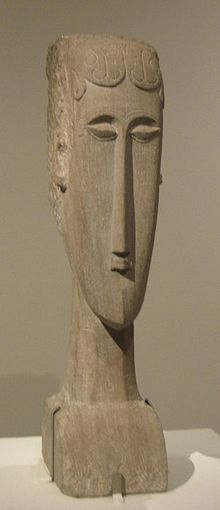
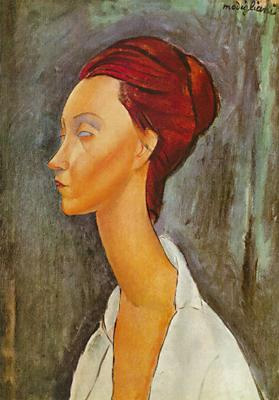
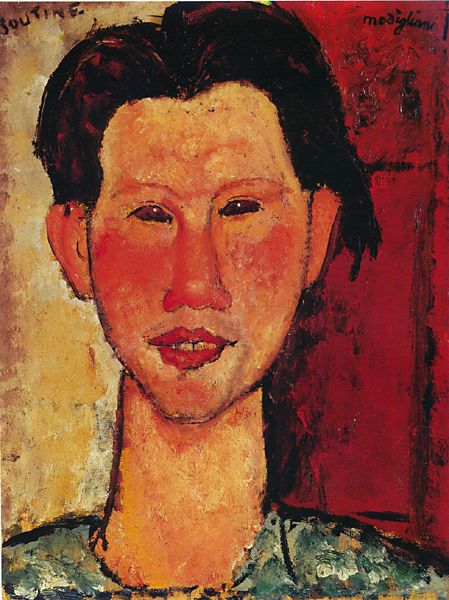
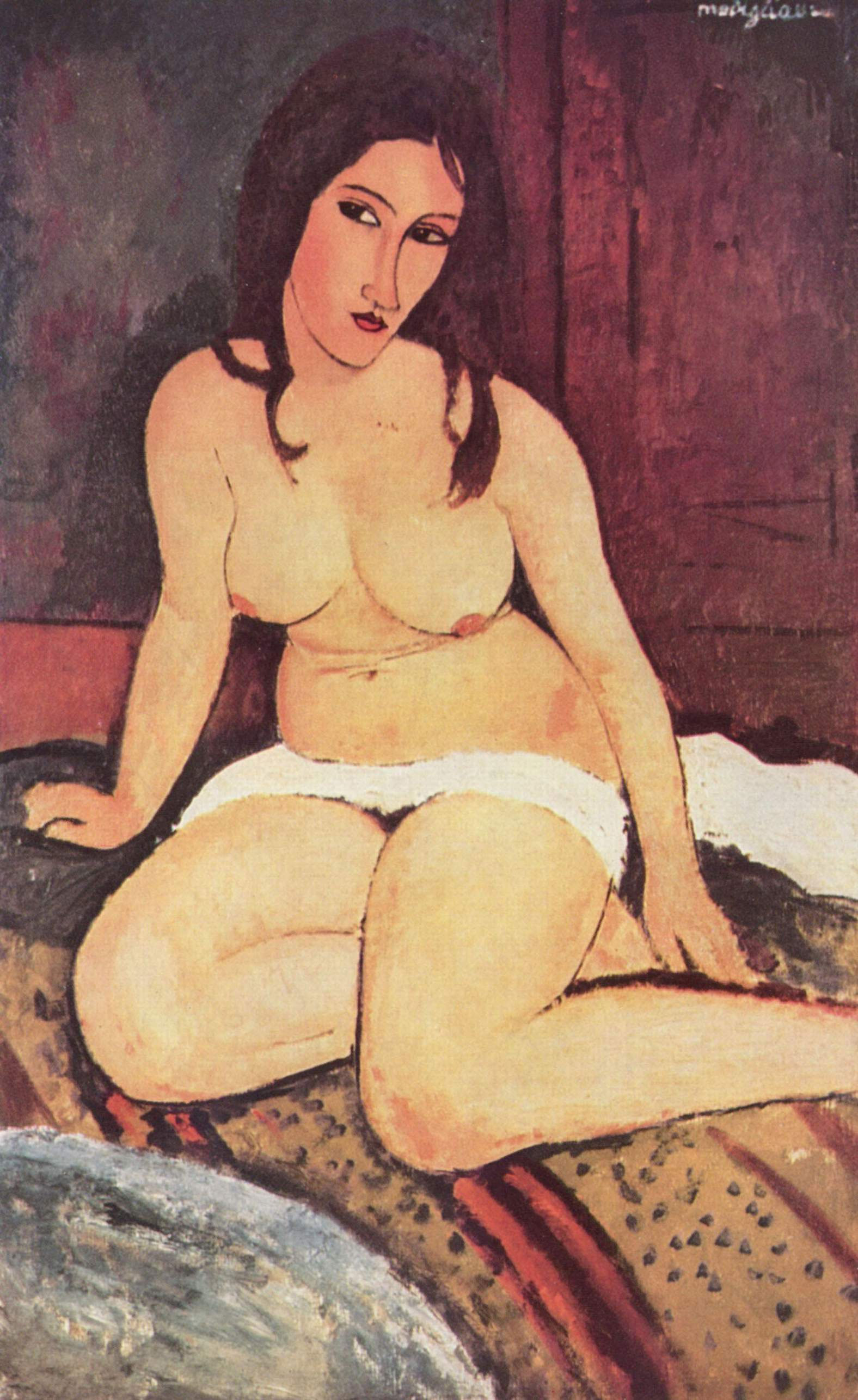
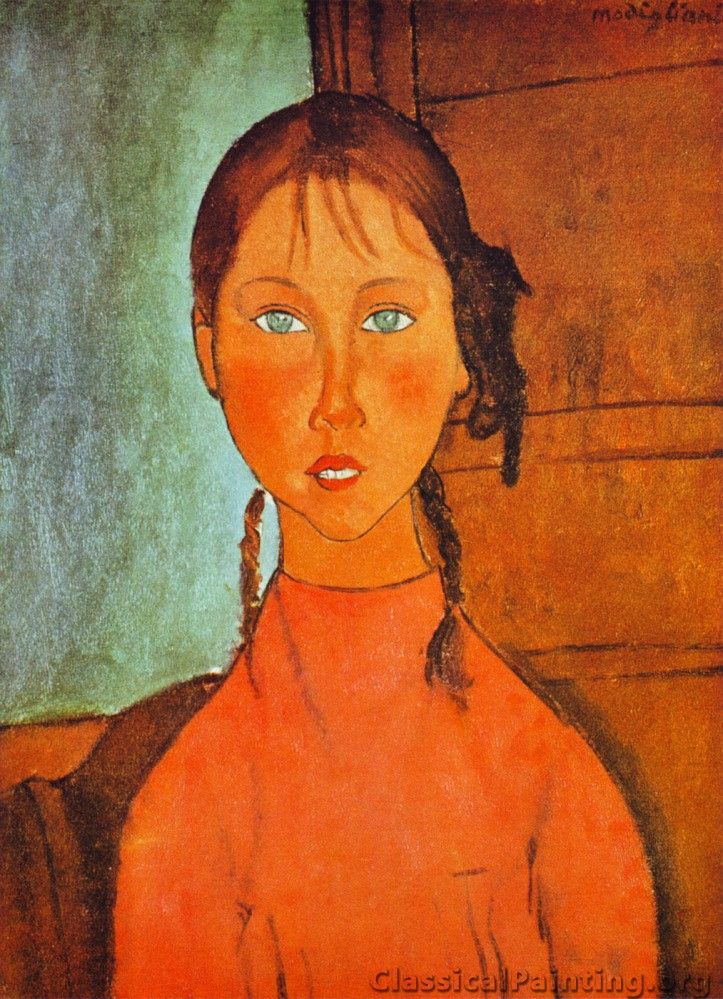
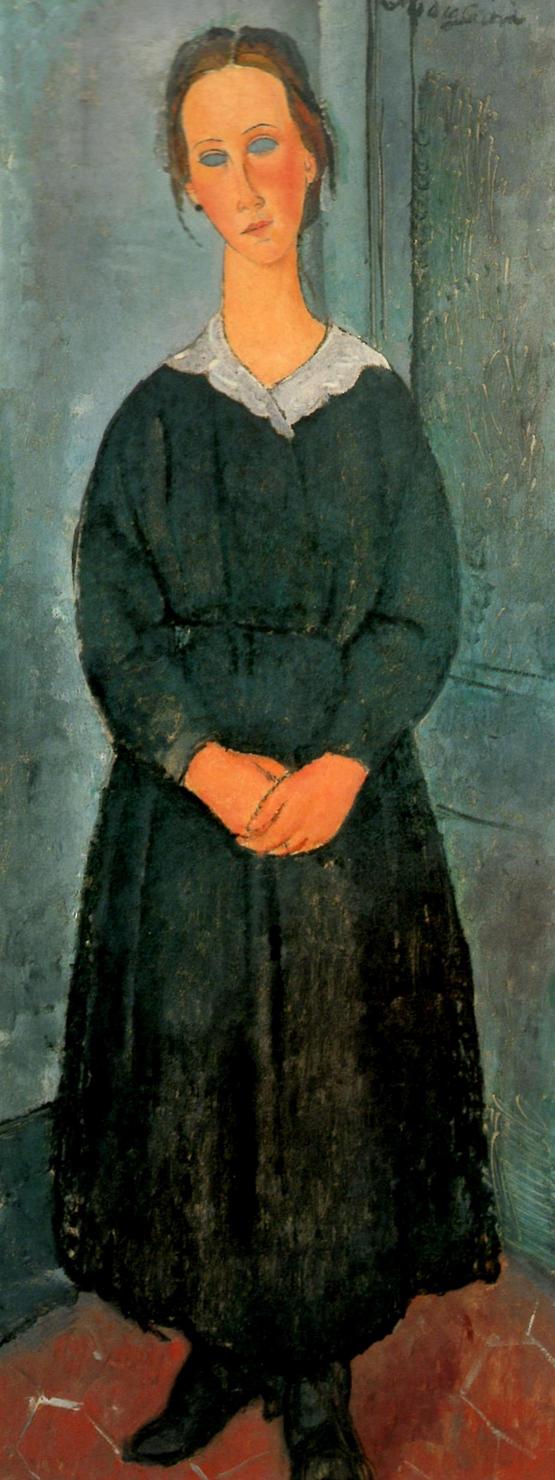
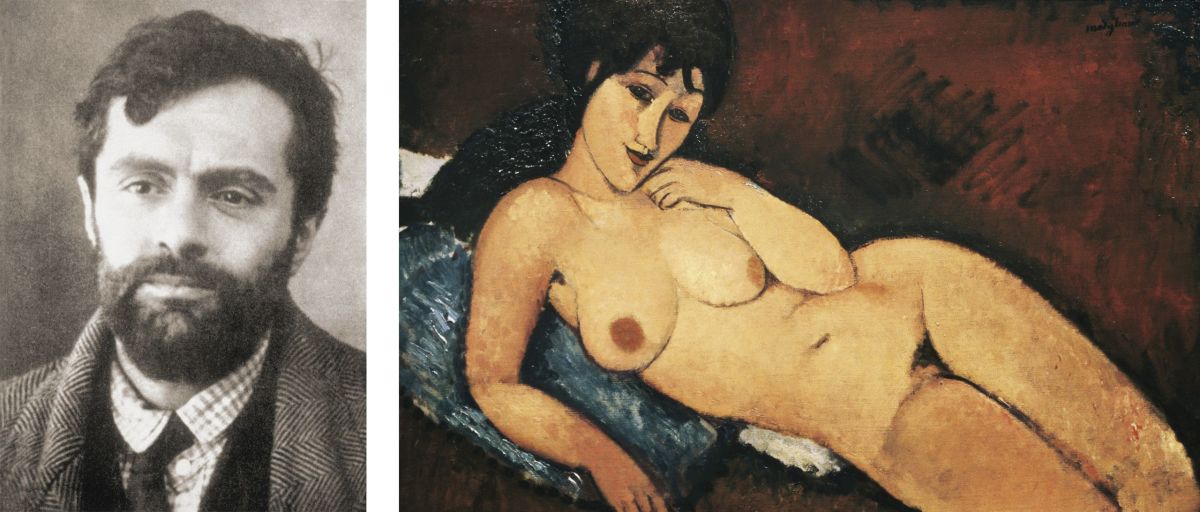
In the last post I made reference to Lautréamont. Little is known about this very outstanding writer and intellect, he lived and died early, in obscurity, and rose to fame post mortem. To a lesser extend this also accounts for Amadeo Modigliani, who happens to be one of my favorite painters. What is known about him is at least that he was very well read and that he always carried a copy of Lautréamonts Maldoror with him. – Modi was well known among the Paris art scene, but remained an idiosyncratic outsider even there and it seems somehow uncanny how Modi could have found the strengh to avoid the influence of Picasso (and others); of Picasso and his multidimensional, intellectual paintings, whereas he himself made portraits seemingly flat and two-dimensional (which was a reason he was dismissed by critics like Carl Einstein). But if you look at his paintings they show a good deal of love and of empathy for his models, a truly productive mimesis, a gentle soul; in his portraits there is this massive interplay between their seemingly reduced appearence and the individuality and character of his models being so pronounced — which is why – in some contrast to Picasso – Modigliani makes my heart sing. – He lived in poverty and died due to tuberculosis at age 35. (Last year his Nu Couché was sold for $ 170 million and is therefore at the moment the second most expensive painting in the world (#1 is Picasso´s Les Femmes d´Alger)). Although the couple had a baby his finacee Jeanne commited suicide the following day. This is understandable, since, as far as I can see, once you have met someone like Modigliani in your life you are not likely to ever meet such a person again.


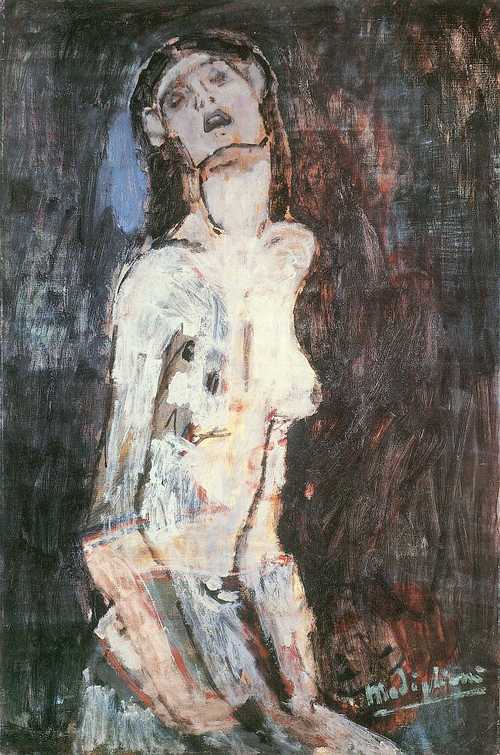
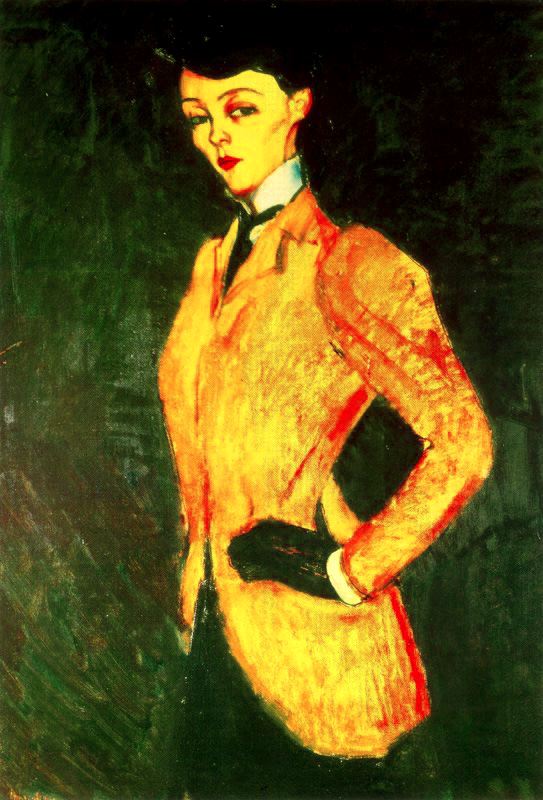
UPDATE 03/20/2017 I have mentioned the last time that it is cool, if not somewhat uncanny how Modi avoided the pronounced influence of Picasso respectively of the avant-gardist tendencies of his time. A considerably robust and strong artistic personality, self-contained and authentically creative out of itself, is necessary to operate at such a level of stability and unaffectedness. Modi however did not explicitely desire to be avant-garde, and he was content with being an outsider, occupying the position of true individualism – and indeed, he was aware that he was a kind of „superuomo“, an overman as the climax of the authentically creative individual drawing out of itself to the highest degree; – Modi´s quest was for beauty, for harmony, for vitality and for the eternal. Whereas the primary motive of avant-gardism is to explode into the future, the serene qualities of beauty, harmony, etc. refer to the archetypical. The art genius, both revolutionary as conservative as he is, will strive to express beauty and harmony by relying on archetypical forms and transforming them into something new, to create new archetypes; plus he will be highly creative in discovering the archetypical in places neglected by others: Modi was a versatile and dead-aimed artist from the beginning, painting, for instance, the eerie as well as roughcast Nudo Dolente (1908) or displaying his sense for elegant forms and colours as well as his talent (or genius) for offering striking and revealing impressions of physiognomy and character with Woman in Yellow Jacket (Amazon) (1909) (which infuriated the amazone – Baroness de Hasse de Villers – so much that she refused to pay for it) – yet it was during his period as a sculptor (1909-1913) in which Modi progressed into synthesis. In his quest for „forms of beauty and harmony“ Modi draw back not only on sculptural forms of the Greco-Roman antiquity but also of ancient non-European worlds. Despite that his sculptures are rather a paraphrase and an allusion to primitivism, not an imitation nor a mere avant-gardist takeover, revealing, again, his staunch autonomy as well as accuracy in finding modes of expression of both abstract and eternal as well as concrete and individual qualities.

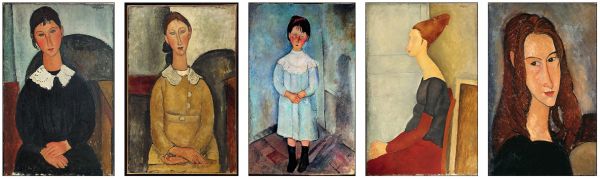
Through reduction, linearity and abstraction Modi found his own, peculiar and homogenous style, and maybe the true amazing quality of Modigliani´s art is how the abstract and the supratemporal and the concrete, the individual and the modern not only mirror each other but seem to be born out of each other. In taking away so much elements that his portraits may rather seem caricatures he brings the physiognomy to a vibrant life and to extremely distinct expression; despite the homogeneity in style the individuality is always most pronounced. His nudes are both individually (and in several respects) in the flesh as well as they are statuarily abstracted and otherwordly – where this amalgam between living objects and objects of art, the animate and the (timeless) inanimate and transcendent comes in the most unexpected, idiosyncratic way. Likewise his characters sometimes have eyes whereas on other occasions their eyes are eradicated into an apparent de-individualised glimmer (– Modigliani explained that to him this would symbolise an „affirmation of life“, on other occasions that he would not paint eyes as long as he was not sure about having captured to „soul“ of a person —— that Modigliani did not talk much about his art, offered several, sometimes seemingly contradictory and elliptic explanations is typical for the genius, since the genius makes conclusions all the time yet at the same time lives in a multilayered world of inconclusive conclusions in which everything is both in stasis and in motion). In his final portraits his characters are transcended into a kind of supra-individuality where the abstract and the concrete meet, the timeless and the ephemeral, the common and the idiosyncracy… where those portrayed have become dwellers in a realm that is impossible to tell what it actually is (Heaven? Hell? Purgatory? Or, most likely glimpses from an eye on reality which is able to look into other, additional dimenions)… where those individuals portrayed have become… art (where Modi´s artistic eye somehow seemed to have sensed a compressing interplay of dimensions forming diamonds).

Although Modigliani wasn´t a commercial success during his brief lifetime his art was well acknowledged by the people close to him, although no one could tell where the specific quality and beauty lay and how it could be conceptually grasped. This kind of evasiveness (due to its multidimensionality respectively its interdimensionality) is still there and makes the quality of genius art. That is so because it is, finally, inexblicable as beauty itself and carries its own transcendence.

I do not know or understand why and how Carl Einstein could have got it so wrong with Modigliani; yet despite their high intelligence neither The Art of the 20th Century nor Bebuquin, I find, carry much of a soul. It is cool how Einstein is a severe judge of the art and the artists of his time – such a thing is quite absent today – but I often find The Art of the 20th Century unnecessarily confrontational.

Living on the Edge #2

„… die bedauerliche Tatsache, daß jeder der anerkannten Künstler nur etwa ein Dutzend verstehender Anhänger besitzt, … aus jahrzehntelanger Erfahrung hat Cézanne resigniert geäußert, jede Kunst sei nur für wenige da. Erst als Bildungsvorrat erweitert sie die Peripherie ihres Kreises und schafft die Täuschung, als wären der Erkennenden viele. Alles dies gehört in in das Gebiet der Auswirkung der Kunst, nicht in den inneren Bezirk des Geschehens…“ (Will Grohmann, 1926)

 artist3